Showing posts with label commercials. Show all posts

Thursday, July 2, 2009

2008-10-01 - Rolling Stone

The Surreal Life

Rolling Stone, 2008-10-01

Photobucket

Of Montreal's Kevin Barnes is obsessed with Prince, suicide, and borrowing his wife's tights. Meet rock's newest damaged genius.


There are many things that Kevin Barnes' wife might prefer he not talk about. For instance, when she became pregnant a few years ago, the idea of becoming a father so terrified Barnes that he considered committing suicide. Or that after his daughter was born, his misbehavior on the road nearly destroyed their marriage. Or that he suffers from chronic depression, which he treats with the powerful antidepressant Cymbalta in a haphazard regimen. "I take it every three days or so," says the 34-year-old leader of the cult-fave psychedelic pop group Of Montreal. "I should probably take it more, but I kind of like that it messes up my mind. Every day is like a roller coaster — sometimes I feel really good, and sometimes I feel all tingly." Today is a Cymbalta day, which makes Barnes feel "introspective and weird." In the Athens, Georgia, band's industrial rehearsal space, downwind from a chicken-processing plant, Barnes stands quietly among his cheerful, PBR-drinking bandmates, with a purple Vitaminwater at his feet and a glossy Rickenbacker strapped to his slight frame. Dressed like Ziggy Stardust on a casual Friday — skintight red jeans, octagonal clear-frame sunglasses, a jaunty blue scarf adorned with tiny white stars — he absently noodles on "Day Tripper" before calling the song "Triphallus, to Punctuate!" from the band's new album, Skeletal Lamping (out October 21st). Three of his bandmates grab basses and pick out complex, strangely melodic lines as Barnes lets loose with an effects-heavy series of "ooh-ooh-oohs" that sound like Freddie Mercury on helium.


As with the last two Of Montreal records, Barnes recorded Skeletal Lamping (the title came to him after reading a Dylan Thomas poem) at home on his computer. An idea-packed pastiche inspired by Brian Wilson's SMiLE and Prince's Sign o' the Times, Lamping boosts the group's oddball pop with its polyperverse, sexed-up lyrics and kitchen-sink range — from hip-hop and disco to freaked-out soul and Stones-y blues. It arrives just a year after Barnes inadvertently introduced himself to the masses by allowing Outback Steakhouse to use his 2005 song "Wraith Pinned to the Mist and Other Games" in its ads. (The Australian-themed chain added didgeridoo and changed the lyric "Let's pretend we don't exist/Let's pretend we're in Antarctica" to "Let's go Outback tonight/Life will still be here tomorrow.") "They told me it was just going to be a radio jingle," he says. "And of course it wasn't — it became the anthem of Outback Steakhouse. The reality is it's definitely not good to sell a song to a commercial, as far as allowing people to have their own memories of a song." Barnes posted an anguished essay, "Selling Out Isn't Possible," online, writing, "The pseudo-Nihilistic punk rockers of the '70s created an impossible code that no one can actually live by."


But looking back, Barnes says the fear that he'd damaged his credibility fueled Lamping's adventurous spirit. "I was like, 'If you're going to call me a phony, I'm going to prove that there's nothing about me motivated by record sales,'" he says. Take Georgie Fruit, a character Barnes introduced on Of Montreal's 2007 album Hissing Fauna, Are You the Destroyer?, and in whose voice he sings much of the new record. "He's an African-American man who was in an R&B band called Arousal in the Seventies," Barnes says. "They didn't go very far, and he ended up in prison, where he had a lot of weird experiences and decided to be a woman. So he had a sex change. He's very free — I think of him as a genderless superhuman, untouched by taboos or the boring parts of our culture." (Barnes is considering an Arousal "reissue" as a side project: "It would be totally fun." He's also working on an album with MGMT's Andrew VanWyngarden under the name Blikk Fang.)


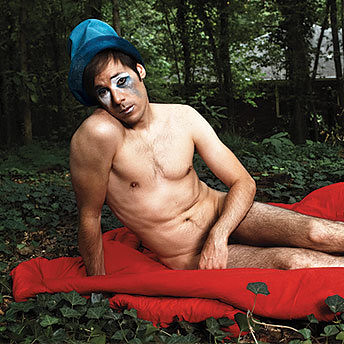
Of Montreal's live shows have evolved into over-the-top glam spectacles involving surreal props, whimsical sets and multiple costume changes — and, on one occasion, a fully nude Barnes performing against projected clips of Seventies gay porn. As the tours have grown increasingly baroque, Of Montreal have developed a reputation as kind of a Grateful Dead for arty, sexually ambiguous kids (plus David Byrne and Bono, who have both been spotted at gigs) who use the shows as an opportunity to dress up in hypercolorful garb, apply liberal amounts of makeup and glitter, and get supremely elevated on booze and drugs. In a few weeks, the band is heading off on its biggest tour yet, a theatrical production complete with elaborate costumes (drag, mythological creatures, giant kimonos), Madonna-size video screens and a cadre of "performance artists" who will act out choreographed scenes, including a brawl in a Deadwood-style saloon. "The inspiration is very Michel Gondry," Barnes says. "Or the kid in Rushmore that puts on those productions."


At rehearsal, Barnes' five bandmates appear to have been sent over from Indie-Rock Central Casting. Guitarist Bryan Poole has a Neil Young look involving bushy sideburns and an awesome tricked-out art project of a car (with a complicated back story about an artist friend's attempt to assemble a militia to capture a mysterious local known as the 8-Track Gorilla); bassist Davey Pierce lives in a garage next door among at least a dozen vintage mopeds in various states of operability; synth player Dottie Alexander sports a pink cheerleaderish skirt and polka-dot tights; and multi-instrumentalist Jamey Husband has an ascotlike scarf that recalls Fred's from Scooby-Doo. Rocking a cool straw hat and an unbuttoned cardigan without a shirt is drummer Ahmed Gallab, the latest addition. Gallab (who's been in town for less than a month and lives in the loft above the rehearsal space) emigrated from Sudan when he was a kid, and is eagerly waiting for rehearsal to stop so he can break his Ramadan fast. "There's two sides of Of Montreal," Barnes explains the next day. "There's the recorded music, which I've been predominantly doing myself. But the performing band is collaborative, and everyone is deeply invested emotionally and financially."


Barnes grew up in Grosse Pointe, Michigan, a well-off suburb of Detroit. "I listened to a lot of poodle rock," he says. "Mötley Crüe and Ratt were my favorite bands, and I covered my bedroom with pictures I cut out of Hit Parade and Circus." When he was 13, his parents — an accountant father (with dreams of becoming a stand-up comic) and teacher mother — bought him a black Pearl drum kit like Tommy Lee's. He formed his first band, Wit's End, singing and playing drums with a local kid named Mark Tremonti, who went on to become the guitarist in Creed. "Kevin was always a real talented guy," Tremonti recalls (the two haven't spoken since high school). "And he had a really cool voice and an artistic edge to him. Just to be able to write songs at that age was amazing. Our best song was 'Pull My Trigger.' It was pretty much a sex, drugs and rock & roll type of tune. You know, that Mötley Crüe thing. Dangerous lyrics. For a group of eighth-graders it was pretty edgy."


A year later, Barnes' father lost his job and moved to West Palm Beach, Florida, to look for work, leaving Barnes with a profound feeling of uncertainty. He fell into his first major depression. "Things were fucked up, and I was getting into trouble at school," he says. "Even though I wanted to be a rebel, there was a part of me that was sweet and wanted to be accepted." (Tremonti remembers, "He didn't really adhere to authority — he was a guy who probably got in trouble more than the average kid.")


Barnes began suffering increasingly debilitating anxiety attacks, culminating in what he refers to as "a weird drug experience." "It was my birthday and my friends bought me all this pot," he says. "Maybe because I was still developing, I had this bizarre reaction where I totally lost my mind. I really thought I was dying. After that I became conscious of how vulnerable we are psychologically. I still feel touched by that experience, which used to bother me. Like, what the fuck is wrong with me — I still feel as crazy as I did when I was a teenager. But now I feel like it's good, like it fuels my creativity."


In Florida, Barnes made a crucial discovery — British Invasion rock, particularly the Beatles, the Kinks and the Rolling Stones. "I was delivering pizzas, and I got The Kink Kronikles on vinyl," he says. "I put it on a cassette and listened until I wore it out." Playing along to an early Stones comp on guitar, Barnes taught himself chords, and by the time he finished school, he had released a collection of tunes on the influential indie label Bar/None. In search of a band, he headed to Athens after seeing the classic documentary Athens, GA. Inside/Out. "I was just dying to find like-minded people to play with," he says. "But I never thought in a million years that I would ever have a career in music — I was just a kid with a four-track recorder with no friends and no prospects."


Athens has two abiding passions: University of Georgia football and off-kilter art rock. Best known as the birthplace of R.E.M., Athens also nurtured freaked-out proto-alt bands such as the B-52s and Pylon, who exploded from acid-fueled UGA parties in the early Eighties. A decade later, when Barnes arrived fresh out of high school, a new scene was starting to take off — centered around a tight group of Beatles-and-analog-recording-obsessed indie bands that referred to themselves as the Elephant Six Collective. "It was just a great explosion of talent," Barnes says of his early years there. "Very bohemian, everyone living together, three or four people sleeping on the floor, everyone playing on each other's records. And there was the excitement of seeing Michael Stipe at a house party, wearing a straw hat, looking really cool. I'd be like, 'Oh, my God.'"


Until 2004's awesomely titled Satanic Panic in the Attic, the first Of Montreal record Barnes made by himself, the band was mainly inspired by the Elephant Six groups (Neutral Milk Hotel, Olivia Tremor Control, the Apples in Stereo among them), whom Barnes befriended shortly after moving to town. "They were kind of like big brothers to me," he says. "I sort of worshipped them — like, God, they're making records and going on tour, they have a publicist, a booking agent, all these things." Living together in a series of communal houses, including a $400-a-month brick bungalow he shared with Neutral Milk leader Jeff Mangum ("It was a total party house — we had a skateboard quarter pipe in the living room and no heat"), Of Montreal cut several low-fi albums between day jobs. "We all wanted to sound like the Beatles," Barnes says. "And everyone was turning each other on to lost psychedelic classics — like someone would go on tour and discover, like, Os Mutantes or the Pretty Things' S.F. Sorrow and bring it back to the circle. Everyone would be really influenced by them."


Of Montreal's breakthrough, 2007's Hissing Fauna, veers from synthy electro pop to sun-splashed R&B inspired by psychedelic-soul great Shuggie Otis (name-checked on the standout "Faberge Falls for Shuggie"). On about half the songs, Barnes' vocals shift into a life-affirming falsetto — but the lyrics are more harrowing than groovy. Hissing Fauna's emotional center, "Heimdalsgate Like a Promethean Curse," finds Barnes singing, "I'm in a crisis/I need help/C'mon mood, shift back to good again . . . chemicals don't make me sick again."


Barnes met Nina Twin — a talented visual artist and musician — at a gig in Oslo in 2001. After a long-distance courtship, she moved to Athens and joined the band on bass. When she became pregnant in 2004, the couple moved to Nina's native Norway to take advantage of the Scandinavian nation's free health care. "The government actually pays you when you have a child," Barnes says. "So we said, 'Fuck it, let's put everything in storage, go to Norway and see what happens from there.'"


Barnes suffered the deepest depression of his adult life, becoming mired in anxiety, paranoia and persistent thoughts of suicide. (Heimdalsgate is the name of the street where they settled in Oslo.) "I was totally isolated, totally broke, we were couch surfing, and I had never imagined myself a father. I found the concept of having a child terrifying, and it is terrifying. There was so much terror in my mind. It was so much easier to live in a dream state where all I had to worry about was myself." And as scary as the pressures of fatherhood were, the fear that he'd have to give up music was worse. "We had been a band for seven years, but never had any commercial success," Barnes says. "But the thing that motivated me wasn't praise or acclaim — it was the process of creation. So there was no reason for me to stop making music, until there was the idea that, fuck, if I have a kid . . . I'll have to stop fuckin' around and take care of my kid."


Encouraged by their booking agent, the couple returned to the U.S. to launch a tour behind the surprisingly popular Satanic Panic. After an attempt to bring their daughter, Alabee, on the road failed, the tour continued without Nina — who became increasingly resentful of being left behind. "Understandably so," Barnes says. "Taking care of a baby is nowhere near as much fun as going on tour."


With Nina at home, and fueled by champagne and antidepressants, Barnes began bringing his glam superqueen live-show persona to the afterparties. "I think the medication allowed him to function, but it also caused his psyche to become more disassociated from feelings like empathy — especially when alcohol is involved," says guitarist Poole, who records his own psychedelic side project as the Late BP Helium. "He'd do stuff like come up to you and stick his hand down your pants and start jerking off your dick. Or, like, try to make out with you, or take all his clothes off and just start walking around at parties."


Nina and Alabee moved back to Norway, and for half a year Barnes went on without them. But then something clicked inside. "I was looking for another Nina, in a way," he says. "But I realized what I had with her was so special. And I was missing Alabee a lot. My whole life I've been sort of detached emotionally, but with Alabee I understand true love. When I'd go visit them in Norway, Alabee would stand at the windowsill and cry because she wanted to see me. That's when you realize you need to be there for your child, because she needs you, she loves you. And you can't take that lightly."


For now, Barnes and Nina seem happy. They just bought a chic, modern, three-bedroom house in the leafy Athens neighborhood of Five Points, separated from the neighbors by tall, shady trees and a long driveway. The sun-soaked rooms feel homey and somehow Scandinavian, accessorized with high-end kitchen gear, an upright piano, framed expanses of cheery Marimekko fabric, Nina's artwork and shelves full of tasteful books (spotted: Portnoy's Complaint, Gravity's Rainbow, Bob Dylan's Chronicles, Dave Eggers' What Is the What).


Barnes' mom lives in a house next door and helps out with Alabee. When he's not making music, Barnes spends a lot of time in front of his new flatscreen TV, watching NFL games. "When I was a kid, like in high school and stuff, I felt very feminine," he says. "But I'm also very athletic, very into sports. I read ESPN magazine. I watch SportsCenter all the time. I'm a big Cleveland Browns and Indians fan."


Sitting on his big new patio as the sun sets, with Nina puttering around in an embroidered housedress, Barnes seems relaxed. His sunglasses are off, revealing sleepy, vulnerable eyes. But the couple's hard-won contentment could be shaken in a couple of weeks, when Of Montreal hit the road again for a yearlong tour. "I'm not always a very attentive husband," Barnes admits. "And there's no way I could be with Alabee all the time and never do anything in the adult world. Nina's a lot like me — it's hard for her to have a three-year-old as her only companion. But she's going to be performing the first four or five shows, and I'm excited. Hope springs eternal."

Saturday, June 27, 2009

2008-11-13 - Paste (part 4)

Of Montreal's Kevin Barnes: The complete Paste interview

Steve LaBate, photo by Jeremy Cowart |


Paste
: On the song “St. Exquisite’s Confessions” on the new record, when you say you’re “tired of sucking the dick of this cruel, cruel city,” are you talking about any city in particular or is it more of an imagined, kind of made-up situation?
Barnes: That’s kind of about Oslo. I have this really special relationship with Oslo because my wife’s from Norway and my daughter was born in Norway, and I spent a lot of time there, and I set up a little studio there and started recording that song there. And you know, it’s weird when you’re in a foreign country. Even though most people speak English there, it’s their second language, so you automatically feel like an outsider. And I’ve had really weird anxiety attacks and bad mental episodes in Oslo, but I’ve also had like some really great experiences. It’s a beautiful city and Norway is a beautiful country, but there’s a darkness there. There’s a real heavy darkness. There’s a lot of super-depressed people. When you have really strong experiences, they stick with you—they’re imprinted on your mind all the time. You walk down a street where you’ve had a weird experience and it kind of happens again; it’s like it never stops happening. So I wrote that song, in a way it’s that feeling of—when you feel beaten by your environment, and you’re trying to push on. Curtis Mayfield
sings about that a lot, like when you’re beaten down by your surroundings and your experiences, but you gotta keep on pushing and staying positive. I actually changed the original lyric [to “St. Exquisite’s Confessions”]. It used to be, “I was so used to sucking dick while I was in prison.” I thought that was funny—I liked the idea of this character: It would be like, “I got so used to sucking dick while I was in prison, I’ve forgotten what it’s like to please a woman, or what it takes to please a woman.” It’s kind of a funny idea, like if you’ve been in prison and you have to adapt to that world—you know, just suck some dick or whatever. It could be metaphorically speaking or actually sucking dick. Ad now you’re in the straight world again, and you’re free and you’re like, “OK, what’s it like? What do you have to do again to please a woman?” But I changed that because it just seemed too jokey, and I think the idea of sucking the dick of a city is more universal.

Paste: You touched on this in a post on your website this past summer, but, in regard to the title Skeletal Lamping, what skeletons are you spotlighting and have you gotten any further with the question you posed about whether you want to shoot them or capture them?
Barnes: [laughs] I just want to let ’em go. I always want to change and evolve and reject the past and not really worry about it so much. I don’t feel the need to inspect my motivation for things I’ve done; I just want to continually move forward. But I think, when you make art, like a record or whatever, it’s sort of frozen in time, so it’s like turning the light on in a room and leaving it on forever. But you can also walk away from the room with the lights on—or keep paying the electric bill, but move into a new house.

Paste: How, if at all, did the negative reaction you got about the Outback Steakhouse commercial affect your approach to the new record?
Barnes: The backlash from the Outback commercial really motivated me to push myself, to make something bold and different so people couldn’t marginalize me. When someone calls you a “sell-out,” they’re basically saying you have no value; that you’ve given it up for your bank account—”well,” I thought, “I’m going to prove you wrong.” It filled me with a great energy, the desire to show these people, even though they’re sort of invisible. Like when anyone writes on a blog they’re called like AJJohnson622 or whatever [laughs], it’s like they don’t really exist. But I think what they’re saying, the thought they’re posing—if it matters to you like it matters to me, I wouldn’t want people to think I was a sell-out. But then, I have a complicated relationship with that concept, the idea of selling out. I [eventually] realized that selling out isn’t possible—I can’t sell out because I don’t make music to make money; I make music because I feel compelled to do so. I never sit down and say, “OK, I haven’t written a song in a while. I gotta do this.” It’s never like that. I want to do this. This is what gives my life meaning, what gives me a sense of fulfillment. I’m not really trying to sell records. I mean, I’d like to sell records because it makes life easier when you do sell them, but that’s not the fundamental motivation behind it. I also can understand how people get upset ’cause [when you sell a song to a commercial], in a way you’re sacrificing the song, potentially forever. You know, if it develops negative associations with people, or if it deprives people of having a romantic connection to the song, because you can’t really have a romantic connection to Outback Steakhouse. Or you can, maybe, but it probably wouldn’t be on the same level.

Paste: Like, “Man, that Bloomin’ Onion was so good!”
Barnes: [laughs] Yeah, I’ll never forget that time I spent… But I can really understand both sides of it. It still kind of hurts me though. No one had ever really said that to me before, no one had ever called me a “sell-out.” It would’ve been impossible, really, unless they would be like—I mean, some people are actually like, “You were on Conan O’Brien, you’re a sell-out.” Some people are actually like that; it goes that far. Like, “Oh, I can’t like this band anymore because they were played on the radio.” I mean, some people are like that. But the sad reality is that—if you’re an indie artist—you have to look to other avenues to earn a living. And either it’s going to be a day job that has nothing to do with music, or you can try to find some way to use your talents to earn a living. And that was actually the first time I had ever been offered anything like that, and I was so broke, and I was like, “I can’t say no to this.” I couldn’t project into the future and imagine what the ramifications were going to be, or how it would be different, and I think that if I could go back in time, I wouldn’t do it again, but only because of the scope of it—only because it’s been like their ad campaign for like three years and it’s not going away. Most bands, maybe they do a commercial and it’s there for like a month, two months, tops. And this thing has been like [McDonald’s’] “I’m lovin’ it.” And so, [if I’d known it would be like that], I definitely wouldn’t have done it. But I was so green at the time—I didn’t have representation and I had no previous experience to put it up against. So it’s the price of an education on some level. But it also really helped me financially. I was like, “Well, let’s put some more money into this next production. And now I sort of compare it to an actor or director that will make like a big-budget film in order to fund their pet project, their art project. Like I said, sometimes you have to suck a little dick to get by, just like everyone else has to suck dick, you know? Everyone has to have this other job or this other thing that allows them the freedom to do other things. But now, whenever I’m doing [anything commercial], I try not to incorporate
Of Montreal songs in that world. If I’m gonna try to do something for hire, I don’t want to use any Of Montreal songs. I want to just make something new.

Paste: Well, now you can be like, “I’m the guy who wrote the song for the Outback commercial.”
Barnes: It’s a funny thing, too, ’cause other people—people who aren’t at all connected to the indie world, like my dad’s friends, you know, people like that,—they’re so impressed. They’re like, “Oh my god, that’s so great, man! That’s so wonderful!” Like for them, it’s like validation. And if you’re applying for a loan, and someone’s like, “What do you do?” You say “musician.” “Oh really? Have you written any songs I might know?” And then you can say, “Well, have you heard the Outback Steakhouse commercial?” [laughs] And then they’re like, “Yeah, I’ve heard that! Aw, that’s fantastic! I can’t wait to tell my friends that I met the guy who wrote the song from the Outback Steakhouse commercial!”

Paste: Tell me about how Dylan Thomas influenced the lyrics on Skeletal Lamping.
Barnes: He’s one of those writers that he has such an interesting—almost like a self-produced lexicon. His style of phrasing things and putting words together is so original that it bends my mind. A lot of the song titles from Hissing Fauna and Skeletal Lamping were results of reading a Dylan Thomas poem and then trying to stay in that spirit, that frame of mind, and just write whatever comes to mind. Just sort of automatic-writing style, where you just turn off your mind and write whatever comes out. It’s great; it’s almost like a drug, like a really quick drug. You just like read one poem and try to absorb it and be influenced by it, and see what comes out of you after taking the drug. I mean, I don’t really do drugs like that, but if drugs did that for me, then I would because it’s always good to bend the mind, to gets it out of the grocery-list mentality. You know, you make lists—these are things I have to do today, and these are the people I’m gonna talk to and it’s always situation-appropriate. But if you bend your mind, you can get out of the trappings of that. It can help you think really creatively.

Paste: Have you ever done any kind of trance writing in the past? Written songs where you let go like that?
Barnes: Yeah, I do that a lot, at night usually, when everyone else is asleep and I can just—almost like a meditative state, where I try to shut everything off and just let the stream of consciousness flow, and I come up with some things that I find really interesting. So I do a lot of writing like that. And it’s also good [to try that] if you have music [already]. I think a lot of hip-hop artists do this, where they just sort of ad-lib and don’t really know what they’re gonna say next, and maybe do 10 tracks of ad-libbing, and then pull something interesting together. I definitely do that.

Paste: Where do you think the collagist aesthetic on the new album comes from?
Barnes: I guess it comes from the desire to create something unpredictable, and so it’s things that are seemingly out of place with each other, which helps create that unpredictability, ’cause if you’re listening to a song, a lot of times you can predict where the person’s going to go—you know how they’re gonna resolve the melody line and when the chorus is gonna come, and to me that’s not that exciting. I wanted to make something that was really unpredictable because that’s the kind of music I like listening to, and I want to make the kind of music I want to hear. So what I’m trying to do is make something that’s really unpredictable, but also has an immediacy to it—something that’s not completely out there and so impossible to follow that it hurts the brain. I don’t want to hurt the head too much; I just want to create something interesting that has unexpected twists. When I listen to the first two Os Mutantes records, I can listen to them all the time because they’re speaking a language I don’t understand, so it has a mystery. Musically, if you’re not following along, and you’re not looking at the CD player and seeing, “OK, this changed from track 4 to track 5,” you don’t even know when one song starts and the other ends.

Paste: I had difficult time, when we were listening to the album the first time, trying to figure out where the track breaks were. I took notes, but when I went back and looked at it again, they were all wrong.
Barnes: A lot of times, when it would’ve made sense for it to end in one place, we were like, “No, let’s just include that other thing and say it’s part of the same song.” I wish there could be hyphenated track listings or hyphenated track markers—like, “OK, this is track 6.2 or something.”

Paste: A lot the past records you’ve put out with of Montreal have been really fantastical, but I feel like this one has almost a space-age vibe to it.
Barnes: I really want to make now music. I want to make music that feels progressive, like it’s reaching toward the future rather than being this sort of anachronistic retro thing. In the early days, I wanted to make something retro. That was the kind of music I was into. But now I really want to push music into this new area it’s never been before, and I haven’t yet, but that’s definitely the motivation. So I think that might give [my recent music] a sense of being more progressive. At least, the intent was to make something progressive. I feel like music is going in a really great direction. There’s a lot of bands that are doing really interesting things—bands like Health and Gang Gang Dance and Deerhoof and Animal Collective. I feel like we’re in the middle of something amazing, that people are going look back on 20 years from now and be like, “Holy shit! All these classic records were being made during this period,” like when I think about The Pretty Things and Pink Floyd and The Beatles, and all these bands making amazing records in 1967. And I hope that this continues, where people are using the technology of the time, the instruments that are there that weren’t before to create something now, something that really feels like this time period. Even if it sounds dated 20 years from now, it doesn’t matter as long as it has a personality and an identity outside of anything before or after. I mean, everything is inevitably going to sound dated. It’s amazing to me how the ’80s—the sound is such a really strong… it has such a strong personality, and the fashion…

Paste: The gated drums, the synthesizers…
Barnes: Yeah, everything. And I think that’s so fantastic. Like, the ’90s, it had that [distinct identity] to some degree, but not on that level like the ’80s. And people joke around about the ’80s—it definitely seems silly, you know, and we kind of laugh about it, but that’s really all you can hope for: to create something that has such a strong identity that it’s impossible to take it out of context.

Paste: Earlier you were talking about the way the tracks on Skeletal Lamping jump into each other and the erratic way the album is sequenced. All that chaos, when I’m listening to it, snaps me in and out of these trance states. What role do you think chaos plays in your music?
Barnes: Well, this is the first record where I really tried to incorporate tension, and tried to build tension in the songs and not just make it as melodic as possible. I tried to incorporate elements of dissonance. I think it’s really exciting to work in that area because that’s kind of a heavier, deeper form of composing, because you’re touching on all these different emotions. In the past, I’ve done a lot of electro-disco pop, which is basically like one emotion, maybe happy, with slightly intellectual lyrics. But this album, musically, I wanted it to have more depth and to create something that’s more mesmeric at times, even anxiety-producing at times, and in a way reflect my state of mind or the human condition ’cause you’re never just happy and you’re never just sad, there’s always varying levels of everything from moment to moment.

Paste: Why did you choose “Id Engager” as Skeletal Lamping’s first single?
Barnes: We felt like it was dancey and fun, but it was hard to pick one song.

Paste: Are you gonna put out a few singles?
Barnes: Yeah. We’ll definitely do a couple, but “Id Engager” seemed like a safe choice because it’s not such a dramatic departure from Hissing Fauna but it’s also kind of representative of the new record because it has so many different sections and it’s sort of out there, sort of like the freak-disco song on the record. I really pushed for “For Our Elegant Caste” because I thought that was a bit bolder of a statement. But, you know, people on the business side were like, “Well, maybe that might be a bit too much for the first single.” [The song’s chorus feature the lyric: “We can do it softcore if you like, but you should know I take it both ways.”] I feel like there’s no real way to ease people into this album—either they’re going to open-minded and cool with it or they’re not. So I felt like there was no real reason to try to dumb it down or pick the most accessible track. But at the same time, I like “Id Engager.” It’s not a totally simplistic love song. There is depth to it. And I think it’s an interesting song because the lyrics in the verse are in opposition to the lyrics in the chorus. The lyrics in the verse condemn this hedonistic, superficial relationship, and warn people against it. But in the chorus, there’s this unapologetic lyric about, “I just want to play with you, I don’t care about having a deep relationship. I just want to have a superficial, noncommittal experience.” It’s like the two voices are sort of fighting each other.

Paste: Sounds like something that goes on in people’s minds all the time.
Barnes: Yeah.


Friday, June 26, 2009

2008-10-01 - Spin

PhotobucketPhotobucket

Photobucket

Photobucket

Photobucket


With unlimited imagination and the resources to realize his weirdest whim, Of Montreal's gender- (and genre-) bending, secretly sane visionary is learning to have his cake and eat it, too.
By Andy Battaglia 09.22.08 1:55 PM
Photographed for SPIN by Michael Schmelling

For an impish sprite with a wardrobe full of starry aqua ankle boots and fishnet tights, Kevin Barnes is surprisingly intense when it comes to volleyball. It's a numbing summer night in Athens, Georgia, and we're engaged in some serious business in Normaltown, the larky boho haven that Barnes calls home. His backyard is strewn with tangles of Christmas lights, and his friends -- the tight coterie of musicians, painters, and various weirdo visionaries who help make Of Montreal more than just a band -- have split into gamely warring factions. "I've seen him rip off his shirt in anger for losing," says Of Montreal drummer and multi-instrumentalist Jamey Huggins. Keyboardist Dottie Alexander describes playing against Barnes as "a real catharsis."

The attic in the house up front is where Barnes has worked on a series of increasingly ambitious art-rock masterpieces, including Of Montreal's ninth album, Skeletal Lamping. But it's out here, in the yard past the trampoline and a kiddie pool, where Barnes, 34, and his band function like a true unit. The group just treated itself to a new piece of equipment: a shiny pink volleyball to replace a leaky old one wrapped with what bassist Davey Pierce describes as "20 pounds of duct tape." (They tried.) The grass around the net is littered with melted Cherry Garcia cones and empty beer cans. By any sporting measure, the level of play is unmistakably low. But the spirit! Bodies lurch and dive feverishly. Absurdist trash-talk zings over the net like so many feeble slams: "We need to get you finger extensions!" "What would Jackie Joyner-Kersee do?"

On the Set with Of Montreal (video hosted on Spin's website)

Barnes himself is commanding but relatively quiet. Between points, he riffs on the allure of Aerosmith and tells of a dream in which a bandmate appeared before him with a disarmingly small penis and six swinging testicles. (That would be Ahmed Gallab, a newly enlisted supplemental drummer, not yet in town to be freaked out.) But the Kevin Barnes diving after wobbly shots with an incongruously focused look is a long way from the upstart star who preens onstage amid a mess of cuddly winged monsters.

Of Montreal's practice space is in a complex of repurposed warehouses between a chicken-processing plant and a cement factory, under a rusty water tower on which hobo is graffitied in a shaky hand. A trapeze studio and a bike shop do business among art spaces and rooms made noisy by dozens of bands. They rent two large rooms: one for music and another to build props and sets for their famously elaborate stage shows. The music room boasts a guitar amp draped in pink fur and a chandelier attached to a pulley, built on a whim to raise and lower for the lighting of wax candles.

The prop room nearby houses the fixtures that make Of Montreal come alive onstage. A wooden box swathed in brightly colored paint serves as a makeshift coffin from which Barnes can spring forth as a ghostly white blob, covered with the contents of 30 cans of shaving cream.


"Over here we're building leaf-blower guns," says Nick Gould, who started designing sets and props for Of Montreal as a recovering film-school student and dates keyboardist Alexander. Components of a dazzling stage set stack up high against a wall, with luminescent risers and a catwalk suspended in between. In concert they flash in stroboscopic patterns like something from Ziggy Stardust's yard sale. In storage they're just a bunch of plywood contraptions cobbled together and crammed with standard-issue 60-watt bulbs. "Your output is going to be exponentially more creative when you make it up as you go," says Gould.

Of Montreal's growing stature -- 2006's Hissing Fauna, Are You the Destroyer? sold an indie-respectable 108,000 copies worldwide -- owes a lot to the ad hoc spectacles they stage, with little budget but lots of ingenuity. When they performed "Heimdalsgate Like a Promethean Curse" on Late Night With Conan O'Brien last year, Of Montreal had so many people doing so many different things on set -- sword fighting, stumbling around in a ten-foot space-god suit -- that union rules required them to be billed as a "performance group" rather than just a band.

Live Video: Of Montreal, "Mingusings"

Such shoestring theatricality has made them heroes to a new breed of like-minded bands. "Kevin is constantly pushing the boundaries of pop, which is inspirational to slackers like us," says Andrew VanWyngarden of MGMT. "He's making the Black Albums and Station to Stations of today."

This outsize ambition has been funded in part by a handful of commercial deals, including a jingle for a certain Australian-themed steak-house franchise that has been the source of much debate in indie circles. "It's all slightly embarrassing, a skeleton in the closet," Barnes says. "But we put a lot of money into the shows that we might not see again. If you want to make a living making music these days, you have to have other sources of income."

"We're always up for an incredulous moment," says guitarist Bryan Poole, who joined up with Barnes more than a decade ago. Back then, Barnes was a shy, awkward twentysomething from Florida with an ear for forgotten '60s pop and a belief that indie rock could be more than glum guys in plaid shirts. Poole remembers him confessing to not having any friends until he was ten or 11, so "he had to create his own world and all these things to entertain himself."

Barnes wasn't alone in Athens, though. When he first moved there, he shared a house with Jeff Mangum of Neutral Milk Hotel and Will Hart and Bill Doss from Olivia Tremor Control -- each a prime mover in the experimental psychedelic confab known as the Elephant 6 Recording Company. "That was just about making music for yourself and your friends," Barnes remembers. "The scene didn't exist that we wanted, so we just had to make it."

2009-01-26 - Sweet Oblivion

Of Montreal interview - finally here!

Here's an interview I did with of Montreal frontman Kevin Barnes two months ago...I am unspeakably excited about the gig this Wednesday in The Button Factory!
This is one of my favourite pieces I've written, hopefully I did the band justice.

Labyrinthian Pomp

By Aoife Barry

Why play by the rules when you can set the rulebook on fire and dance on the flames? For Athens, Georgia-based band of Montreal, music isn’t something that has to be constrained by rules and regulations – who says things have to go verse-chorus-verse? Since the band was first formed by Kevin Barnes back in the late 1990s, they’ve gone from a pretty traditional lo-fi band to an all-out psychedelic group that bring their listeners on a wild trip through a world where the word ‘normal’ is banned. Key to this is the band’s theatrical live performances, which have recently seen Barnes bound on stage naked or astride a white horse. Who knows what we should expect when they play Dublin on January 28th.


It’s been a long journey for of Montreal – through more than 20 releases, numerous side projects, the famed Elephant 6 Recording Company collective (which also produced Neutral Milk Hotel amongst other bands), extended stays in Norway, marriage, childbirth, break-ups and make-ups. But through it all, they’ve kept evolving, kept pushing the boat out and creating music that breaks down the notion of what ‘pop’ music really is. Their work was eventually recognised with the release of the dark ‘Hissing Fauna, Are You the Destroyer?’ in 2007 – and now, with ‘Skeletal Lamping’, things are about to seriously explode for this close-knit band. They’re currently in the middle of a US tour and will be back in Europe in the New Year – and they’re bringing with them a stage show that’s a feast for the eyes and the ears.

“Our show is theatrical,” explains an ebullient Kevin Barnes backstage before a show in Tampa, Florida. “We have three or four performance artists on stage with us and they’re doing a bunch of different things. We have little skits and things like that. But all the while we’re just playing the songs from the records and stuff. It’s almost like a meta-style performance where there’s all these things happening at the same time. Sometimes the things go along with the music; sometimes they’re just completely independent. We basically just wanted to create a dynamic entertaining visual performance to go along with the music.”

Creating a dynamic entertaining visual performance? If that involves Barnes evoking the spirit of a 40+ year old African American transsexual called Georgie Fruit, the band dressing in eccentric outfits and make-up while acrobats dance around beside them, then of Montreal have got it down pat. It’s interesting, then, that it’s considered pretty unusual for this to happen – for a band like of Montreal to put together a theatre performance rather than a typical live gig. Why is it that other bands don’t do this?

“A lot of bands, they don’t really think about it, you know?” muses Barnes. “Like they’re worried about getting the music right and that’s it – of course you have to get the music right, that goes without saying. But I think we’ve been doing it for so long that it keeps it interesting for us.” But it’s not just interesting for the band. “I’m sure it’s really fun to see this ‘cos, I guess, just because it’s not a static show,” agrees Barnes. “It’s something we’ve sort of been building up to for a while – we’ve always wanted to have interesting visual elements along with the performance, and try to just do something exceptional –something that no one else has done, or something people weren’t expecting.”

Another thing that’s been pretty unexpected, for the band at least, is the sudden interest in them. They’ve gone beyond being a small indie band and onto something much, much bigger. “It’s great ‘cos we’ve been a band for a very long time,” says an obviously delighted, yet bemused, Barnes. “In Europe it’s taking even longer but in the United States it’s taken us seven years of touring non-stop, sleeping on people’s floors and making no money. So finally, after riding it out like that for a really long time we’ve finally reached an audience. And in Europe we’re still building it up, we’re nowhere near as well known in Europe as we are in the states, so it’s another challenge. It’s fun playing in Europe because it’s still exciting.”

It’s exciting too for the band to feel that at last, after eight albums, people are finally starting to ‘get it’. “I feel really fortunate that people are paying attention to what we’re doing now,” admits Barnes. “I know very well what it’s like on the other side - we put out really interesting creative records long before ‘Hissing Fauna’ but no one really bought them, no one really liked them. We always did what we wanted to do, we always did what we were compelled to do and what we were excited about.”

But the years of being relatively unknown have taught the band something, says Barnes. “I think in a way, all those years of being commercially unsuccessful were really positive for us because now we’ve realised what we like about it is the process of creating, and not about playing shows in front of lots of people or selling records or being on TV or whatever – it’s all about the creative process and what that does for you emotionally, intellectually, spiritually or whatever. We have a really good work ethic and that’s really important.”

Although he describes it as “kind of traumatising to struggle and struggle and struggle along and see all these bands becoming popular around you”, there still seems to be part of Kevin Barnes that is always going to be surprised at the band’s success. “It’s really kind of shocking that people like it,” he says incredulously, “because it’s not really in line with what is trendy. I’m always surprised when we play shows that there’s a lot of people there – like “are you people cheering for me? You’re really cheering for us? You really like us?”...I’m just like amazed, really excited and really happy and kind of shocked.”

Barnes generally records the of Montreal albums at home, eschewing studios and the corporate ‘machine’. He says he’s glad to see the record industry “failing” because it encourages bands to go the independent route. “If anything there are a lot of bands like us that are doing this on their own because they love it and not because they wanna sell,” he says. “That’s the worst thing in the world, to make music to sell.” But of Montreal recently sold three of their songs to be used in commercials in the United States. How does he reconcile this with his independent attitude? “I think there’s a difference between creating something because you want to sell it, and then selling something that you’ve already created, in a pure way,” is how he explains this decision. “If someone comes to me and says “I wanna use your song in a commercial”, it’s just kind of like, “great, because I have no money and this is gonna help me make more music”.”

He compares this to directors or actors doing big budget films to make money for art projects: “of Montreal is just like my art project and like any other thing it needs money to survive.” “It’s just an unfortunate aspect of things – if you don’t have money, you have to hustle a bit – that’s a fact of life,” elaborates the musician, who says he will be embarking on some new projects in 2009, including an album with Andrew VanWyngarden from MGMT. “But I agree I don’t like the idea of my song being in a commercial – I would much prefer to not do that. I would much prefer to keep it pure and everyone would have their own personal relationship and it wouldn’t be sullied in any way. But that’s not reality.”
And with that he’s off, back to his own reality, a shape-shifting, gender-bending world of beautiful freaks and monsters.

Thursday, June 25, 2009

2008-11-12 - Dallas Music


By Kevin O'Donnell
Published on November 12, 2008 at 11:16am


Kevin Barnes has contemplated suicide. Two years ago, the frontman for indie-pop institution Of Montreal moved to Norway with his wife to raise their newborn daughter, Alabee. The weather was shitty, he was living apart from his family and friends in a strange country, and his new family suddenly forced him to face the uncomfortable truth of adulthood.

"I was in such a bad state of mind that I couldn't see anything positive," says the 34-year-old. "There was just lows. Nothing was beautiful."

He tried yoga, meditation and psychiatry to cure his depression. Nothing worked.

"It was like you're bleeding to death," Barnes recalls, "and someone hands you a Kleenex and says, 'Here, put this on.' "

So Barnes threw himself into his music, writing most of last year's Hissing Fauna, Are You the Destroyer?, a bizarre, brilliant set of whacked-out psychedelic synth-pop that explored his twisted psyche. And this month, the frontman and his crew—Bryan Poole, Dottie Alexander, Jamey Huggins, Davey Pierce and Ahmed Gallab—return with Skeletal Lamping, which, while not as dark as its predecessor, is definitely crazier. It's a jaw-droppingly great 15-song explosion that features burbling synth dirges; horn rave-ups; sweaty disco bangers; cacophonous noise-rock explosions; and party-starting, Prince-style funk. It's also one of the funniest records you'll hear all year, with Barnes delivering explicit ruminations on sex, gender politics and relationships. "We can do it soft-core if you want/But you should know I take it both ways," he proclaims in sweet falsetto on "Our Elegant Caste." And on "Wicked Wisdom," he unleashes non-P.C. nuggets like "Why is it white girls don't ever have any ideas?"

"I really enjoy eccentric '70s soul, where people sing stuff like, 'If you want to get with me, you've got to get on your knees and crawl to me,'" Barnes explains. "So I'm pushing myself to make outsider art that's very provocative and bizarre. I want to grab people and have them say either, 'I love this' or 'This is bullshit!'

"I feel like with indie rock, everything is so gentle and polite."

It's taken Barnes a while to come to that realization.

Soon after he formed Of Montreal in 1997, he became part of Athens, Georgia's Elephant Six Collective of bands such as Neutral Milk Hotel and Apples in Stereo—precisely the style of "gentle" indie he rebels against today. Even his band's earliest records—including 1997's Cherry Peel and 1999's The Gay Parade—were fairly conventional, Beatles-style rock records.

But Barnes still found E6 to be a much-needed support group for his band: "If we were by ourselves, we probably would've broken up," he now says. "But knowing that our friends supported us and that they loved us, it made us feel empowered."

In 2004, Barnes started writing and recording the band's records largely by himself; his craft noticeably improved on that year's Satanic Panic in the Attic and 2005's The Sunlandic Twins.

After the latter release, Barnes was approached by Outback Steakhouse to use the quasi-funky number "Wraith Pinned to the Mist and Other Games" for a commercial. Barnes, who couldn't afford an attorney to help negotiate the terms of the contract, agreed. But when the commercial finally aired, the company altered the lyrics from "Let's pretend we don't exist" to "Let's go Outback tonight." Of course, Barnes was furious.

But he was also inspired: "I never had to deal with anyone ever calling me a sellout," he says. "It's funny, too, because I feel like it helped motivate me to make music that was more out there and interesting. The backlash was a good thing."

There'd be no Skeletal Lamping—and maybe no Barnes—without it.

2008-11-05 - Creative Loafing


Three years later, Of Montreal still can't shake the shadow of that Outback Steakhouse commercial.

The long-standing Athens band, an outgrowth of the Classic City's now legendary Elephant 6 indie-rock collective, made a mint and a muddle by selling the song "Wraith Pinned to the Mist (and Other Games)," from its 2005 album, The Sunlandic Twins, to Outback for a television ad.

But selling a song to the workaday steak chain hardly seemed like an ideological faux pas. Especially considering that everyone from Iggy and the Stooges to the Shins have allowed their songs to be used in commercials for products ranging from cars to vacation cruises.

Of Montreal didn't just license their song, though, they sold the melody, which was then chopped, neutered, rearranged and turned into a carnival-esque soundtrack for the Outback dining experience. It was the first indie-rock song to become a true commercial jingle, and to this day the group's blog (www.ofmontreal.net) still receives whiney comments from disapproving fans every time the commercial airs.

"People definitely didn't respond well to it," Kevin Barnes offers with a cautious and self-effacing chuckle.

"Now when people hear the song they think about steak, and maybe they're vegetarians and don't want to think about steak," he laughs. "For a long time we wouldn't even play it live because, honestly, I was embarrassed. We would finish the song and inevitably someone would yell 'Outback!' I had this feeling of ... 'Oh... goddamn it!' It really messed up my mind for a while, but now it's just a footnote in the song's life. It doesn't affect me as it once did."

But the backlash from the commercial did leave an impression on Barnes that affected his songwriting. Of Montreal's latest and most complicated album, Skeletal Lamping, (Polyvinyl) intends to exorcise the demons brought on by selling the song's soul to the steakhouse.

After the commercial appeared, cries of "sellout!" pushed Barnes to reconsider his position. He decided to take some unprecedented artistic chances to save Of Montreal's good name. "I wanted to prove that I wasn't a sellout and that I still have value as a writer; that I still have a wild imagination and that I am capable of doing something fantastic," Barnes says. That sense of ideological motivation culminates in Skeletal Lamping.

The new release is the group's most challenging and sexually unrestrained to date as Barnes sporadically hands the reins over to his gay, black, transgender alter-ego, Georgie Fruit. Ironically, the record will also introduce Of Montreal to Wal-Mart America, because Skeletal Lamping is the band's first release to make its way out of the indie record store circuit and in to such big-box chains as Target and Wal-Mart.

But is middle America ready for Georgie Fruit?

From the opening keyboard whiz, amphetamine beat and falsetto squawk, Skeletal Lamping takes a sexed-up freak ride through Barnes' mind that unfolds in a jumble of thoughts, ideas and disconnected narratives. Songs jump from fugue-like movements of synaptic disco, funk and oddball pop and plow headlong into schizophrenic references to Prince, the Beatles and Ziggy Stardust-era David Bowie. But these influences never reveal themselves for longer than a few fleeting moments. As a result, the album emerges as a mass of connective tissue that remains unbound to any major structure.

The title refers to an archaic hunting method in which a wooded area is flooded with light, sending all of the hidden inhabitants scurrying into the light for easy pickings. As the name suggests, Skeletal Lamping illuminates a myriad of Barnes' hidden musical ideas, and sends them scattering like beasts big and small.

"Nonpareil of Favor" provides the blueprint for the album's labyrinthine nature. Barnes' soulful yowls amble over electronic beats that move swiftly before slamming into a wall of guitar noise and drone that then transforms into a patchwork of percolating vocal chirps and cyclical rhythms.

"An Eluardian Instance" is the exception to the album. It more closely resembles the twee-pop traditions of the group's past. But when placed next to the epic weirdness of "Women's Studies Victim" or the Technicolor blast of the album's first single, "Id Engager," the song feels passé by comparison.

Skeletal Lamping is a strange album indeed, and its imprecise angles were foreshadowed with a post on the band's MySpace blog where Barnes offered an early explanation: "... very few things pique our interest while they are working as we expect them to, things are far more interesting when they are not working. Shocking people though, just for the sake of it, is so mundane ... in most contemporary songs, you can basically finish the artist's sentences, musically and lyrically. I wanted to make an album where that was not possible."

Skeletal Lamping does just that, but to say that it doesn't work misses the point. The album works overtime. It takes shape as a seamless collage of unorthodox changes, jump cuts and sexually charged art pop that underscores Of Montreal's typically bright, uplifting pop tones with whimsy and surrealism.

"I wanted it to mirror my psyche," says Barnes. "I like the idea of never having a straight narrative."

The voice in "Women's Studies Victim" reels through a tale about a mannequin that cheats and opens her eyes before shifting into a sultry tale of seduction by the kitchen sink while the song flows from hook to hook. Such changes in direction define the record. It's a strange, stream-of-consciousness trip pieced together like a dream. Listeners can process bits of information and interface with the songs on multiple levels, yet the illogical pace of the recordings defies any attempt to place them into the context of day-to-day, waking life.

The album also finds Barnes delving deeper into the Georgie Fruit persona that he introduced with 2007's Hissing Fauna, Are You the Destroyer? Georgie is a gay, middle-aged, black she-male who Barnes insists is an ambivalent creature less alien than Ziggy Stardust and more reflective of the universal human spirit.

The concept, Barnes says, is his way of unlocking a side of himself that transcends race, gender and history. "While I was making Skeletal Lamping, I wanted to have no connection to any economic, social or psychological situation," he says. Georgie's uninhibited voice first speaks up on Skeletal Lamping in the song "Wicked Wisdom," and plays a large part in the group's live shows. Above all else, Georgie Fruit gives Barnes the opportunity to perform.

"I bring a much more exaggerated Kevin Barnes to the stage than what I am in my normal life," he says. "There's no repression whatsoever and I really hope that people would also feel that coming to an Of Montreal show gives them that same opportunity."

Onstage, Barnes handles guitar and vocal duties while peeling through a parade of costumes. The rest of the band is rounded out by Bryan Pool, aka the Late B.P. Helium (guitar), Dottie Alexander (keyboard), Jamie Huggins (drums/electronics), Davey Pierce (bass) and newcomer Ahmed Gallab (drums).

The artwork associated with the music has also captured a lot of attention.

In conjunction with the album, the group released numerous functional art objects. They include a hanging Chinese lamp, T-shirts, tote bags, decals, a massive horse poster decorated with a collage, and various bits of small ephemera that convey the album's spirit. Barnes' wife, Nina, and his brother David – the latter of whom provides the group's signature album covers – designed the collection.

The CD's packaging is an intriguing objet d'art, as well. It doubles as a fold-out paper sculpture of a strange plant/microbe organism armed with several mouths and a hypnotic mess of primitive paisley markings. "The whole thing is something we've had as a dream for a long time. In the back of my mind I was thinking, 'Things this cool just don't happen,' but Polyvinyl was on board from the beginning and totally made it happen," Barnes says. The willfully nonlinear approach can come across as pretentious or even too convoluted for some fans of the group's less fractured material.

The album hit the streets via Polyvinyl Records on Oct. 21. Upon release, it shipped 100,000 copies to retailers around the world, including the big-box chains. By indie standards, that's pretty huge, and it's a significant jump from Hissing Fauna, which shipped a paltry 30,000 copies when it was released in January 2007.

Posting such big numbers amid the likes of Wal-Mart and Target brings Of Montreal closer to the all too familiar cries of "sellout" once again. More importantly, Wal-Mart caters to rural America's strong conservative element. These are the same people who banned Sheryl Crow's 1996 self-titled album because she sang about people killing each other with guns bought at Wal-Mart. What the heck's going to happen when they get a load of Georgie Fruit?

Barnes remains undeterred.

"The positive thing about getting your record into Wal-Mart is that not every city has an independent record store, like Wuxtry or Criminal in Atlanta," he says. "When I was in high school in south Florida we didn't have a record store where you could get indie records. You had to go to the mall. I think it's amazing that Wal-Mart would even carry Skeletal Lamping, but it doesn't change anything on our end. We're not going to change anything to appeal to middle America, but I am proud of the record and I would like as many people to hear it as possible."

Wednesday, June 24, 2009

2008-10-14 - The Village Voice

Of Montreal Trades Polite Beatles Worship for a Flashy Prince Fixation
Kevin Barnes loves loincloths and horses. Outback Steakhouse? Not so much.
By Kevin O'Donnell
Tuesday, October 14th 2008 at 3:01pm


Kevin Barnes has contemplated suicide. Two years ago, the frontman for indie-pop institution Of Montreal moved to Norway with his wife to raise their newborn daughter, Alabee. The weather was shitty, he was living apart from his family and friends in a strange country, and his new family suddenly forced him to face the uncomfortable truth of adulthood. "I was in such a bad state of mind that I couldn't see anything positive," says the 34-year-old. "There was just lows. Nothing was beautiful." He tried yoga, meditation, and psychiatry to cure his depression. Nothing worked. "It was like you're bleeding to death," Barnes recalls, "and someone hands you a Kleenex and says, 'Here, put this on.' "

So Barnes threw himself into his music, writing most of last year's Hissing Fauna, Are You the Destroyer?, a bizarre, brilliant set of whacked-out psychedelic synth-pop that explored his twisted psyche. And this month, the frontman and his crew—Bryan Poole, Dottie Alexander, Jamey Huggins, Davey Pierce, and Ahmed Gallab—return with Skeletal Lamping, which, while not as dark as its predecessor, is definitely crazier: a jaw-droppingly-great 15-song explosion that features burbling synth dirges, horn rave-ups, sweaty disco bangers, cacophonous noise-rock explosions, and party-starting, Prince-style funk. It's also one of the funniest records you'll hear all year, with Barnes delivering explicit ruminations on sex, gender politics, and relationships: "We can do it soft-core if you want/But you should know I take it both ways," he proclaims in sweet falsetto on "Our Elegant Caste." And on "Wicked Wisdom," he unleashes non-p.c. nuggets like "Why is it white girls don't ever have any ideas?"

"I really enjoy eccentric '70s soul, where people sing stuff like, 'If you want to get with me, you've got to get on your knees and crawl to me,' " Barnes explains. "So I'm pushing myself to make outsider art that's very provocative and bizarre. I want to grab people and have them say either, 'I love this' or 'This is bullshit!' I feel like with indie rock, everything is so gentle and polite."

It's taken Barnes a while to come to that realization. Soon after he formed Of Montreal in 1997, he became part of Athens, Georgia's Elephant Six Collective of bands like Neutral Milk Hotel and Apples in Stereo—precisely the style of "gentle" indie that he rebels against today. Even the band's earliest records—including 1997's Cherry Peel and 1999's The Gay Parade—were conventional, Beatles-style rock records. But Barnes found E6 to be a much-needed support group. "If we were by ourselves, we probably would've broken up," he says. "But knowing that our friends supported us and that they loved us, it made us feel empowered."

In 2004, Barnes started writing and recording the band's records largely by himself; his craft noticeably improved on that year's Satanic Panic in the Attic and 2005's The Sunlandic Twins. After the latter release, Barnes was approached by Outback Steakhouse to use the quasi-funky number "Wraith Pinned to the Mist and Other Games" for a commercial. Barnes, who couldn't afford an attorney to help negotiate the terms of the contract, agreed. But when the commercial finally aired, the company altered the lyrics from "Let's pretend we don't exist" to "Let's go Outback tonight." Of course, he was furious—but also inspired. "I never had to deal with anyone ever calling me a sellout," he says. "It's funny, too, because I feel like it helped motivate me to make music that was more out there and interesting. The backlash was a good thing."

The money has certainly helped Of Montreal stay afloat. The band still receives a yearly royalty check for $33,000, which helps finance their over-the-top concerts. These days, Of Montreal are one of the best live bands going. Friday night, the group did a sold-out Roseland Ballroom gig featuring stage risers, movie projections, glam-rock costumes, a cover of Nirvana's "Smells Like Teen Spirit," and a sequence where a crew pretends to hang Barnes with a noose. Plus, since this is New York, they went one step further: Barnes got nearly naked and rode around the stage on a white stallion. He'd also hoped to shave his head and eyebrows and cover his entire body in red paint, but at the last minute, he opted to go just with the paint. "It takes a really long time for your hair to grow back," Barnes says. "I chickened out."

Fittingly enough, Prince happened to be performing an intimate show on the rooftop of the Gansevoort Hotel that same night. So after his own gig, Barnes tagged along as the plus-one of MGMT frontman Andrew VanWyngarden. (The longtime friends are collaborating on a side project dubbed Blikk Fang.) Barnes has long been a fan of Prince; he compares Skeletal Lamping to "Sign 'O the Times, Lovesexy, and The Black Album all together." So to see his idol live for the first time in such an intimate setting was an absolute blast. "There's a Prince song called 'The Ballad of Dorothy Parker' that I think is definitely one of the best pop songs ever written," Barnes raves. "I feel like that one song has inspired so many other songs for me." While it's not like Prince and Barnes are pals, it's certainly something Barnes hopes for. "If Prince contacted me and told me he liked my music," he says, "it would just mean the world to me."

2007-11-16 - Stereogum - "Selling Out Isn't Possible"

From Stereogum. Published on November 16, 2007.

of Montreal Talk T-Mobile: "Selling Out Isn't Possible"

Last Saturday night, while out in Brooklyn, we met a PA who worked a T-Mobile video shoot with of Montreal, also mentioning that Art Brut shot a commercial for the same campaign earlier in the day. oM's went down at Waldorf, while Art Brut filmed at Irving Plaza. Curious, and jumping into reporter mode, we heard from another source that oM's spot would feature two lines of Kevin Barnes dialogue and the band in full Monty attire. Hello, America. We were curious about the logistics and the band's decision-making process, especially considering some of the flak they received for their Outback campaign, so we reached out to see what was what. Kevin Barnes, master lobster handler, kindly stepped to the plate. Of course we weren't asking the man to defend himself (we certainly prefer oM to Mellencamp during Office breaks); nevertheless, Kevin's presupposed a "Band Of Whorses"-style backlash and titled his essay to 'Gum readers "Selling Out Isn't Possible"...

Selling Out Isn't Possible
by Kevin Barnes

Are you a sell out? Yes. Don't let it bother you though, cause apparently I am also a sell out, and so are your parents and everyone you've ever known. The only way to avoid selling out is to live like a savage all alone in the wilderness. The moment you attempt to live within the confines of a social order, you become a sell out. Once you attempt to coexist you sell out. If that's true, then selling out is a good thing. It is an important thing. If we didn't do it, we'd be fucked, quite literally, by everyone bigger than us physically who found us fuckable.

The pseudo-nihilistic punk rockers of the 70's created an impossible code in which no one can actually live by. It's such garbage. The idea that anyone who attempts to do anything commercial is a sell out is completely out of touch with reality. The punk rock manifesto is one of anarchy and intolerance. The punk rockers polluted our minds. They offered a solution that had no future. Of course, if the world would have ended before Sandinista! was released then everything would have been alright. It didn't. Now we have all of these half-conceived ideas and idiot philosophies floating around to confuse and alienate us. I think it is important to face reality. It is important to decide whether you are going to completely rail against the system or find a way to make it work for you. You cannot do both -- and if you attempt to do both you will only become even more bitter and confused.

When I was younger, and supported my parents, I chose to float between the two. A lot of people choose to do this. There are so many confused young people running around now polluted by this alloyed version of the tenets of the punk rock manifesto. Of course they're confused. It isn't possible to be in chorus with capitalism and anarchy. You must pick one or the other. Very few people are willing to do it, though. The worst kind of person is the one who sucks the dick of the man during the daytime and then draws pictures of themselves slitting his throat at night. Jesus Christ, make up your mind! The thing is, there is a lack of balance. When capitalism is working on a healthy level, everyone gets their dick sucked from time to time and no one gets their throat slit. It's impossible to be a sell out in a capitalist society. You're only a winner or a loser. Either you've found a way to crack the code or you are struggling to do so. To sell out in capitalism is basically to be too accommodating, to not get what you think you deserve. In capitalism, you don't get what you think you deserve though. You get what someone else thinks you deserve. So the trick is to make them think you are worth what you feel you deserve. You deserve a lot, but you'll only get it when you figure out how to manipulate the system.

Why commercialize yourself? In the art industry, it's extremely difficult to be successful without turning yourself into a cartoon. Even Hunter S. Thompson knew this. God knows Duchamp and Warhol knew it. Some artists are turned into cartoons and others do it themselves. I prefer to do it myself. at least then I can control how my cock is photographed. Why should it be considered such an onerous thing to view the production of art as a job? To me, the luckiest people are the ones who figure out a way to earn a living doing what they love and gain fulfillment from. Like all things in this life, you have to make certain sacrifices to get what you want. At least most of us do. If you're not some trust-fund kid or lotto winner, you've got to slave it out everyday. People who wanna be artists have the hardest time of it 'cause we are held up to these impossible standards. We're expected to die penniless and insane so that the people we have moved and entertained over the years can keep us to themselves. So that they can feel a personal and untarnished connection with our art. The second we try to earn a living wage or, god forbid, promote our art in the mainstream, we are placed under the knives of the sanctimonious indie fascists. Unfortunately, there isn't some grand umbrella grant that supports indie rockers financially and enables us to exist outside of the trappings of capitalism.

The thing is, I like capitalism. I think it's an interesting challenge. It's a system that rewards the imaginative and ambitious adults and punishes the lazy adults. Our generation is insanely lazy. We're just as smart as our parents but we are overwhelmed by contradicting ideas that confuse us into paralysis. Maybe the punk rock ethos made sense for the "no future" generation but it doesn't make sense for me. I like producing and purchasing things. I'd much rather go to IKEA than to stand in some bread line. That's because I don't have to stand in a bread line. Most people who throw around terms like "sellout" don't have to stand in one either. They don't have to stand in one because they are gainfully employed. The term "sellout" only exists in the lexicon of the over-privileged. Almost every non-homeless person in America is over-privileged, at least in a global sense.

Obviously, I've struggled with the concept. I've struggled because of the backlash following my songs placement in TV commercials. That is, until I realized that the negative energy that was being directed towards me really began to inspire my creativity. It has given me a sense of, "well, I'll show them who is a sellout, I'm going to make the freakiest, most interesting, record ever!!!" ... "I'm going to prove to them that my shit is wild and unpolluted by the reach of some absurd connection to mainstream corporate America."

I realized then that, for me, selling out is not possible. Selling out, in an artistic sense, is to change one's creative output to fit in with the commercial world. To create phony and insincere art in the hopes of becoming commercially successful. I've never done this and I can't imagine I ever will. I spent seven years not even existing at all in the mainstream world. Now I am being supported and endorsed by it. I know this won't last forever. No one's going to want to use one of my songs in a commercial five years from now, so I've got to take the money while I can. It's the same with pro athletes. You only get it while you're hot and no one stays commercially viable for long. It's not like Michael Vick is going to be receiving any big endorsement deals anytime soon. As sad as it may seem, one of the few ways most indie bands can make any money whatsoever is by selling a song to a commercial. Very very few bands make enough money from album sales or tour revenue to enable themselves to quit their day job.

Next time you see a commercial with one of your favorite bands songs in it, just tell yourself, "cool, a band I really like made some money and now I can probably look forward to a few more records from them." It's as simple as that. We all have to do certain things, from time to time, that we might not be completely psyched about, in order to pay the bills. To me, the TV is the world's asshole boss and if anyone can earn some extra bucks from it and they're not Bill O'Reilly, it's a good thing.

2007-03-01 - The Cornell Sun

http://cornellsun.com/node/21749

Of Montreal’s Bryan Poole Chats with Daze
March 1, 2007 - 1:00am
By Rebecca Weiss

Of Montreal is currently on tour to promote their new album, Hissing Fauna, Are You’re the Destroyer? Founding member Bryan Poole took some time out of his busy schedule to talk tunes with Daze.

Daze: Hissing Fauna is Of Montreal’s eighth full-length album in ten years, and if you count compilations and EP’s, it’s your 19th release in 10 years. How do you guys continue to put out so much music?

Bryan Poole: It all starts with Kevin [Barnes, frontman] because he writes the songs, so he has blessed the band with being an insane workaholic. I’ve never known him to have a letup in the songwriting process; he always has plenty of ideas in mind, and generally, by the time that one of the records comes out, he’s already in his head plotted out the next record or the next couple of records. It’s pretty amazing.

It’s actually pretty hard for him, and for us, I guess, that when we have a record released and we go out on tour that we’re playing songs that aren’t necessarily new to us anymore. That’s the hardest thing. Definitely for Kevin, since he’s written the songs and a lot more. Sometimes you want to live in the now and you want to live in the present, but its hard for him to play a really old song.

Daze: The album itself is split into two parts. One is more Kevin and the other is Georgie Fruit.

BP: Yeah, yeah. Georgie comes out of the madness. It’s just that things get so crazy that for some reason the Georgie Fruit personality shows up. It’s kind of like his breakthrough into this other world, this fantasy realm where he can leave his troubles behind. He has another character to talk about the things that are upsetting him.

Daze: When and how did Georgie come into existence? Is Georgie Kevin’s first alter ego or are there more?

BP: Kevin has tons of alter egos. Probably the first alter ego was Claude Robert. Claude showed up during The Gay Parade. And then Claude was in full force on the Coquelicot [Asleep in the Poppies: A Variety of Whimsical Verse] record, because he was the bandleader of Coquelicot. And Claude might have been somewhat around for Aldhils [Arboretum,] because Aldhils was more stuff that the band had had for quite a while. So the band put out the fifth album, and at the time, it was the singles record. Then Claude disappeared after that.

He has another character called … (chuckles) … what is it called? I think it’s called Lisp Crispy? I don’t know if its L-I-S-P? Crispy … I can’t remember the exact spelling. It’s a very new character. Lisp Crispy writes very delicate songs. Like there is a song that we’ve been playing live, called “Eminent Effects,” which is a brand new song. It’s more like early ’70’s songwriter, works well on piano. I like that he’s getting him more contemplative, but in the past year, he has another set of songs that are more like little mini-operas, or even more so just jam-packed, little movements of songs. The last song on the EP, “No Conclusion,” is similar, so it’s another song that has all these movements. So it’s gonna begin as a three-minute pop song that may turn into six, seven, eight minute pieces.

Daze: Who is the Late B.P. Helium? Is he synonymous with you or is he different? Is he an alter ego also?

BP: He is slightly an alter ego. There’s a couple things with that. I was Bryan Helium when I played in Elf Power. And when I first put out a record, my first solo thing, as kind of a joke, I didn’t want to be Bryan Helium anymore, so I killed him off in the Late BP [Helium]. It was just a single thing, then I thought, well I don’t have to keep this name, I’ll just put that album in that name. But everybody kinda liked it and then so when it came to put new records out, I thought, ‘Well, I’ll change the name,’ but then all my friends were like, ‘No, it’s a great name.’

I kinda wish I had a simpler name that made sense when you’re trying to tell somebody because it’s like, ‘Oh, what’s your band’s name? The Late B.P. Helium? What did you say?’ They don’t really know what you’re talking about.

It also does have a more personal significance. I kinda [sighes] … oh about eight, nine years ago, I met a girl [chuckles,] and I really though she was “the one,” as they say, and she … We worked really hard to make things work, but she left me. I went through this month-long trying, and I’ve never experienced anything like it. But I’d never really opened my heart as much as I opened it to her, and I kind of in a weird way felt … a little … dead inside since then.

Daze: Oh.

BP: That’s the darker more … I made you go ‘Oh.’

Daze: That phrase carries a lot with it.

BP: I’ve met a lot of great girls that I’ve dated, but I never had the connection that I had with that one girl. It’s left a void in me in a weird way.

Daze: You guys have been playing slightly bigger venues this time around — possibly because of your being featured on The OC soundtracks, and maybe even the commercials that you’ve licensed “Wraith Pinned to the Mist and Other Games” to. How has that affected things for the group?

BP: It’s cooler. We enjoy playing the bigger venues. But then it’s kind of a trade-off because the bigger venues — they have a bigger stage so we can do more, which is awesome, they have better sound systems so the sound will be good, they’re more comfortable for the audience. But sometimes if we ever move to really big venues, you might lose a little bit of intimacy with the band.

Getting us onto things like The OC, or just little things, video games or MTV2 or something like that and there’s a lot of things that I had no idea about there. “You’re on so-and-so compilation, I heard you on this TV show, I heard your music on this’ … ‘I didn’t know anything about that, but I guess that’s cool.’

Sometimes it is kind of shady with those kinds of things, like you’re saying commercials and stuff like that. Like Outback commercials because that was like not what we wanted at all. But I’m sure that was something that Kevin could cover normally, and it’s … not that cool. They’re changing the song. We regret that and it kind of makes us sad. The Outback commercial, it’s weird but, I mean, in this day and age, that’s fine. It brings money for the record so it helps us survive.

Of Montreal will be playing dates at Hamilton College Wednesday, March 7, Philadelphia March 8, and New York City March 9 and 10. Their album Hissing Fauna, Are You the Destroyer? is available on iTunes, Amazon.com, and in most major music outlets. Visit www.ofmontreal.net for more information.

2007-01-24 - San Diego City Beat

Worldview askew

Of Montreal sells out on its way to the Hall of Fame

It always happens. You finally think you've got the world figured out and then--wham!--you're hit with some new piece of information so messed up it makes you call into question everything you thought you'd already figured out. Like, say you learn that the Athens-based, space-glitterati rockers Of Montreal are going to be inducted into the Georgia Music Hall of Fame, joining such luminaries as Travis Tritt and Peabo Bryson. Or that the band's song "Wraith Pinned to the Mist (And Other Games)" is featured in a commercial for Outback Steakhouse.

Now don't get your worldview in a tizzy. There are perfectly good and rational explanations for these things (the South's growing liberalism and copious drug use), but, before we explain the Hall of Fame/Outback thing, first let's take care of a few journalistic details indispensable to the story.

Yes, Of Montreal's new album, Hissing Fauna, Are You the Destroyer (out this week on Polyvinyl) is an excellent slice of post-Bowie, post-Prince, post-New Order disco-pop-indie-funk about singer-guitarist Kevin Barnes' crazy, messed-up life. Barnes wrote, produced and performed the whole album and, no, it's not as good as their 2004 album, Satanic Panic in the Attic.

Now let's get your understanding of the world back on track.

"They're trying to recognize some younger bands," says Barnes about the Hall of Fame. "We'll be in there with James Brown, Little Richard, R.E.M. I think it's indicative of how things have changed over the last few years. At one point a band like The Flaming Lips would have been total pariahs, but now the former counter-culture has just melted into the mainstream."

When he says it like that, doesn't the induction make sense? I mean, who are Of Montreal if not a loving amalgam of James Brown's beats, Little Richard's eye shadow and R.E.M.'s hooks. But what about the Outback jingle?

"When Outback approached me, I was in this really weird state of mind where I was so indifferent I didn't really care," Barnes says. "I was pretty heavily medicated with antidepressants that were pushing me in this weird direction. I was very indifferent, very detached. It was helping me with all this anxiety and paranoia and this crazy depression stuff, but it made me make a bad decision."

Barnes was originally quick to defend selling the song to Outback but now believes it was a huge mistake--which is still strange considering he and his fans don't mind that he sold another song to NASDAQ. After getting a few drugs out of his system and reading a shitload of hate mail, he realized that steakhouse theme songs aren't something he wants to do in the future.

Of Montreal plays with The Blow at Soma on Tuesday, Jan. 30. Doors open at 7 p.m. $15. 619-226-7662.

2007-02-00- Stomp & Stammer

Feb.07 Cover - Of Montreal PDF Print E-mail =
Written by Glen Sarvady
ImageWell Done:
Of Montreal Leader (and Outback Pitchman) Kevin Barnes Mines Art From Some Not-So-G'Days With His Mate


Kevin Barnes is hunkered down in one of his favorite places in the world - the attic of the rented Athens house he shares with his wife Nina and young daughter Alabee. "I don't like living out of a suitcase - I like having a home base where I can have my stuff set up. When it comes to writing and recording I like to be in Athens because there's this attic where I have everything set up, it's like a separate world," he explains on a chilly evening. "I get enough of the transient lifestyle when we're on tour." It's a surprising admission, given the guy's history. For the past few years Barnes has alternated stretches in Athens with periods in his wife's native Norway, most critically in late 2004 when the uninsured couple relocated to leverage that country's universal health care system for the birth of their child. And before he retreated to the attic, Barnes' band Of Montreal was one of those all-consuming experiences, to the point that its members shared a house in full-time musical immersion.

Without these experiences Of Montreal would hardly sound like the 2007 edition that dropped the sprawling synth-glam opus Hissing Fauna, Are You the Destroyer?. Few bands can lay claim to an evolution as dramatic as the one from their beginnings ten years ago as a Kinks-influenced cabaret act on the outer ring of the burgeoning Elephant 6 scene to the proto-disco/synth-pop of 2005's breakthrough The Sunlandic Twins. Fewer still have made the journey with the same core personnel - there are plenty of examples of musicians asserting full control over a "brand" and turning it into a one-man recording process, but rarely does that transition occur without running off other members. "We were kind of at an impasse," Barnes says of 2002's Aldhils Arboretum, Of Montreal's most collaborative release and also its least satisfying. "Things were sort of fizzling within the band. We had been living together in a house on the outskirts of Athens - that sort of ended badly, not so badly that it was unrecoverable, but we reached a point where we all needed our own space. I had just gotten married, so my wife and I moved out to our own house and set up a studio. Rather than being a taskmaster and telling everyone how to play their parts on the next record, I just decided to do it all myself and take the band in a direction I had wanted to for awhile."

That new direction found Of Montreal disassociating with much of the Elephant 6 doctrine. "We had this hang-up about electronic music, thinking that using MIDI instruments and electronic drums was almost like cheating," Barnes recalls. "I started realizing how narrow-minded that was and how liberating it was to open yourself up to all kinds of music, which led me to listen to more electronic and dance music and realize how complex it was." Barnes acknowledges that he initially faced a tough sell, to his community more so than his bandmates. "I was very much influenced by bands like Neutral Milk Hotel and Music Tapes, but it's kind of a weird clique, and it was difficult to incorporate anything outside this little bubble. And beyond the music there's kind of an ethos attached too - you don't go to McDonald's, you don't shop at Wal-Mart, you've got to be a vegetarian, you shouldn't care about fashion, follow the earth. And after a while it was like, ‘Fuck it -- I like glam, I like thinking about imagery.' I don't mind pretentiousness anymore - it's kind of fun to be false, because you're experimenting with different characters within yourself. I think it's better to take the David Bowie approach, working the nebulous concept and following whatever inspires you - even if it contradicts the thing you were doing before."
Still, Barnes doesn't dismiss the role commercial acceptance played in smoothing the transition. "I think what helped a lot was that we started reaching a larger audience with Satanic Panic in the Attic, the first Of Montreal release recorded as a one-man band. One of the reasons we were having problems was that we had been struggling for so long without seeing results - if the goal is to support yourself with your music and that's not happening, then you have to pick up some sort of job you hate and you sort of lose focus. But when the band is doing well not only is it fun, but you're more focused because it is your job, and a dream come true."

Particularly since The Sunlandic Twins bumped Of Montreal from the smaller clubs into the mid-size halls, the financial aspect has clicked. As the sole writer and recorder Barnes reaps the benefit of the CDs, but the band shares equally in all tour and merch proceeds. "It's supporting everyone - it's not like we're buying yachts or anything, but we're so used to scraping by on small budgets that it works."

Barnes' next financial decision certainly tried the patience of the earthy Athens crowd. If you're familiar with The Sunlandic Twins and watch network television, by now you've likely noticed the prominent use of "Wraith Pinned to the Mist and Other Games" in an ad for Outback Steakhouse. "It happened very, very fast," Barnes explains with a hint of sheepishness. "I had been approached by a couple of different ad agencies before asking to use songs for commercials and it never panned out, so when they called about Outback I was very cynical and said, ‘Sure, pitch away.' Then they asked if I'd be OK with this much money, and I really in my heart didn't think it was going to happen so I said, ‘Yeah, sure, whatever, just leave me alone I'm working right now.' So when the deal actually came through I was like, ‘Fuck, do I really wanna do this?' I mean, Outback is so far outside the spectrum of what I care about, or what people who listen to this kind of music care about. It put me in a difficult position because I knew that if I did it then from an economic standpoint I'd be totally set for about a year, and I could focus on music without having to worry about anything. But I also knew it would turn people off and potentially ruin the song for people. I think it has ruined the song for a lot of people and it really messes with my credibility." Don't listen for Barnes' voice (or his original "Let's pretend we don't exist" chorus), in the spot, though. "That was the weirdest part -- they didn't want me involved at all. It was like, ‘What are you guys really paying me for? You're basically taking my melody line and the bassline, and that's it' - they didn't want the performance, they didn't want my lyrics. Why couldn't they just write their own melody line? They could have come up with something almost exactly like it, and I probably wouldn't have been able to sue them."

Don't expect to see the tour van pulling into the Outback lot for freebies, either - bassist Bryan (The Late B.P.) Helium is a vegetarian. Continues Barnes, "I definitely have leanings toward vegetarianism but I'm not going to say I am one because I don't want to be that militant about it. We're not those people like, ‘You have to be exactly like us or you're an asshole.' I think about this like every day, because we get people writing us constantly - most say we know you're not Donald Trump, you need the money, good for you, but others - mostly the younger ones - are really uptight about it. You try not to think about being accessible but it's always in the back of your mind - is this going to sell well enough to support me, the band, my family? And that's been taken off my mind. But then you get this money and it's like I can just go back to making art and being as freaky and weird as I want to be. It's not apparent on Hissing Fauna because the record was basically done, but on the newer stuff it's almost like I'm proving to the world I'm not a sellout."
Hissing Fauna, Are You the Destroyer? both builds on the sound of The Sunlandic Twins and takes that disc's success as license to move further onto the fringe. Its chipper moments are even more ebullient, its interludes more obtuse, and Barnes ventures deeper into '80s funk territory (Sunlandic's credits jokingly include Prince's crossed-out name as an all-purpose mastermind; the gag's even more relevant now). It also harbors a decidedly dark undercurrent. Barnes pooh-poohs my hypothesis that Sunlandic represents the giddy early throes of romance, whereas Hissing Fauna reflects everyday realities setting in. The thematic thread can even be traced to "Eros' Entropic Tundra" from Satanic Panic (one of that disc's few tracks, he explains, dating to pre-Nina days), on which Barnes dejectedly doubts he'll ever meet Ms. Right. "I'm not a super consistent person, so every day I don't know how I'm gong to feel," he counters. "Nina is really my first relationship - I had always been living in a fantasy world, looking for someone who didn't exist."

Barnes claims he wasn't much of an autobiographical writer pre-Fauna. "This is the first record that really mirrors what was going on in my life. It's sequenced very chronologically." And unfortunately for him, the disc chronicles a pretty heavy time. "Nina Twin is trying to help/And I really hope that she succeeds," he sings on "Heimdalsgate Like a Promethean Curse" (Barnes hardly tries to disguise his sources - "I really view her as my twin, someone that you totally connect with on all levels"). The move to a foreign Nordic environment in the dead of winter (Barnes may want to research Seasonal Affective Disorder before scheduling his next Nordic stint) with few social contacts and a host of top-shelf stress factors (new home, new spouse, new kid) triggered a severe depression. "I was freaking out - we had no home base, we were staying at a friend's place in Norway, we're having a baby - all this stuff is totally on my shoulders and I have to deal with this craziness. And then I've got this new baby that I'm not spending any time with because of touring around Sunlandic. And there's so much stress on your relationship with a new kid. I was mainly making music on my laptop as therapy, to lift me out of this horrible darkness, because I was going crazy." Barnes matched his perkiest hooks with the direst topics. The bouncy "A Sentence of Sorts in Kongsvinger" opens with the singsongy admission "I spent the winter on the verge of a total breakdown while living in Norway" and best of all, he tries to summon a moodswing by repeatedly pleading "Come on, chemicals!," turning "chemicals" into a ten-syllable word. "I think being in a foreign environment and being forced to grow is really healthy, because you can get knocked out of this position of feeling comfortable in the world," Barnes postulates in hindsight. "I think the government should pay for all Americans to go live somewhere else for six months, just to see what it's like to be a stranger, to get a new perspective and not feel so cocky."

Initially, Nina Twin's help didn't appear to be enough. After migrating back to Athens in 2005 the couple broke up, Nina returning to Oslo with Alabee. "It was a really heavy scene - we had actually filed separation papers." Although Hissing Fauna's arc isn't purely narrative, the couple's romantic nadir fuels the disc's centerpiece. On "The Past Is a Grotesque Animal" Barnes recites a 12-minute synopsis of the twins' courtship set to a discordant motorik churn. "I fell in love with the first cute girl I met..." Barnes relates in a seemingly standard-issue recrimination, then continues "...who could appreciate Georges Bataille," and you realize this isn't typical boy-girl angst. "‘Grotesque Animal' kind of lets the tension out. Once that was off my chest, the record lightens up," he concurs. "After I recorded that there was a break in the Sunlandic tour, Nina and I got back to try to patch it together, and the record gets a little more fun again." To wit, the criminally infectious "Bunny Ain't No Kind of Rider" follows with hints of Barnes pulling back from the brink of an after-hours dalliance, and from there it's clear he's cast his lot with his Twin. How does his wife feel about such public airing of their travails? "She's an artist herself, she's awesome about this," Kevin gushes of Nina, a veteran of the Norway music scene who briefly doubled as Of Montreal's bassist before deciding pregnancy and nightclub smoke made for bad bedfellows. The two met at an Oslo Of Montreal show, continued their courtship at the Swedish festival called out in "Grotesque Animal," and married fairly quickly when she agreed to move stateside.
Hopefully the family has now mastered their logistics, as 2007 shapes up as another touring year. The band, now scattered cross-country and cross-continent (longtime keyboardist Dottie Alexander resides in Santa Cruz, drummer Jamey Huggins followed his girlfriend to Stockholm, where he's doing production work, and newest addition Matt Dawson recently left Athens for Portland) convened in Athens for two weeks of rehearsals before the holidays, and planned for two more before hitting the road in late January. "We've got it worked out now after three albums doing it this way - I just send them each a special mix CD with their part on it and they learn it on their own. The big change is getting programmed drums into the live set. We were very much into the sixties scene and took pride in pulling off these complex arrangements without using backing tracks, but now that we're more dance-oriented it seems more acceptable."

"I'm already pretty happy with how we sound musically, but there's a lot of work to go on the theatric side," reports Barnes, who visualizes the new live set as "a photo shoot where each song has its own frame, rather than a static image throughout the show." The opening screen at Of Montreal's website, a montage of Barnes applying copious makeup, reinforces the importance the latter-day Of Montreal places on fashion. "I've been playing less musical instruments live, trying to get the point where I can focus entirely on the theatrical aspects. I still love playing guitar, but it's nice to have the freedom not to play it on all songs."

Furthering the Prince comparisons are a pair of tracks ("Faberge Falls for Shuggie" and "Labyrinthian Pomp"- whatever Barnes' aspirations to accessibility, he certainly doesn't advance them with his song titles) on which Kevin launches into an ill-advised falsetto channeling Sly Stone-by-way-of-The Purple One. These vocal acrobatics seem hard enough to replicate live, not to mention doing so without blushing. But Barnes voices little concern. "I've always been lucky to be able to just get into the character. I never feel self-conscious or nervous - I'm actually more nervous the smaller the crowd since then they seem more, um, human."

Despite issuing no new "proper" material in 2006, Of Montreal did a yeoman's job staying in the spotlight. In addition to continuing accolades for Sunlandic and the Outback hubbub there was The Satanic Twins, a remix album of tracks from The Sunlandic Twins and Satanic Panic. It was an odd experience for Barnes, who's used to having a hand in every note of the finished product but in this case did little more than assembling and shipping off the basic tracks. He's particularly fond of Grizzly Bear's and Mixel Pixel's takes on his material.

Current label Polyvinyl also brought the bulk of the band's back catalog (which had been snared in the Kindercore debacle) back into print. Don't look for those chestnuts to be added to the set list, though. "I don't like playing the older stuff - it's not that I don't like them, but I'm just not there anymore," he explains. "I'm not a very nostalgic or sentimental person, I don't romanticize the past, so doing them just feels unnatural. It's like the closing of a chapter - that period is done, I feel like Satanic Panic is the beginning of the new period."

That new period is proving to have plenty of sauce and sizzle.