Showing posts with label Nina Barnes. Show all posts

Thursday, July 2, 2009

2008-10-01 - Rolling Stone

The Surreal Life

– Rolling Stone, 2008-10-01

Photobucket

Of Montreal's Kevin Barnes is obsessed with Prince, suicide, and borrowing his wife's tights. Meet rock's newest damaged genius.


There are many things that Kevin Barnes' wife might prefer he not talk about. For instance, when she became pregnant a few years ago, the idea of becoming a father so terrified Barnes that he considered committing suicide. Or that after his daughter was born, his misbehavior on the road nearly destroyed their marriage. Or that he suffers from chronic depression, which he treats with the powerful antidepressant Cymbalta in a haphazard regimen. "I take it every three days or so," says the 34-year-old leader of the cult-fave psychedelic pop group Of Montreal. "I should probably take it more, but I kind of like that it messes up my mind. Every day is like a roller coaster — sometimes I feel really good, and sometimes I feel all tingly." Today is a Cymbalta day, which makes Barnes feel "introspective and weird." In the Athens, Georgia, band's industrial rehearsal space, downwind from a chicken-processing plant, Barnes stands quietly among his cheerful, PBR-drinking bandmates, with a purple Vitaminwater at his feet and a glossy Rickenbacker strapped to his slight frame. Dressed like Ziggy Stardust on a casual Friday — skintight red jeans, octagonal clear-frame sunglasses, a jaunty blue scarf adorned with tiny white stars — he absently noodles on "Day Tripper" before calling the song "Triphallus, to Punctuate!" from the band's new album, Skeletal Lamping (out October 21st). Three of his bandmates grab basses and pick out complex, strangely melodic lines as Barnes lets loose with an effects-heavy series of "ooh-ooh-oohs" that sound like Freddie Mercury on helium.


As with the last two Of Montreal records, Barnes recorded Skeletal Lamping (the title came to him after reading a Dylan Thomas poem) at home on his computer. An idea-packed pastiche inspired by Brian Wilson's SMiLE and Prince's Sign o' the Times, Lamping boosts the group's oddball pop with its polyperverse, sexed-up lyrics and kitchen-sink range — from hip-hop and disco to freaked-out soul and Stones-y blues. It arrives just a year after Barnes inadvertently introduced himself to the masses by allowing Outback Steakhouse to use his 2005 song "Wraith Pinned to the Mist and Other Games" in its ads. (The Australian-themed chain added didgeridoo and changed the lyric "Let's pretend we don't exist/Let's pretend we're in Antarctica" to "Let's go Outback tonight/Life will still be here tomorrow.") "They told me it was just going to be a radio jingle," he says. "And of course it wasn't — it became the anthem of Outback Steakhouse. The reality is it's definitely not good to sell a song to a commercial, as far as allowing people to have their own memories of a song." Barnes posted an anguished essay, "Selling Out Isn't Possible," online, writing, "The pseudo-Nihilistic punk rockers of the '70s created an impossible code that no one can actually live by."


But looking back, Barnes says the fear that he'd damaged his credibility fueled Lamping's adventurous spirit. "I was like, 'If you're going to call me a phony, I'm going to prove that there's nothing about me motivated by record sales,'" he says. Take Georgie Fruit, a character Barnes introduced on Of Montreal's 2007 album Hissing Fauna, Are You the Destroyer?, and in whose voice he sings much of the new record. "He's an African-American man who was in an R&B band called Arousal in the Seventies," Barnes says. "They didn't go very far, and he ended up in prison, where he had a lot of weird experiences and decided to be a woman. So he had a sex change. He's very free — I think of him as a genderless superhuman, untouched by taboos or the boring parts of our culture." (Barnes is considering an Arousal "reissue" as a side project: "It would be totally fun." He's also working on an album with MGMT's Andrew VanWyngarden under the name Blikk Fang.)


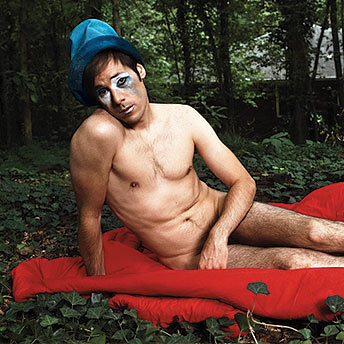
Of Montreal's live shows have evolved into over-the-top glam spectacles involving surreal props, whimsical sets and multiple costume changes — and, on one occasion, a fully nude Barnes performing against projected clips of Seventies gay porn. As the tours have grown increasingly baroque, Of Montreal have developed a reputation as kind of a Grateful Dead for arty, sexually ambiguous kids (plus David Byrne and Bono, who have both been spotted at gigs) who use the shows as an opportunity to dress up in hypercolorful garb, apply liberal amounts of makeup and glitter, and get supremely elevated on booze and drugs. In a few weeks, the band is heading off on its biggest tour yet, a theatrical production complete with elaborate costumes (drag, mythological creatures, giant kimonos), Madonna-size video screens and a cadre of "performance artists" who will act out choreographed scenes, including a brawl in a Deadwood-style saloon. "The inspiration is very Michel Gondry," Barnes says. "Or the kid in Rushmore that puts on those productions."


At rehearsal, Barnes' five bandmates appear to have been sent over from Indie-Rock Central Casting. Guitarist Bryan Poole has a Neil Young look involving bushy sideburns and an awesome tricked-out art project of a car (with a complicated back story about an artist friend's attempt to assemble a militia to capture a mysterious local known as the 8-Track Gorilla); bassist Davey Pierce lives in a garage next door among at least a dozen vintage mopeds in various states of operability; synth player Dottie Alexander sports a pink cheerleaderish skirt and polka-dot tights; and multi-instrumentalist Jamey Husband has an ascotlike scarf that recalls Fred's from Scooby-Doo. Rocking a cool straw hat and an unbuttoned cardigan without a shirt is drummer Ahmed Gallab, the latest addition. Gallab (who's been in town for less than a month and lives in the loft above the rehearsal space) emigrated from Sudan when he was a kid, and is eagerly waiting for rehearsal to stop so he can break his Ramadan fast. "There's two sides of Of Montreal," Barnes explains the next day. "There's the recorded music, which I've been predominantly doing myself. But the performing band is collaborative, and everyone is deeply invested emotionally and financially."


Barnes grew up in Grosse Pointe, Michigan, a well-off suburb of Detroit. "I listened to a lot of poodle rock," he says. "Mötley Crüe and Ratt were my favorite bands, and I covered my bedroom with pictures I cut out of Hit Parade and Circus." When he was 13, his parents — an accountant father (with dreams of becoming a stand-up comic) and teacher mother — bought him a black Pearl drum kit like Tommy Lee's. He formed his first band, Wit's End, singing and playing drums with a local kid named Mark Tremonti, who went on to become the guitarist in Creed. "Kevin was always a real talented guy," Tremonti recalls (the two haven't spoken since high school). "And he had a really cool voice and an artistic edge to him. Just to be able to write songs at that age was amazing. Our best song was 'Pull My Trigger.' It was pretty much a sex, drugs and rock & roll type of tune. You know, that Mötley Crüe thing. Dangerous lyrics. For a group of eighth-graders it was pretty edgy."


A year later, Barnes' father lost his job and moved to West Palm Beach, Florida, to look for work, leaving Barnes with a profound feeling of uncertainty. He fell into his first major depression. "Things were fucked up, and I was getting into trouble at school," he says. "Even though I wanted to be a rebel, there was a part of me that was sweet and wanted to be accepted." (Tremonti remembers, "He didn't really adhere to authority — he was a guy who probably got in trouble more than the average kid.")


Barnes began suffering increasingly debilitating anxiety attacks, culminating in what he refers to as "a weird drug experience." "It was my birthday and my friends bought me all this pot," he says. "Maybe because I was still developing, I had this bizarre reaction where I totally lost my mind. I really thought I was dying. After that I became conscious of how vulnerable we are psychologically. I still feel touched by that experience, which used to bother me. Like, what the fuck is wrong with me — I still feel as crazy as I did when I was a teenager. But now I feel like it's good, like it fuels my creativity."


In Florida, Barnes made a crucial discovery — British Invasion rock, particularly the Beatles, the Kinks and the Rolling Stones. "I was delivering pizzas, and I got The Kink Kronikles on vinyl," he says. "I put it on a cassette and listened until I wore it out." Playing along to an early Stones comp on guitar, Barnes taught himself chords, and by the time he finished school, he had released a collection of tunes on the influential indie label Bar/None. In search of a band, he headed to Athens after seeing the classic documentary Athens, GA. Inside/Out. "I was just dying to find like-minded people to play with," he says. "But I never thought in a million years that I would ever have a career in music — I was just a kid with a four-track recorder with no friends and no prospects."


Athens has two abiding passions: University of Georgia football and off-kilter art rock. Best known as the birthplace of R.E.M., Athens also nurtured freaked-out proto-alt bands such as the B-52s and Pylon, who exploded from acid-fueled UGA parties in the early Eighties. A decade later, when Barnes arrived fresh out of high school, a new scene was starting to take off — centered around a tight group of Beatles-and-analog-recording-obsessed indie bands that referred to themselves as the Elephant Six Collective. "It was just a great explosion of talent," Barnes says of his early years there. "Very bohemian, everyone living together, three or four people sleeping on the floor, everyone playing on each other's records. And there was the excitement of seeing Michael Stipe at a house party, wearing a straw hat, looking really cool. I'd be like, 'Oh, my God.'"


Until 2004's awesomely titled Satanic Panic in the Attic, the first Of Montreal record Barnes made by himself, the band was mainly inspired by the Elephant Six groups (Neutral Milk Hotel, Olivia Tremor Control, the Apples in Stereo among them), whom Barnes befriended shortly after moving to town. "They were kind of like big brothers to me," he says. "I sort of worshipped them — like, God, they're making records and going on tour, they have a publicist, a booking agent, all these things." Living together in a series of communal houses, including a $400-a-month brick bungalow he shared with Neutral Milk leader Jeff Mangum ("It was a total party house — we had a skateboard quarter pipe in the living room and no heat"), Of Montreal cut several low-fi albums between day jobs. "We all wanted to sound like the Beatles," Barnes says. "And everyone was turning each other on to lost psychedelic classics — like someone would go on tour and discover, like, Os Mutantes or the Pretty Things' S.F. Sorrow and bring it back to the circle. Everyone would be really influenced by them."


Of Montreal's breakthrough, 2007's Hissing Fauna, veers from synthy electro pop to sun-splashed R&B inspired by psychedelic-soul great Shuggie Otis (name-checked on the standout "Faberge Falls for Shuggie"). On about half the songs, Barnes' vocals shift into a life-affirming falsetto — but the lyrics are more harrowing than groovy. Hissing Fauna's emotional center, "Heimdalsgate Like a Promethean Curse," finds Barnes singing, "I'm in a crisis/I need help/C'mon mood, shift back to good again . . . chemicals don't make me sick again."


Barnes met Nina Twin — a talented visual artist and musician — at a gig in Oslo in 2001. After a long-distance courtship, she moved to Athens and joined the band on bass. When she became pregnant in 2004, the couple moved to Nina's native Norway to take advantage of the Scandinavian nation's free health care. "The government actually pays you when you have a child," Barnes says. "So we said, 'Fuck it, let's put everything in storage, go to Norway and see what happens from there.'"


Barnes suffered the deepest depression of his adult life, becoming mired in anxiety, paranoia and persistent thoughts of suicide. (Heimdalsgate is the name of the street where they settled in Oslo.) "I was totally isolated, totally broke, we were couch surfing, and I had never imagined myself a father. I found the concept of having a child terrifying, and it is terrifying. There was so much terror in my mind. It was so much easier to live in a dream state where all I had to worry about was myself." And as scary as the pressures of fatherhood were, the fear that he'd have to give up music was worse. "We had been a band for seven years, but never had any commercial success," Barnes says. "But the thing that motivated me wasn't praise or acclaim — it was the process of creation. So there was no reason for me to stop making music, until there was the idea that, fuck, if I have a kid . . . I'll have to stop fuckin' around and take care of my kid."


Encouraged by their booking agent, the couple returned to the U.S. to launch a tour behind the surprisingly popular Satanic Panic. After an attempt to bring their daughter, Alabee, on the road failed, the tour continued without Nina — who became increasingly resentful of being left behind. "Understandably so," Barnes says. "Taking care of a baby is nowhere near as much fun as going on tour."


With Nina at home, and fueled by champagne and antidepressants, Barnes began bringing his glam superqueen live-show persona to the afterparties. "I think the medication allowed him to function, but it also caused his psyche to become more disassociated from feelings like empathy — especially when alcohol is involved," says guitarist Poole, who records his own psychedelic side project as the Late BP Helium. "He'd do stuff like come up to you and stick his hand down your pants and start jerking off your dick. Or, like, try to make out with you, or take all his clothes off and just start walking around at parties."


Nina and Alabee moved back to Norway, and for half a year Barnes went on without them. But then something clicked inside. "I was looking for another Nina, in a way," he says. "But I realized what I had with her was so special. And I was missing Alabee a lot. My whole life I've been sort of detached emotionally, but with Alabee I understand true love. When I'd go visit them in Norway, Alabee would stand at the windowsill and cry because she wanted to see me. That's when you realize you need to be there for your child, because she needs you, she loves you. And you can't take that lightly."


For now, Barnes and Nina seem happy. They just bought a chic, modern, three-bedroom house in the leafy Athens neighborhood of Five Points, separated from the neighbors by tall, shady trees and a long driveway. The sun-soaked rooms feel homey and somehow Scandinavian, accessorized with high-end kitchen gear, an upright piano, framed expanses of cheery Marimekko fabric, Nina's artwork and shelves full of tasteful books (spotted: Portnoy's Complaint, Gravity's Rainbow, Bob Dylan's Chronicles, Dave Eggers' What Is the What).


Barnes' mom lives in a house next door and helps out with Alabee. When he's not making music, Barnes spends a lot of time in front of his new flatscreen TV, watching NFL games. "When I was a kid, like in high school and stuff, I felt very feminine," he says. "But I'm also very athletic, very into sports. I read ESPN magazine. I watch SportsCenter all the time. I'm a big Cleveland Browns and Indians fan."


Sitting on his big new patio as the sun sets, with Nina puttering around in an embroidered housedress, Barnes seems relaxed. His sunglasses are off, revealing sleepy, vulnerable eyes. But the couple's hard-won contentment could be shaken in a couple of weeks, when Of Montreal hit the road again for a yearlong tour. "I'm not always a very attentive husband," Barnes admits. "And there's no way I could be with Alabee all the time and never do anything in the adult world. Nina's a lot like me — it's hard for her to have a three-year-old as her only companion. But she's going to be performing the first four or five shows, and I'm excited. Hope springs eternal."

Saturday, June 27, 2009

2008-11-13 - Paste (part 7)

Of Montreal's Kevin Barnes: The complete Paste interview

Steve LaBate, photo by Jeremy Cowart |


Paste
: Tell me how you got your first record deal.
Barnes: I had this friend, we were like best friends in Florida, and he was way more in touch—he had an older brother who turned him on to some things, and he knew about the indie scene, about indie labels, which I had no clue about. I guess there was some list that had all the indie labels, and there was this book about how to put out a record on an indie label, or how to start a label or something like that. We wrote songs together, and I wrote my own songs on the side. He got a list of all these labels, so we made a demo. Nobody seemed at all interested except Bar/None who wrote back and said they liked what they heard and wanted to hear more, so we sent them more and they were like, “eh, that’s pretty cool,” but they weren’t that into it. So, in secret, I sent my own tape with my own songs and they were like, “hey this is cool, we like this a lot,” but this put me in a weird position with my friend because they rejected the songs we wrote together and they liked the songs I wrote myself. For a while, I tried to sneak him into the contract, where we’d write the songs together and I’d sing them, but I’d try to sing them in his style, but [the label] wasn’t really that into that, and eventually it was obvious they didn’t want that stuff, they wanted my stuff. After a couple years of trying to work it out, we started to split apart, and I realized I’d be better off working by myself, so I just signed the contract with Bar/None and put my own songs out.

Paste: Are you from Athens originally?
Barnes: No, originally I’m from Cleveland, Ohio.

Paste: After Florida, you ended up in Cleveland and Minneapolis for a bit. Tell me what was going on in your life then, and about what made you come to Athens.
Barnes: The funny thing is, the guy I was telling you about, my friend from Florida, he was a huge R.E.M.
fan. He got his hands on a copy of Athens, GA Inside/Out, the documentary. We were trying to find a place to move, to get a band together, and Athens seemed like this fantasyland. We really romanticized it.
Julian Koster [of the Music Tapes] lived in Athens at the time and was also signed to Bar/None with his band, Chocolate USA. I was talking to Bar/None, saying I was trying to get a band together, “Where do you think I should go?” And they were like, “we have this other artist who’s kind of in the same position you guys are, he lives in Athens and he seems pretty happy, you should go meet him.” So I called him and talked for two hours, and it was like, “this guy’s awesome, he’s totally on the same page.” My friend and I moved to Athens together, but for whatever reason, he decided he didn’t want to live there anymore and moved away, but I stayed. I ended up living in the same house with Jeff Mangum [of Neutral Milk Hotel] and Will Hart and Bill Doss [both of Olivia Tremor Control]. It was amazing. All of a sudden I realized, “I’m not a freak! There are people who are into the same kind of music, and four-track recording and the DIY ’60s-psych-pop thing.” I think that was super-important for my development, to give me the support to keep going. I’d felt like I was the only one doing this thing, so it was so exciting to meet a group of like-minded people—it’s like, “holy shit, you’re doing the same thing and you’re 10 times better than me, this is so exciting!” But after a while, sometimes when you’re a kid—I was 18 at the time, and I had saved up money to move to Athens, but of course I spent all my money in a couple of months. I couldn’t really manage to support myself so I had to move back to my parents’ house in Florida. I should have just moved back to Athens when I had the money again, but I decided to try a couple of different places. I tried Cleveland because my sister lived there, and tried Minneapolis, but that didn’t work out. Eventually, I came back to Athens and have been here ever since.

Paste: Since it took so long for Of Montreal to have any kind of commercial success, did you ever doubt yourself and doubt the music you were making?
Barnes: I never really doubted myself. It’s kind of like that thing—when you believe in it, even though it’s not selling, you can always say, “well, people just don’t get it.” It definitely was frustrating as hell. I wasn’t very happy during the early years. I hated working at these non-committal jobs and having to spend so much time doing that.

Paste: What kind of day jobs did you have?
Barnes: I worked at a video store forever, and I did some telemarketing—all sorts of jobs you can’t really get any fulfillment out of. It seemed really impossible to earn a living playing music. It was like this code I just couldn’t figure out how to crack. How are these other people doing it? Are they more talented than I am? Are they smarter than I am? Why can’t I do it? But I never gave up because there was no reason to give up. Making music was the only thing that fulfilled me. I wasn’t going to give up just because people weren’t buying my records because that would’ve deprived me of something super-important in my life, of my whole focus of existing. It was definitely frustrating and depressing, and I almost feel like I paid too many dues. I’ve been kind of scarred by the amount of dues I paid. I was so emotionally invested in every show, and you go on tour for years and play to 50 people, and you’re like, “What the fuck, this is our third record, our fourth record, our fifth record and we’re still playing to 50 people. What the hell’s going on? Why isn’t it clicking with people?” You just can’t figure it out. And then, like magic, all of a sudden people start caring and you’re like, “What happened? Why is it different now?” But I’m happy. I’m psyched people care now because I know all too well what’s it like to play when people don’t care.

Paste: I interviewed you before a show at the 40 Watt in Athens right before Sunlandic Twins came out, and you seemed like you were in a pretty good place at the time. You told me, “I got married and I felt really emotionally strong. I was stable and happy and using that energy to make music.” But between then and Hissing Fauna you went through a difficult period—some depression and you and Nina split up for a while.
Barnes: Yeah, we split up for 3 months.

Paste: What was this time in your life like, and what do you think brought on this depression? How was your mindset when making Hissing Fauna?
Barnes: When I look back on it now, I think that it all centered around having [my daughter] Alabee. Being married is one thing, that sort of connects you to the world on one level, but there are so many anxieties that come with being a father that I wasn’t prepared for. I was living in this fantasy world inside my head, in this sort of bubble, and having a child roots you to the earth on such a huge level. It really slaps you in the face, like, “I am mortal, I am not going to last forever, I am responsible for this little thing, I have to take care of her.” It puts you in this strange, fractured state of mind, especially when you’re so used to being self-centered and egotistical all the time. That was really difficult for me. Also, the scenario around her birth—we were in Norway and we didn’t have a place to live, didn’t have a house of our own. We were couch-surfing, which is so insane when I think about it now. Nina’s eight months pregnant and we’re couch-surfing in a foreign country. Even though Satanic Panic had done well, we didn’t really have any money to speak of. There was no way we could’ve had Alabee in the United States because it would’ve ruined us, we would’ve been so far in debt. But in Norway, they take care of their citizens—they actually give you money [when you’re having a child]. You don’t have to pay for anything; they give you money to help out. So we decided to do it over there. We took everything out of our house and put it in storage, and went to Norway—without a home, without a country, just floating around, waiting for this child to be born and freaking out. Sunlandic Twins was done but hadn’t come out yet, and I knew I was going to have to go on tour once the record was done. It was a really weird transitional period, and that transition was really difficult for me. It took me a long time to find my footing again after that. I think that was the cause of my depression, but also, a big part of it was being on tour and Nina has this two-month-old baby back in Athens, living in this little apartment. I’m on tour, which is like a party. I’m having fun and she’s got all the responsibility. I wanted to be there with her to help her, but this is my dream, this is what I’ve wanted to do forever and things are really evolving in a positive way: We’re playing bigger shows, selling more records. But, at the same time, Nina is at home and suffering, and there’s nothing I could really do about it. So I was torn. I couldn’t satisfy everyone and I couldn’t satisfy myself. Eventually, it came to a head, and that’s why we split up. It was like, “Well fuck this, I can’t do this anymore, it’s driving me insane. I’m not going to quit music, [and I’m] not going to stay home. I can’t do both, so you have to go away.” It was really fucking hard for her. It’s so like a man to be, “OK, you take the kid and go.” And [she] takes all the pain and responsibility, and it’s so like a woman to be able to handle it. I would’ve totally lost my mind, but she’s so strong. She’s a fantastic person. And for her not to hate me after that, I think proves how strong our bond is. I couldn’t think of being with another person, and I don’t think she can either, so she just forgave me and we got back together. All that happened while I was touring for Sunlandic Twins and writing and recording Hissing Fauna. “The Past is a Grotesque Animal” is about our breakup. And that was difficult once we got back together—here’s this record documenting our hard times but it’s only from my perspective. The world only knows my side of the story; they don’t know her side. I think for a while that was kind of hard for her too, me airing out our dirty laundry for the whole world to see. But then, she’s like me, she’s an artist as well, so it’s like, “I understand, that’s what it’s about, you’re an artist.” There are tons of examples of people going through these breakups or tough times and writing about it, and the other side has to deal with it being out there.

Paste: How was your mindset while working on Skeletal Lamping as opposed to the more turbulent times that led to Hissing Fauna?
Barnes: I’m slightly more stable now because I’ve been on anti-depressants for a couple years, and things are a little bit less insane—still insane, but less insane. I think I was in a happier state of mind because I don’t have to worry about money as much, and don’t have to worry about doing my part with Alabee because things have worked out, she’s in school and my mom’s there to help. I just focus on making music. In a way, it’s sort of established now too—it’s a silly thing, until you start making money with music, some people are always going to be like, “Don’t quit your day job.” When [playing music] becomes your primary source of income, people give you more respect and give you more space to do what you need to do. So I take advantage of that and spend as much time as possible working on music.

Paste: The word ‘whimsical’ has been used to describe Of Montreal. It’s even in one of the band’s album titles, and I’ve heard you use that word to describe the music before. What does that word mean to you, and do you think it’s still the best word to describe Of Montreal’s sound and approach?
Barnes: It’s definitely still a pretty good description of the band. When I think back on the earlier records, people would always say we were twee. At the time, I was super annoyed: “How can they say that, it’s not twee; it’s really emotionally heavy and blah blah blah.” But now when I look back, I’m like “Yeah, it is twee, it was twee, that shit was extremely twee.” At the time it really offended me, I didn’t really understand it, which is insane because it just shows how delusional a person can be. Obviously, now, things are a bit heavier emotionally but it’s funny how people have this perception of emotions like, things are light if they’re happy and dark if they’re sad. It’s not necessarily that cut-and-dry. It’s not like something has less value because it’s happy. But for a while I got into that state of mind: I don’t want to make super-happy music because it might seem like it has less legitimacy. [2002's] Aldhils Arboretum was actually the one record I was more influenced by the outside world. While I was writing that, I was trying to make something that seemed slightly more mature than the past records had been. I abandoned that with Satanic Panic and just did what I felt like doing. And now I’m still in that state of mind. [Aldhils] was just a brief departure into that world. It was also at a time when we had been a touring band for a long time, and we were trying to crack the code in a way: How can we do something that we still find creatively interesting, but that doesn’t make people disregard it as twee or preschool music, music for babies.

Paste: You’ve been making music under the name Of Montreal for almost a decade now. When you look back at all these different records and this body of work, how do you feel about it?
Barnes: I never listen to the old records, but I’m happy with them. I’m proud of them. I’m proud of the packaging and the personality of each one. I’m also really happy that each record has its own individuality, but it all works together. I kind of toyed around with the idea of changing the band name for Satanic Panic and closing that chapter and moving on. But I decided it’s cooler to have it all under the same heading. It’s interesting that it’s pretty diverse. When we first started getting [a lot more] people into the band around Satanic Panic and Sunlandic Twins, I knew they weren’t going to like Gay Parade or Coquelicot. It’s very unlikely they would listen to that and be like, “This is awesome.” I think in 20 years time, hopefully, I’ll still be putting out different kinds of records, and still developing as an artist and trying different things. Hopefully, Sunlandic Twins, Hissing Fauna and Skeletal Lamping will be just as foreign to what I’m doing 10 years from now as The Gay Parade is to what I’m doing right now.

Paste: When I was listening to the new record, I was thinking, “you could play a lot of this in a club.” But I bet [Coquelicot’s] “Good Morning Mr. Edmonton” would really clear a place out.
Barnes: Yeah, definitely.

Paste: The name Of Montreal came from a relationship you had with a girl from Montreal.
Barnes: Yeah.

Paste: How much do you still relate to that name? Or is it just something you picked and stuck with?
Barnes: At the time, it made sense, but it was very shortsighted of me to pick a name that was always going to be connected to this relationship I had. At the time, it was the most important thing in my life, but I should’ve known 10 years from that point it wouldn’t really have the same value. [But] I think just the fact that the impetus for calling the band Of Montreal was centered around a life experience—I think that’s still true. Everything I do is centered around my personal experiences. Each record is a time capsule for what I was going through at the time—what I was listening to, what kind of films I was watching, books I was reading, people who were in my life. So I think the name is still appropriate in a way, if you think of it in a broader sense than just a failed relationship.

Paste: Have you ever considering producing records?
Barnes: I’m actually doing my first production job in a couple weeks, with this French band. I’ve never really produced anybody before. I’m kind of excited, but also a bit nervous. I feel kind of like a charlatan even though I’ve self-produced and engineered all [the Of Montreal] records. I feel like I’m not really proficient enough to call myself a producer/engineer. At the same time, I guess I am, I am producing and I am engineering, and if people think it’s OK and they like it, then there’s no reason not to try it. I would really like to do it as long as I’m on the same wavelength with the person. I would want to collaborate with people and be creative in it, and not just sit there and say, “Oh, you want to record guitar now?” and then get up and move the microphone to the guitar. I definitely would want a more hands-on relationship with the band. But I think it would be a lot of fun.

Paste: I heard you were going to be in a new Joe Swanberg film. I guess it starts shooting in September?
Barnes: That has actually been postponed for a while. Originally, I was supposed to do this film with him and then he called me—“Hey, I want to do this other thing.” He’s been working with Noah Baumbach a lot, and he’s like, “We want to do this project that’ll be a bit different.” And then this production job came up with this French band, and I’d rather do that. But I’d definitely like to get into acting at some point, if it was a good role. I’d really like to do something where I could be really freaky, like a Crispin Glover thing.

Thursday, June 25, 2009

2008-11-24 - Paste

Catching Up With... Nina Barnes, Of Montreal's creative partner
By Steve LaBate, on November 24, 2008 4:00 PM


Of Montreal frontman (and Paste's November 2008 cover subject) Kevin Barnes and his wife Nina have been through a lot together since they met at a music festival in Oslo, Norway in 2001: A few amazing nights in Europe, months of long-distance email correspondence, flights across the Atlantic, a tour, plenty of musical and artistic collaboration, a wedding, a child, struggling to pay the bills, a painful breakup and a joyful reunion. In this exclusive Paste interview, Nina Barnes sheds some light on her husband and his work, and tells her side of the Of Montreal story.

Paste: Tell me about your creative role in Of Montreal.
Nina: Oh, dear. (Laughs) Back in Norway I used to play music and I played in the band. I played bass with Kevin for one tour, and it was so much fun. But then I found out while we were on tour that I was pregnant, so that kind of ended my musical career in Of Montreal, ’cause having a kid, and tour buses and that sort of thing, it’s not very simple, it’s not very ideal for anyone. So, I had always been drawing and got suddenly a lot of time on my hands just walking around being pregnant and finding an outlet for my very scattered brain. (Laughs) So I started making posters, doing T-shirt designs and all kinds of stuff like that [for the band]. [Kevin’s brother] David always did all the album art and everything, and his role in the band was very strong. I think a lot of the early fans saw [David] as the heart of Of Montreal—you know, the aesthetic of Of Montreal. So I never wanted to—what do you say?—like, take his role. We are such good friends and we have this like—when we get together, we just overflow of ideas…

Paste: You and David?
Nina: Yeah, me, David and Kevin. Like, if we sit down, things are bound to happen. And we just started collaborating on small things and one thing led to the other and, suddenly, you know, we came up with this idea for Skeletal Lamping. We wanted to do something totally different, and we decided we wanted to do it together. So it’s just one big collaboration. You know, like Kevin, of course, making the music and then me and David listening to the music and having ideas.

Paste: So all these great new ideas for packaging the new album, was that something that you and David came up with?
Nina: Initially, David had the idea that we should make a lantern. And we were all like, “Yeah!” And then we started talking about packaging, we started talking about—for me, I’m so old, you know, when I started buying music it was all vinyl. And I just remember the feeling of, you know, buying Clash, for example, like Sandinista! And the vinyl with this pamphlet inside, like comic books and all this crazy madness, and that sort of excitement of having art with the music. We just realized we should actually make people excited about that part of an album or a record—[to remind them] that it doesn’t have to be that boring, mundane little square. That doesn’t really matter anymore because everyone is downloading things. So we were like, “Can we give them something else? Something they can actually appreciate and have in their homes and be a part of their life?” And then one thing took the other and we started out with the lantern, but it became hard for the CD to be the lantern for the packaging. And from then on, we knew we had to be very inventive in how we did things. But the construction, the sculpture that me and David made for the CD —you fold it up and you put it together. It’s very easy and becomes this pretty big sculpture. Just trying to find that shape, and making it work with the packaging, was such a huge challenge and I think David did an amazing job. He was so amazing. From the engineering of it, he stared filling it up with art, and he made something and sent it over to me, and I would make something and I would send it over to him, and then we had one of those huge disagreements about something, but it turned out to be a good thing and we all agreed upon, you know, changes and everything. So we really have a very good flow between us when it comes to the working process.

Paste: Kevin also told me that when he’s making an album or writing songs, he’ll frequently bounce ideas off of you and David. Can you tell me a little bit about that?
Nina: Yeah. Kevin will be very open—I think he trusts David and me and our opinions, and he takes them into regards. In our old house, he had a studio in the attic and he would make music like for 12, 14 hours and then he would some down time and he’s like, “Listen to this,” and I’ll listen to it and then comment on it and say, “What if I did this for the bass, adding something here, [or] what if you layered there.” And he doesn’t necessarily agree with me, [but sometimes] he’ll say, “OK, no, that’s a great idea.” He has a lot of respect for both David’s and my opinion, and I think it’s because we’re so close, and I think both me and David are kind of connected to [Kevin], so we understand immediately what he’s trying to do, and it’s just an amazing thing—to encourage each other and be a part of each other’s creative outlets.

Paste: How and when did you and Kevin meet?
Nina: Oh, a long time ago. We met in Oslo [in 2001]. He was on tour in Europe with
Great Lakes, and he was playing one show at a Swedish festival with Of Montreal. They played two shows in Oslo, and they stayed at my best friend’s house ’cause the whole show was arranged by the record label my band [The Ethnobabes] was on, and the whole crew, there were like eight or nine people, they stayed at my friend’s house, and that’s how I met them. Actually, I knew of Of Montreal, I had the old vinyl and everything, and really loved it and was excited to see them. And after one of the shows we talked for a couple of hours and hit it off. There was a connection there— just telling stories and talking about music and art and life and my crazy family. If I get started, I can talk and talk and talk. So it was really pleasant, and then we just had some email correspondence for like six months. And then I decided to come over here to visit. That was my first trip to the U.S. That was in 2002. And then I came back like 3 or 4 times, and we were a little bit back and forth about the whole deal, but the last time I came over it was like, “How the hell are we going to be able to stay together?” We were like, “Well, it’s the only thing, we have to get married”—so that I could have a green card, you know? So, I flew back home to my Norway, and I arranged everything in like one month, and Kevin and his parents and David came over, and we got married in Oslo. And I moved to the U.S. after that. And I love it here!

Paste: When I met with Kevin last time, we talked a lot about the difficult time the two of you had between Sunlandic Twins and Hissing Fauna. Kevin was going through a depression, you guys split up and he left you to take care of [your daughter] Alabee on your own. I’ve heard his side of the story, but I was wondering what this time in your life was like? Because he said he got to tell his side in some of his songs, like “Past is a Grotesque Animal,” but that you’ve never been able to tell your side of the story.
Nina: It’s true, yeah, it’s true. But I have a double view of Hissing Fauna. I see the artistic statement. And even though listening to it can hurt, I totally respect it, and I’m totally like, “This is his artistic freedom, his freedom to take something very hard and difficult and make it into a personal statement, an artistic statement.” And I think it’s beautiful and moving. I really, really love that record. But it’s not something I’m going to hang out and listen to and rock out. I couldn’t really do that. But it’s true. When the record was released, it was interview upon interview about our breakup, and it was a story about me and my child, and I had no say in it. I became this sort of object. And at first, I was really like, “ But no one really knows me.” I became like a character in a book. On a totally personal level, of course, it was rough for both of us, but it’s one of those things—I roll with the punches in life. When you have a kid you just have no choice other than to shape up, take control of your life and make the best of it. And also, it’s a source of humongous inspiration for both of us, you know, artistically.

Paste: Having a child?
Nina: No, well, having a child and having the big break up, you know? Like, being a single mom. I have to say for every single mom or single dad out there, it’s a hell of a job. I have so much respect for all those people who are alone in the world and bringing up a child. It’s not easy. But you become aware of those aspects of life, and then you really appreciate the little time you have. For me it’s like—Kevin is very much like me: When he is in the process of making things—he does it all the time and he doesn’t really stop—but he will work for like 14 hours. So, basically, I’m taking on the majority of the childcare.

Paste: Is it difficult to find time for your own art?
Nina: Well, since I’m from Norway and Kevin’s touring so much, we travel so much, so it hasn’t been possible to have Alabee in any kind of daycare. But she just started school now, so that frees up the day for me, so I can do my stuff to a much greater extent. I have more time on my hands, which is an amazing feeling. But I think, actually having to work under pressure, it makes you extremely focused. Anyone who’s had a kid knows you just have to organize your time well to do everything. It actually has been a really positive force in my life because my mind wanders off, and there’s so many distractions in life. So it made me actually focus so much more. I love [Alabee] more than anything, but being a stay-at-home Mom, I don’t think it really applies to my personality. So I had to have my own thing, I had to have my outlet. I think that also became a very strong force. When Kevin was on tour, and I was home with Alabee, when she went to bed I would just start making stuff. I lost an enormous amount of sleep. It’s probably going to shorten my life a little bit, but I’m having fun, so it’s a good thing. Now, I have Gemini Tactics—it’s my company name, or at least some sort of name for what I’m doing. I make T-shirts and underwear and bags and prints and all sorts of things that I sell online. And I do illustration and designs for other people, so I can earn some money for what I do, which is a great feeling.

Paste: With all that going on for you, creatively, and with Of Montreal finally starting to have success, how do you feel these days?
Nina: It feels great. We were able to actually buy a house. That may seem like a small thing for some people, but for us, it was like, “HOLY SHIT!” And we can actually afford to pay our bills! When Kevin started in 1997, the success didn’t come until Sunlandic Twins, a little bit, and then with Hissing Fauna. Living, it was hard, and having a kid, and the expenses of that. Now, being able to—it’s not a luxurious life, but it’s comfortable. Ant that’s a good thing, even though we were terrified buying a house, just getting a taste of, “We’re settling down.” I think it’s probably a little bit of the Peter Pan syndrome; we don’t really want to be adults, but our life situation—having a kid—has forced us to be that, at least for parts of the day. But hopefully we won’t get mundane and boring. We’re always out there looking for some sort of enlightenment, through reading and philosophy and art and books and film or whatever. It’s all about creating a lot of friction, and keeping yourself mentally stimulated.

2008-09-01 - Venus Zine

From Venus Zine.


Photobucket

Wednesday, June 24, 2009

2007-03-?? - Chicago Innerview

The Universal Experience of Depression.


If band biographies have taught us anything, it’s that one’s career success is often inversely proportional to the success of one’s interpersonal relationships. Sure, it’s a laughable music biz cliché — the climb up the ladder (or the charts, as it were) heralding the downward spiral, with the whiskey bottle only revealing its projectile properties until after the sold-out show — but that doesn’t mean these things can’t (and don't) really happen.

Take Kevin Barnes, creative core of Athens, Georgia’s Of Montreal, who perfected his sunny candy-coated synth-pop sound on 2005's infectious Sunlandic Twins, only to then battle depression and a separation with his girlfriend, Nina, and his now two-year-old daughter, Alabee. Meanwhile, Of Montreal was becoming a critical darling and playing sold-out shows across the country. While Barnes’ tale may not be of What’s Love Got to Do With It proportions, Barnes, unlike Tina Turner, was able to mend his wounded personal life and take a great artistic step forward in the process.

BARNES' INNER VIEW
“I started to totally freak out. I had this really serious, kind of like the very beginnings of this insane chemical depression period. It was, like, insane and almost led me to kill myself...”


The recently released Hissing Fauna, Are You the Destroyer? (Polyvinyl Records) is Of Montreal’s most introspective effort to date, but, thankfully, the bright harmonies and rhythmic fun that has become the band’s fingerprint isn’t lost along the way. Barnes pours his heart out, but only so we can dance happily along. Chicago Innerview called Barnes during a tour stop in Las Vegas to discuss how everything from anxiety to antidepressants to alter egos factored into his band’s newest album.

Chicago Innerview: Can you talk about what you were going through when you were writing and recording Hissing Fauna?
Kevin Barnes: The very first part of the record I wrote before my daughter was born. I was living in Norway because my girlfriend is Norwegian and we didn’t have health insurance because we thought it would make more sense — because they have socialized medicine in Norway — to have our daughter over there. So we’re living in Norway and I started to totally freak out. I had this really serious, kind of like the very beginnings of this insane chemical depression period. It was, like, insane and almost led me to kill myself. So all the early songs like 'Cato as a Pun' and 'Heimdalsgate Like a Promethean Curse' and 'A Sentence of Sorts in Kongsvinger' — all those songs were written and recorded while I was living in Norway, during the beginning of that really insane period, using the very limited resources that I had — just a laptop, a MIDI-keyboard and a microphone. At the same time, right after my daughter was born, I went on tour in support of Sunlandic Twins because that record had just come out. I had this newborn baby that was like two or three months old and I had to leave my daughter and girlfriend back in Athens, Georgia. It was really difficult for me because the band was taking off at that point. We were sort of finally reaching a larger audience and feeling like all our hard work, all our paid dues were sort of paying off. But at the same time, I couldn’t really enjoy it because I knew that I was putting my girlfriend and my daughter in a crazy situation. I just basically abandoned both of them to go on tour and pursue music. Everything was just on fire, exploding all around me. So then my girlfriend and I split up and she went back to Norway with our daughter and I kept touring.

Chicago Innerview: Had you experienced depression before?
Kevin Barnes: No, never. That was the thing. It totally just hit me. I had never ever seen anything like it. And coming from this sort of blue-collar background, my parents never accepted depression as a real affliction or as a real physical thing. It was just basically like, ‘If you’re depressed you need to just pull yourself together. You can do it. Don’t be weak.’ So I had to kind of cast that aside and go, 'Okay, I have a problem and this is something that I need to face and I need to fix. If I’m smart about it, then I’ll be able to recover from it. If I’m stupid, then I’ll either get into serious drugs or just try to find some type of escape.' That’s why a lot of the songs, or some of the songs, make reference to spiritual longing, you know, like desperate for something to sort of help me. I needed help, but nothing was helping. You know, no conversation is going to help, no therapy, no drinking or drugs, no exercise, eating healthy, yoga — I went through all that stuff and none of it helped. And then, luckily, I got on antidepressants and that did help.

CI: Were you afraid the medicine would inhibit your creative impulses?
KB: It hasn’t turned me into a zombie. I was worried it was going to make me like a numb person and not feel anything emotionally. Luckily, I was on a pretty low dose of this thing called Cymbalta, which I still take, but I take it like every other day. And to some degree it made me more detached when I was taking it everyday. I was on the medicine before my girlfriend and I split up, and I think that being on the medicine just made me feel like, 'Okay, I don’t really care. I can’t help you right now and it doesn’t bother me right now because I’m on medicine.' So we split up. That’s what 'The Past Is a Grotesque Animal' is about — the split-up, that time apart not knowing if we were going to get back together and freaking out, to some degree, about that.

CI: Lyrically, Hissing Fauna reflects your experience with your separation and depression, but musically it’s a very jovial record. Like on 'A Sentence of Sorts in Kongsvinger' you’re candidly singing about a nervous breakdown over keyboards that sound like the soundtrack to a bike ride on a warm, sunny day.
KB: Well, I was relying on music in a way that I haven’t really in the past, sort of using it as a form of therapy. It was the only real escapism afforded to me that actually helped in any way. I wasn’t really writing songs and then going into the studio after I had worked out the arrangements. For the first time I was composing everything in the studio, in the moment as this form of therapy. So all the songs up until 'The Past is a Grotesque Animal' were written when we were still together. I wrote 'The Past is a Grotesque Animal' after we broke up. And then the songs after 'The Past is a Grotesque Animal' I wrote after we had gotten back together. So that’s why the music on Hissing Fauna, a lot of times, doesn’t really make sense with the lyrical subject matter. I was trying to create something that was more buoyant and upbeat and happier-sounding to lift my spirits, rather than create something that matched my mood, which wouldn’t really help me anyway because it would just reinforce this darkness that I really didn’t want to be a part of anyway. I was just trying to create something that was a bit more optimistic and positive and hopeful musically, but then when it came to the lyrics, there was no way I could really fake that sort of thing. I couldn’t really say, ‘Oh, life is grand,’ you know?

CI: I’ve heard the second part of the album is also about you reinventing yourself as Georgie Fruit. Was this alter ego another part of your escape?
KB: It’s definitely a strange occurrence. To some degree, I have always experimented with different recording personas and stage personas. But this new character, Georgie Fruit, definitely sprung forth after the breakup with Nina and the reconciliation and all that. He’s like this middle-aged, black, she-male with a checkered past; he’s been to prison a couple times and he was in a band called Arousal in the late-‘70s. I created a pretty thorough backstory for this character, so he seems very real to me. It, in a way, enabled me to breathe life to this different aspect to my personality, my creative spirit.

CI: Now that you’re doing better, is it going to be tough to relive the Hissing Fauna material night after night on tour?
KB: Unless I just completely go through the motions, I’m going to have to relive the inspiration for those songs. But it also translates into something more positive when you are performing it with your friends in front of an audience of people that are, ostensibly, nice and cool and supportive and can also somewhat identify with universal experiences like depression and suicidal thoughts and intense anxiety.

Of Montreal :: with Walter Meego :: Metro :: March 15.

2007-04-18 - Creative Loafing

Of Athens
Published 04.18.07
By Cooper Levey-Baker


Rennie Solis
YOUR NORMAL, AVERAGE, EVERYDAY INDIE ROCK BAND: Kevin Barnes (standing, middle) and band mates Matt Dawson(left to right), Dottie Alexander, Jamey Huggins and Bryan Poole
INFO

of Montreal

Sarasota Film Festival Independent Visions, 8 p.m. Thurs., April 19, Minxx Nightclub, 7111 S. Tamiami Trail, Sarasota, 923-6200. $20.

The website for the loose indie rock collective known as Elephant 6 features a bewilderingly dense, overlapping network of bands and individuals from Athens, Ga. Twenty-five groups are listed as full-fledged members of the scene; 14 others are dubbed "The Extended Family." Entries on the history of each band are chock full of hyperlinks to bios of transient band members and brief collaborative projects.

Trying to make sense of who recorded what with whom in Athens over the past 15 years quickly makes you dizzy.

For of Montreal bassist Bryan Poole, though, the Elephant 6 thing is notably less complex. The scene "was just a group of friends getting together making music," he says on the phone from Athens during a tour break. "[It] just kind of had a name." Poole had grown up in Columbia, S.C., and was lured to the college town by word-of-mouth buzz about its first-rate music scene, still hoppin' a decade after luminaries like R.E.M. and The B-52's lit it up.

"Back then the Athens scene was more like math rock," Poole remembers. "It wasn't quite the Seattle grunge thing, but it was really heavy." Things were "heavy" in most underground rock spots around the country during the early '90s, with bands offering up variations on the post-punk blueprint but always keeping the noise and the chaos right up front.

Elephant 6ers, though, had a jones for something a little different.

"The Elephant 6 thing was a dollop of psychedelic sunshine," says Poole. That meant flourishes like brass sections and keyboards, and hooks -- loads and loads of hooks. Scenesters that normally regarded musicianship as more of a handicap than an asset weren't quite sure what to make of the new breed. For Poole, though, the period was magical: "Back in the day, it was a utopian collective feeling."

Poole began playing in various incarnations of the band Elf Power, led by friend Andrew Rieger, and joined of Montreal's inaugural lineup, put together by chief songwriter Kevin Barnes, circa 1997. While of Montreal is generally regarded as little more than a pseudonym for Barnes' solo work, Poole -- except for a brief stretch when he left the band because playing in two groups "just got too hectic" -- has been there for the entire run.

"I've been his foil behind the curtain, behind the terry cloth or something," Poole says. "We've been friends for a long time."

Although the Elephant 6 scene started producing some nationally recognized acts (The Apples in Stereo, The Olivia Tremor Control) and even one indisputably classic disc (Neutral Milk Hotel's 1998 burner In the Aeroplane Over the Sea), of Montreal still languished on the Athens B-list.

But while of Montreal toiled in small venues, the Elephant 6 sound started conquering indie rock clubs across the country.

Today, you can hear the bands everywhere. The Shins -- early Athens fans -- took the town's '60s pop obsession all the way to the no. 2 spot on the Billboard charts this past January. The Decemberists performed a similar feat last fall. Even the relentlessly serious art rock of The Arcade Fire owes something to the expanded sonic palette the Elephant 6 groups gave to the underground.

Indie kids today -- for better or worse -- would much rather be pop than Iggy.

Poole doesn't sign on to my theory, calling the game of Who Influenced Who "a big puzzle." He was flattered and honored, though, when The Shins played Athens before they were big and specifically invited the town's indie elite to the show.

The new zeitgeist helped of Montreal generate more and more buzz over its past few albums (2004's Satanic Panic in the Attic and 2005's The Sunlandic Twins), but no praise had ever matched the acclaim that greeted the release of Hissing Fauna, Are You the Destroyer? early this year. Tastemakers at Pitchfork gave it a rep-confirming 8.7.

And the disc is superb. "Suffer for Fashion" kicks it all off, with programmed beats, buzzing synths and Barnes' funky upper-register vocal hysterics. "Cato as a Pun" accentuates a not-quite-hip-hop beat with an assortment of odd sound effects and electric guitar squiggles. "Labyrinthian Pop" references the sexed-up funk Beck brought on Midnite Vultures.

The melodies are so bright, I forget pretty quickly that the songs originated in the heartbreak and confusion of a tenuous marriage and an unexpected child.

Before Barnes' wife Nina gave birth to the couple's now-2-year-old daughter Alabee, Barnes poured all the worry and self-doubt of impending fatherhood into some of the songs that would eventually populate Fauna.

Nina, who played bass in the band, was now saddled by motherhood and couldn't tour with her husband. "We're like, 'Wow, we're doing better than ever! We're selling out shows!' but Nina's at home," Poole remembers. "You know, the typical calling home, 'We sold out so-and-so!' and, 'Well. Great.'" After the conclusion of that jaunt, Barnes struggled. "All these things came to a head," Poole says. "And Kevin had a psychosis. He didn't want to leave his house. We came home from tour and he didn't leave his room."

Poole had to begin conducting band rehearsals sans Barnes and the entire group had serious doubts about whether of Montreal would continue. Barnes was eventually coaxed out for a second tour, only to have Nina and Alabee move to Oslo, Norway, while he was on the road. "The pinnacle of the record, 'The Past Is a Grotesque Animal,' he wrote that one after Nina had left him, and he's just alone and spewed it all out," says Poole.

The couple eventually reconciled, but despite Fauna's critical triumph, touring has still proven tough on Barnes and his wife. When I ask Poole if they're bearing up better than before, he answers with a curt "nope," although he notes that now that Alabee's no longer a newborn, she can accompany the band for one-week stretches, helping the mindset of all involved.

of Montreal follows up its Sarasota Film Festival date with a long string of European shows, and then it's on to more recording or gigging later this year. Barnes -- ever prolific -- has already scripted a new set of tunes. And while times seem better for the singer, Poole assures me that the fresh material is "definitely showing a bit of the psychosis in there as well."

Based on Fauna, I wouldn't want it any other way.

Tuesday, June 23, 2009

2008-07-14 - You Ain't No Picasso

An Interview with Of Montreal’s Kevin Barnes

July 14th, 2008


Of Montreal’s new record Skeletal Lamping, like the band’s live show, is a take-it-or-leave-it showing of craziness. Songs not only have schizophrenic changes in melody, but are also lyrically at war with themselves from minute to minute. And as you might expect from a group who often perform in dresses, once in the nude and always with makeup, Kevin doesn’t really care what you think. He’s not writing for the fans, he’s not writing to please his label and he surely isn’t writing to please us armchair music critics.

For the first time in over ten years, Kevin Barnes is writing for himself.

This past June I was lucky enough to be invited down to Athens, GA to hear Skeletal Lamping shortly after it was finished. After sitting in silence for about an hour to listen to the record — all the while wishing I’d brought a pen and paper to jot down notes about album (Sparks, Funkadelic and Prince produced by the Dust Brothers?) — Kevin was nice enough talk for a while about a great many things. He shared a lot about his motivation for the new album (the Outback Steakhouse commercial), how his wife gave him the courage to start writing personally again and what it was like to cover his three-year-old daughter’s favorite song.

An Interview with Of Montreal’s Kevin Barnes


YANP: Obviously this record is very different from anything you’ve done prior. Was it a conscious decision to move away from the old sound or is that just where your writing took you?
Kevin: For some reason I’ve been gravitating more towards… I mean there’s always going to be more pop sensibilities there because I love pop music, but I try to incorporate different things. Obviously some funk influences and even some hip hop influences.. I feel like I have more in common with contemporary hip hop artists than I do contemporary indie pop artists.


Do you follow any producers?
I always like the stuff that Danger Mouse does, I think he’s awesome. Even like Timbaland’s stuff I think is really cool usually. Pharell, a lot.

Did your time in Norway influence you musically?
Disco is pretty hot over there still. Not like 70s disco, but like club music. Electronic music is big there too. I didn’t really meet anybody or see any bands, but that probably did have an effect on me. You know, that sort of sophisticated electronic music. That definitely played a part. A lot of this record I actually did write and record when I was in Norway last summer, though.

So Skeletal Lamping is a very sexual record. Were those themes in your mind at the time or a part of Georgie Fruit?
It was definitely, for whatever reasons, one of those natural, organic things that just happen. I just was compelled to do that and sing about those things. Those were the things that I’d be singing in the shower and go upstairs and start working on. It wasn’t anything premeditated (laughs).

Is the full album supposed to be taken as fully from Georgie Fruit’s point of view or just occasional bits?
I don’t even separate them in my mind. the Georgie Fruit character is not separate from Kevin Barnes. I can’t really say “oh that was just this role I was playing,” because it’s just a part of my personality. All of it is just a part of me anyways.
Have you seen the documentary This Film Not Yet Rated? No.
It’s about the MPAA and how they focus more on sex rather than violence in movies...
It’s a weird thing. A lot of people think about that: why is sex so dangerous? Why is it a frightening concept.
Well it seems handled differently in this record. All your characters seem comfortable with sex.
Definitely. You should be comfortable.
When I make a record, I try not to let the world in. It’s kind of me in my own little island in my head. The only reason you’d ever feel insecure is from worrying how other people would perceive you; and if you’re the only person in the world, you’ll be totally secure.
Do you still do most of the instruments on the record?
I did basically everything on this record myself. There’s some cello and one song where basically everyone in the band plays something.
I picked up on a couple songs you’ve been playing live for a while. Did anything change in “Softcore” or “Our Last Summer as Independents?”
Some lyrics changed and some new melodic parts were added to Last Summer, but Softcore was basically done when we performed it last summer. We didn’t really change anything.

Was creating this album more about linking melodic sections together or about seeing where the song goes?
Some of the things that seemed to flow better were probably ones where I would make one section and then use that as inpiration for the next section and then use that. And then some of the stuff I just tried to piece together in a collagey sort of way. It’s a very collagey sort of record.
A lot of stuff is me intentionally putting two things together that weren’t written with each other in mind, so it’s kind of awkward when they’re next to each other. But I liked that when I stared doing that. It’s cool because you don’t expect that. Like I said in the blog, a lot of the time you can finish the artists’ sentences. That’s obvious. That’s obvious. It’s always obvious. At times it can be great, but I didn’t want to make anything obvious. I wanted to surprise the listener.

Listening to the album for the first time was so strange. There were parts that would sound really good, and I’d be thinking “yeah, keep that going,” but it always switches before you’re ready. It’s like musical denial.
I think that’s why it has a lot in common with Coquelicot, because nothing is really extended. Even though something might be really cool and you’re like “oh, I wish that would go on longer,” it never goes on longer. It’s always replaced by something new. That could be potentially be frustrating for some people if they like something, but hopefully they’ll go back and listen to it again.

The record kind of feels like … when it starts, the first maybe fifteen minutes are kind of conventional and makes sense but then when you get in the heart of it, that’s when it becomes more dense and more complicated.
Yeah. It’s one of the more forward songs on the record, but ends in that great whirl of layers. It’s a great first song for the record.
Actually, it was intended to be the last song and then everyone was like “man, you should put that first” because it’s the most different as far as coming out of Hissing Fauna into that song. The second half is sort of abrasive…
Yeah… [Laughs] Sorry, I’m still trying to process the record.
I understand. It’s like seeing this complicated movie just one time and then you’re like “God… and then that one part!” You can’t photograph music in your mind like you can with movies. With movies you have all these other things that are being recorded in your mind like dialogue, images and emotional memories and things like that. With music, you don’t have any sort of visual photographs.

Does doing music for movies interest you at all?
It would, if I could get into the movie. It’s weird, because with that stuff — unless the movie’s already done and you’re making music to it — it seems difficult if someone was like “well here’s what I want, make music to it.”

I remember reading how Leone extended the opening scene in Once Upon a Time in the West because he didn’t want to edit down the song Morricone had written for it.
Oh, nice.

What will you remember when you look back at this album?
I think that… I think it really was inspired by the commercial backlash when I was getting a lot of backlash from the Outback Steakhouse commercial. I think it did influence me as far as like “I’ll show them I’m not a sell-out. I’ll show them how talented I am…. I can’t be marginalized. I have a lot of value”
I’d never had to deal with that before because we were always so underground. It was a weird thing to face. You can only have backlash if you have success and we’d never really had success, so I’d never had to deal with backlash. So I definitely think that played a part psychologically in the making of the record.

Who confuses who more: you or your fans?
I definitely am not confused by my fans. It’s hard to tell if people are fans.. because a fan is a temporary thing in a lot of cases. People will enjoy a thing and then get bored with it and move on to something else. So does that make them less of a fan when they were a fan? It’s kind of like love in a weird way: when you break up with someone, does that completely undermine what you experienced together and the good times you had just because you’re not together now?
Dealing with criticism is confusing when you put out records. It can be really distracting and weird. I remember when I put out my very first record, Cherry Peel, I was so excited and so full of the joy of making music and sharing it with the world. It got so many bad reviews that I read that I was like Oh man, the world is a bitch, you know?

Were the escapism and fictional characters in the Gay Parade and Coquelicot reactions to that?
Definitely. In a way, it was to protect myself. I’m not going to make myself vulnerable. …But then those records got bad reviews too (laughs)

When did you make the switch to being comfortable writing about yourself again?
I guess when I got married. I’d always been single. I was basically celibate all through my mid-20s, I never dated anyone and kind of lived in this fantasy world. When I met Nina, she somehow gave me this great sense of empowerment. I have this great person at my side and that’s all I need. I don’t need the rest of the world’s approval as long as I have this one person who believe in me and supports me. It’s funny how that works. Having my brother, having Nina — that’s all I need. If they say “man, you’re doing some good stuff” then I know my work has value.

I caught the “I wish David was here” lyric in new record. That’s really great. I love how you summed all that up in Du Og Meg: “his thoughts were not just rubbish.”
It seemed like that was almost what I needed. Because I had gone through this period of being disconnected emotionally. My emotional world was not really finding itself within my artistic production.
Was that frustrating?
I had become really cynical. In the back of my mind — even though it sounds dreadful — trying to figure out a way to reach people and to have a song that actually mattered to people and wasn’t just throwaway bullshit. I felt like a lot of stuff I had done, just because I wasn’t selling records, I thought “well these songs must not be very good because nobody’s into them and they’re not resonating with people.” But then once I gave up on that, organically it all just worked out and people started caring about us and we started reaching a larger audience.
Was it a coincidence that stylistic chances match up for the ability to be more personal?
There was a weird, almost fascist state of mind in the Elephant 6 collective, at least from my perspective. There were sort of these rules to keep it analog, keep it 60s and 70s. There are sort of unspoken rules in a weird way and I was so influenced by those guys. They weren’t dictating these things, but that’s what they were into and I was so smitten.
But I wanted to branch out. I wanted to do different things. I felt a bit nervous, you know, about drum programming and using midi instruments because those were definitely off limits within that clique. Or at least no one did it and it was not respected. You had to actually be able to physically be able to do it.
Then I realized that was holding me back and I really wanted to explore this other kind of music. We all lived in a house together and I moved out of that house and into a house with Nina and my brother. Then I didn’t have anyone in my immediate space who could influence me. Everyone in my immediate surroundings was very positive and very supportive and everyone wanted me to try something new.
Who all did you live with before moving in with your brother and Nina?
The whole band was living in like a big house together out in the country for a couple years. it sort of became an entropic sort of thing: fighting over stupid things, living in this insular environment that was far enough from Athens that you didn’t really want to leave the house. Even though it was positive at times and we definitely had good times together, I felt smothered by it. If I was going to make a recording by myself where I’d play the bass, Derek would be like “what’re you doing, man?” and if I did drums, Jamie would be like “when am I going to play?” So it was good for me to get out of that and into my own world. Because before I met those guys I used to do everything myself. In high school, that was my great escape from the harsh realities of life: just put on the headphones and lose yourself in the creative process. And when you’re collaborating with a lot of people, you can’t really do that as easily. There’s a lot of compromising that goes on and a lot of political stuff you have to deal with. When you get alone and do it by yourself, I get a great surge of energy that I’d been holding inside for so long. And finally when there was no one to tell me no or to tell me “do it this way” or whatever, it was like an explosion of creativity and I still feel like I’m kind of riding that wave.

Are you writing more songs because of it?
When you’re working with a bunch of people, there are a lot of schedules that you have to deal with. But when you’re doing it by yourself, then it’s whenever you feel like it — which for me is all the time — I just go and work, I don’t have to say “oh, I have to wait for Derek to get off his shift at the coffee shop” to do the bass line, I just do the bass line … I do six bass lines! (laughs)

Has music ever felt like work?
For me, the process is what’s exciting. Listening to the record when it’s done is exciting for a little bit, but I never listen to my old records and I don’t really like playing most of the old songs. So this record is new and it’s kind of exciting to listen to but in a couple months I’m not going to want to listen to it and I’m going to want to do something new.

Is that why you like to debut new material live?
It takes so long for a record to come out — it takes five or six months usually — that I have half a new album recorded.
So I wanted to ask you about Arlene… [Kevin's guitar has "Arlene" scratched into it]
I was living in Minneapolis. When I got out of high school, I moved around a lot trying to find people to play with and I’d heard Minneapolis had a scene. I just happened upon this used guitar shop and I got Arlene there really cheap. And it’s a great guitar.

I don’t know the story behind the etching. It was there when I got it and the guy at the store didn’t know either. I mean, imagine just some weird dude, maybe some metalhead dude just like “this is for you, babe…” No one has ever come up to me and been like “man, that was my old guitar!” but maybe one day. [Laughs]
One day… So what happened to “Feminine Effects?” That’s one of my favorite new songs of yours and it’s noticeably absent from the record.
We’re trying to figure out if I want to do an EP or what. There’s a lot of songs that I cut from this record — about 35 minutes worth of material. So I could do an EP or just have extra songs for bsides or bonus tracks and things like that. I like that song. We’ve only recorded it once. We’re recorded it a couple times, but only once that I liked. I never recorded it in my studio, but we did it live a few times.

Like the MPR recording you used for the Green Owl compilation? That’s one of my favorite recordings you’ve ever done.
Yeah. My brother was like “man, that’s the only version … you can’t do another version. You’ve got to use that version if you’re going to do it.”
Wow. I’d never thought of it that way, but he’s kind of right. Speaking of which, I’ve got to say that I love the return of the piano on the new album. Did I hear some horns on the record as well?
Yeah. Originally we had these kind of electronic sampled horns. Every time I’d listen to it, I’d think “man, we’ve got to get some real horns on this.” So eventually we got the guys from Dark Meat to come in and do some real horns for us.
Oh, fantastic! I love those guys. So when you were thinking of the sequence and flow of the record, what were some albums you had in mind as good examples?
In the Aereoplane over the Sea is one of the best sequence records ever. Everything flows so perfectly through the whole record — it never gets boring. And OTC did that with their two records. That was definitely the spirit that I was using and sort of pulling from. And the Fiery Furnaces stuff kind of hurts the brain a little bit more because the songs are bit more dense and the lyrics are some times impenetrable. That’s what I love about them, lyrically they’re so far ahead of everyone else.
I loved when you all covered their song “Tropical Iceland.”
That was my daughter Alabee’s favorite song for a long time. That was the first song she really connected with. At that time she called ice cream “icey” and she was a big fan of ice cream. So when she heard that song she was like “oh! icey land!”
[Laughs] A land made of ice cream!
[Laughs] Exactly.