Of Montreal's Kevin Barnes Says Their New Album Comes From a 'Darker Place'
'Paralytic Stalks' hits stores on February 7th
Comment 0
By Matthew Perpetua
December 5, 2011 1:20 PM ET
Of Montreal will release Paralytic Stalks, their 11th studio album, on February 7th. Though the band have not abandoned their distinctive colorful funk, the disc finds frontman and songwriter Kevin Barnes spiking their tunes with abrasive noise, artful orchestration and some of the bleakest lyrics of his career. ("I spend my waking hours haunting my own life / I made the one I love start crying tonight and it felt good," he sings in "Spiteful Intervention" – and that's one of the album's most upbeat numbers.) Barnes recently opened up to Rolling Stone about grappling with depression while working on the new material, his plan to change the tone of the group's theatrical live show and his disappointment with the response to his band's previous album, False Priest. You can stream "Wintered Debts," the first track released from Paralytic Stalks, above, or download the song for free here.
The press release that was sent by your publicist along with your new album made a point of stressing that you're singing entirely from the first person in these songs, that you're not using any personas this time around. Why was it important to make sure people knew that?
It’s not really something I felt like I needed to disclose, but I guess on some levels, it's just the reality. It was sort of also a decision that I had made, though in some ways it was sort of made for me, because I was going through a difficult period. And a lot of times when I go through those kinds of periods, I use music as a sort of form of therapy. So, I guess I wasn't in good enough spirits to fool around with a persona.
So you work through more upbeat themes through fictional characters?
I think so. I think usually, that if I'm in a happy, balanced state of mind, my imagination tends to go in that direction, where I'm able to create a more positive atmosphere musically. I think I am a bit of an Eeyore. And when I'm feeling better, I really want to sort of want to magnify the effects of that, and that's why I'll create these really outlandish characters.
Did you know going into this album that it was going to be a particularly dark set of songs?
Yeah. I'm not going to just write when I'm happy. I also need to write when I'm in a darker place. I definitely didn't want to be there, but I just sort of found myself there. False Priest is very colorful and more upbeat for the most part. There are kind of darker songs, but for the most part, I was trying to make something that was more like Earth, Wind and Fire or Sly and the Family Stone. Something that was more funky and positive. But somehow that didn't last, and I sort of fell back into this darker place and was just writing songs from that perspective. But it wasn't really something that I set out to do as far as, "I want to make a dark record." It was "I need to make a record" or "I need to make music" because it's one thing I find extremely fulfilling and also distracts me, in a positive way, from my condition.
What brought on this dark phase you were in?
I think it's some sort of cyclical thing, you know? That you just have ups and downs. And I have a lot of depression issues. A lot of people in my family have had a lot of depression issues. In the past, I've tried to make things that are really upbeat, to sort of change my mood or try to alter my mood in a way. Somehow make myself happier. To some extent I'm still doing that with this record. It's still poppy, it's not extremely morose and minor. It definitely has a hookiness to it.
When you perform the darker songs in concert, do you reconnect with that mood?
The first 20, 30, 40 times that we play it, it's definitely still connected to the source. You know, a song like "Heimdalsgate Like a Promethean Curse" has an upbeat, dancey quality to it and the lyrics are much darker. But just by creating a sort of carnival-esque atmosphere, it sort of changed the song in my head. And now when I play it, I'm not really thinking about the original inspiration. I'm thinking about what it has become. And it's sort of become this anthem in a way.
How are you planning to present these new songs live? It seems like it may be tricky to get across some of these arrangements.
Yeah, it's going to be a serious challenge. Zac Cowell, the guy who played the woodwinds and the brass instruments on the record, is joining the band. He is going to be playing those parts, but they're all multi-layer parts, so I think we'll have to experiment with having some samples mixed in with the live playing. And, you know, maybe have people playing parts that were originally on a flute on a synthesizer, or things like that. So it will sound different from the record. It probably won't sound exactly like the record, but we'll try to get pretty close.
Are you going to change the way you present the show visually for these new songs?
Yeah, I'm really excited about that actually. Right now we're still developing ideas. I think, in the past, we've sort of had fun using comedic elements – we've had performance artists coming out in different kinds of costumes and definitely on the False Priest tour, it was way more comedic and sort of Dada, sort of absurd stuff happening. And we've been doing that for a while and it was really fun, but I think now we want to do something slightly more abstract that is relying more on projections. But not just projecting onto a screen behind the drum set, but actually using the whole stage to create a very dynamic visual experience.
There are a few different shows that you've done in New York that have a few over-the-top sort of antics, like when you came out on stage riding a horse at the Roseland Ballroom. Do you feel a need to top that sort of thing, or do you want to move away from it?
I'm trying to not necessarily back away from it, but I feel like right now there's so much flash in music, so much showmanship. Which is great, like Lady Gaga, for example. But I think that in my head, I want to make something that's less superficial. I've been listening to a lot of John Lennon solo stuff and realizing how powerful that music is when it's more raw and direct. I want the stage production to work within that context. I've done that already, you know? I've been on a horse. I've been naked. I've covered myself in glitter, and all that stuff, and it was really fun but I don't want to just do it over and over again. I don't want to become a caricature of Georgie Fruit or whatever. I want to keep growing as an artist. I want to keep doing different things and trying different things and exploring my imagination.
How will this affect your choices of what older songs to play?
I had this kind of cool realization recently where, forever I've been thinking that, "Oh, the show has to be this upbeat dance party from start to finish, and I just want all the songs to kind of blend together and I want it to feel sort of like a mix-tape, like a really well-made, upbeat mix-tape." I realized there's a sort of insecurity in that; you're always afraid of letting the energy go down, and it's almost like you want to get off the stage at a super-high point and you worry about there ever being a moment where people get bored and start talking. But I want to be less insecure. We've got this hour and a half, whatever it is, 70 minutes on stage, and there's no reason to feel like, "Oh we need to apologize for taking chances with certain songs that aren't necessarily everyone's favorite song." I'd rather play slightly more obscure songs that fit the mood of Paralytic Stalks, rather than make it this upbeat dance party. That's not to say it's going to be extremely tedious and pretentious and boring, you know? I just want to make something that's a bit heavier, more beautiful and more emotive.
So what older songs would fit into this kind of show?
I was thinking of playing "Nonpareil of Favor," which is on Skeletal Lamping. It definitely starts off really upbeat and happy, and then it goes into this kind of crazy, noisy guitar thing. So I'd like to play some of the longer songs. Because most of the songs on Paralytic Stalks are pretty long. Or at least half of them are at least six to 10 minutes long.
When you write a song like that, are you kind of piecing together different fragments and ideas?
Well, nowadays, I don't usually write before I record. So I'll write and record a section of a song and work on that for a couple days, and once that's done, it’s "Okay, well now where do I want this song to go?" So I'll work in blocks of a minute, minute and a half. So you could say, "Well that could be a verse and that could be the chorus so let's just repeat that verse and repeat the chorus again and you're done! " Which is kind of a lazy way to write songs, but that's just the way pop music goes, for some reason. There's so much repetition in pop music, and that's cool, that's what it's about. But sometimes I like to get out of that and put a little bit more thought into it and make it a bit more transportive and not worry so much about the hookiness of it.
When did you make that shift over to kind of writing directly to tape?
I guess it was probably around The Sunlandic Twins. I think Satanic Panic in the Attic, I was still writing songs on acoustic guitar and working on it a couple months before recording it. Then I sort of realized there's no real reason to do that. Which on some levels is kind of a shame, because whenever I try to do solo shows, I don't even know what to do with myself because it seems so boring just playing them on acoustic guitar. But back in the day, when you're writing on the acoustic guitar, at least for me, I would try to make the acoustic guitar part kind of interesting too. But now it's like all about the layers and instrumentation, which doesn't really translate as well on acoustic guitar.
Was there anything that came out in the past year that really inspired you?
I was really inspired by Sufjan Stevens' record, The Age of Adz. That woke me up in a way where I realized that music doesn't have to be extremely digestible. You don't have to think about getting a song on someone's iPod playlist. You don't have to accommodate the direction that people are going with music, where they want one single, they don't give a shit about a record, they just want one single that they can put against all of the other singles and I feel there's a superficiality to that. At least for me, for someone who loves music and wants to connect with the human race through music or art, you don't really get that with some three-minute pop song about getting drunk and partying and all that.
The first song you put out from this record is "Wintered Debts." Why did you choose that song as people's introduction to the new album?
I think it was a pretty good representation of what people will be able to expect on the record. It is one of the longest songs and it's one of the more intimate songs – at least it starts that way until it transforms into something different. We could have picked any number of songs on the record, but I guess that one just felt right. I don't care if any of the songs get played on the radio and I don't care if it's even a popular record with people. I'd hope that people can connect with it, but that wasn't the motivation for making it. I'm not really plotting like, "This will be the one that gets them! And then I'll give 'em this one!" It's not like that. It doesn't matter. People could hear any of the songs.
Did you have greater commercial ambitions for any of the previous records?
Yeah, definitely. With False Priest, I was definitely hoping it would help us take the next step commercially, and that's why I did certain things like make a song that was kind of shorter, but also gave them logical titles. And it's funny because for some reason in my head I thought it was a very commercially acceptable record, but I was listening to it the other day and realizing that it's actually not that commercial. It's not a record that would necessarily make a band, or get a band on the television, or break a band, because it's still pretty artsy and weird, and also anachronistic in that it's pulling from these influences that most 18-year-olds aren't interested in. Most 18-year-olds don't think Isaac Hayes is awesome.
Showing posts with label career evolution. Show all posts
Showing posts with label career evolution. Show all posts
Thursday, December 29, 2011

2011-09-14 - Pitchfork
of Montreal's Kevin Barnes Talks New Album, Cassette Box Set, His Career
"I don’t think I’ve made a great record. I guess that gives me something to live for."
By , September 14, 2011 8 a.m. CT
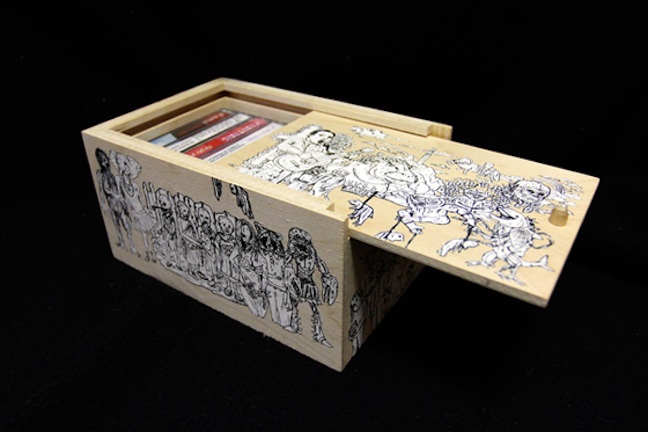
On October 25, Joyful Noise will release a cassette box set of psychedelic-pop mainstays of Montreal's entire catalog-- all ten albums, from 1997's Cherry Peel to last year's False Priest. The whole thing comes packaged in a wooden box (above) with screen-printed original artwork by bandleader Kevin Barnes' brother, David (who's done the cover artwork for all the band's albums in the past, too).
The retrospective package provides an opportunity to look back at of Montreal's career, from the band's lo-fi, 1960s psych-pop-worshipping beginnings to their zany, colorful, avant present. Rather than getting nostalgic, though, Kevin Barnes is looking forward-- he's currently putting the finishing touches on of Montreal's eleventh album, Paralytic Stalks, which is due early next year. Read on for our interview with Barnes, which touches on the new album, the return of cassettes in indie culture, and his feelings about his band's legacy as part of Athens' seminal Elephant 6 collective.
"The new of Montreal album is bit more esoteric, and it’s probably not something everybody’s going to like. The songs are way more intimate and confessional."
Pitchfork: Do you have a personal history with cassettes?
Kevin Barnes: When I first started recording, I used a four-track and I’ve got an incredible collection of cassettes in boxes that I don’t want to get rid of-- especially from when I was living at my parents’ house and doing nothing but recording songs. I have tons of early recordings that I haven’t listened to in forever. At some point, I’ll pull them out and listen to them and cringe. I think that could be really cool to release them at some point, though. There’s so much there. It would only be for the biggest fans in the world. All ten of them.
Pitchfork: Recently, cassettes have come back in vogue with certain, nostalgia-obsessed sects of indie culture. When agreeing to release this box set, were you taking that into consideration?
KB: I can understand the cassette thing, but I don’t really feel that connected to it. Its like the CD for me-- I don’t really like that tactile quality. Plastic just annoys me. It's easy to romanticize the past. That sort of goes hand in hand with vinyl as well. Having a connection to a physical object is really cool. At some point, people will be nostalgic about CDs, too. It's just human nature.
Pitchfork: What about those buyers who are purchasing things like your box sets for collector's purposes, rather than for the material that's inside?
KB: Whenever anybody's giving a shit about music on any level it's a good thing. It’s not like [collecting] guitars. I know people who just collect guitars and don’t even play them-- that's a different matter.
"I don’t really feel that connected to cassettes. Plastic just annoys me."
Pitchfork: This year marks of Montreal's 15th anniversary, and the band's been through a lot of sonic changes since your early albums. Do you think that you've retained fans from way back when?
KB: Every once in a while, somebody will come up and say, “I found out about you guys forever ago, around [1999's] The Gay Parade.” I was playing The Gay Parade for one of the guys in the band who had never heard it-- he couldn’t believe what he was hearing. I feel pretty detached from [that time period]. We never play anything [live] that was recorded before [2004's] Satanic Panic in the Attic. I closed the book on that period of my life and moved forward.
Pitchfork: So you're never going to play material from before Satanic Panic live again?
KB: I can’t see it ever happening. The only way it would happen would be if a record became popular in some weird random country. [laughs] Actually, The Gay Parade did sell really well in Japan. For a brief time period, we were like rock stars over there. But after a year, it had totally died out. [laughs]
What might have attracted somebody in the beginning is not really there anymore. Albums like Cherry Peel are extremely naive and sweet and not all that competent. It's like natural human development, you start off when you’re young and vulnerable.
Pitchfork: So what's your midlife crisis record going to sound like?
KB: [laughs] I don’t know. Maybe like a bagpipe record.
Pitchfork: What's the record in your career thus far that you're most proud of?
KB: There are moments of my records that I’m proud of, but I don’t think I’ve made a great record. I guess that gives me something to live for.
"I’m not really excited about playing any of my old songs live.
It would feel like I was wasting my time."
Pitchfork: With Jeff Mangum touring and Olivia Tremor Control becoming more of an active concern again, an Elephant 6 revival seems to be in place. A bunch of the E6 guys did the Holiday Surprise tour a few years ago-- if that kind of thing were to happen again, would of Montreal join in?
KB: I didn't go on the Holiday Surprise tour because we were too busy, and I’m not really that excited about playing any of those old songs. I don’t feel nostalgic about it. It would feel like I was wasting my time. I don’t mean that as a criticism against anybody else. I think it’s a defect for me that I can’t really appreciate it that much-- anything I’ve done always just seems boring and stale really quickly. I just want to keep moving forward.
Pitchfork: When's the last time you spoke to Jeff Mangum?
KB: A couple of years ago. He came to one of our shows and we were hanging out backstage for a little bit. He seemed to be in good spirits and it’s always great to see him. I’ve always admired him. He’s been sort of a big brother figure for me.
Pitchfork: You're finishing up a new of Montreal record, right?
KB: Yeah, there’s some moments on this record that are very different from anything I’ve ever done before. It’s a bit more esoteric, and it’s probably not something everybody’s going to like. I can see a lot of people having problems with it, but I can also see a lot of people loving it. I feel like so many records nowadays are disposable-- you’re not really expected to listen to the whole album, and no one does. With this record, I wanted something that was more of an experience that you would listen to from start to finish and have a very deep personal connection to. The songs are way more intimate and confessional.
Pitchfork: Any specific influences you're drawing from?
KB: Twentieth-century modern classical music-- Penderecki, Charles Ives, Ligeti. But it’s not a complete departure. There’s still funky elements, and it’s still very much a colorful pop record. But it goes into darker places. There’s one song in particular that is kind of polarizing in a strange way. I play it for a lot of people and it seems like they just feel confused by it.
Pitchfork: What's that song called?
KB: "Exorcismic Breeding Knife".
Sunday, July 10, 2011
2001-06-06 - Thriller Mag (interview from 2008)
James Husband – Of Montreal
By Thriller Monday June 6, 2011
It is not always easy to be a sideman in a band, but it is especially hard if . . .your front man suddenly takes control of the music, leaving no room for your input. And, it is even harder when you are a songwriter who can play a handful of instruments ranging from the guitar, to piano, to trumpet. James Huggins, sometimes known by his stage name, James Husband, was in the strange position of dealing with all of these things at once when Kevin Barnes took control of basically every part of his band, Of Montreal. After roughly a decade of striving and five albums (plus four compilations) that ranged from lo-fi brilliance (their debut, Cherry Peel), to occasionally unbearable whimsy (Coquelicot Asleep in the Poppies), OM had very little to show for their work. They were still grinding it out on the road, still playing for the same twenty or thirty die-hards, still going basically nowhere. In 2004, Barnes admitted to his band that he was thinking of quitting if the new album, Satanic Panic in the Attic, didn’t go over any better. The band already felt a bit weird, since Barnes had recorded the album almost entirely by himself for the first time in their history, so they might not have been too surprised at his admission. But, Satanic Panic was the most intricate, well-rounded, pop-oriented album the band had released. It was, in fact, something of a masterpiece. And that’s when the whole thing started to take off. Barnes followed quickly with Sunlandic Twins, which was great but not as good as its predecessor. Then, he topped himself again with Hissing Fauna, Are You The Destroyer? The group grew in popularity exponentially as the other members’ input decreased seemingly in the same proportion. However, the band’s heightened profile—including an Outback Steakhouse commercial that changed the lyrics to “Wraith Pinned to the Mist and Other Games”, which many saw as a traitorous act—seemed to weight on Barnes’ conscience. So, he began recording a challenge to everyone who said he’d sold out. The resulting album, Skeletal Lamping, was kind of the indie rock Bitches Brew, except that it kept all of the frustrating parts of Miles Davis’ most controversial album and didn’t really show any of the brilliance that make Brew such an essential classic. It sold well and was widely praised, but it is a tedious affair made up of short snippets of songs—most less than a minute long—that are patched together by transitions that are often jarring. Right after it was released, Thriller caught up with Huggins. Since the interview, he has left the band to pursue his solo career, and OM has released another decent but not great album, False Priest.
james2You’ve taken a serious step up in terms of stage performance. What has that been like?
It’s been an experiment that I think has gone very well. There are a lot of changes this time around, and we’re doing, by far, our biggest production in an increasing series of big productions, but this one takes the cake by a landslide.
The first thing I thought when I heard Skeletal Lamping, the only thing I could think of was how in the hell anyone would perform it live. It seems impossible, with all of the drastic changes in the songs. Was that hard to learn and is it hard to perform?
I’m so glad you asked, because no one ever asks about actually performing the music. It seems like most of the attention that the live spectacle gains is from the visual, and I think it’s very easy to forget, even for us, that the whole thing is supposed to be based on the music. We spent about two months before a single costume was tried on or a single prop design was built, learning the actual music. Sure, it’s difficult to learn something that disjointed. I think for Kevin, it’s very natural because he’s spent months with that material, kind of cutting it up and playing it backwards and forwards and inside out, and when he had decided on what he thought would be the final mixes, a lot of the stuff, that was the first time we heard it. Some of it we played on, some of it we had been playing live for months before he put out the album, but I would say a good sixty to seventy per cent of it was new to us, the same as it would be to a fan. Basically, it takes us several weeks where we just take each section and isolate a part or two or three that we think we want to do and try to make the closest representation to the album as possible, which is impossible because most of the songs have a minimum of about forty-eight tracks, some of them up into the hundreds. So, basically, between the six of us, we have to find the essence of three or four parts each and try to condense that into the most basic arrangement of what he has recorded.
It seems like that would take a while to get used to.
It definitely gets easier the more we do it and makes more sense slowly as we do it. But at first, it was very difficult and frustrating because I’m used to, sort of doing one thing or the other on a particular song. So, I could pretty much dedicate myself in the past to playing the bass or the keyboards or the guitar or the drums for about two or three minutes. But, I still look at this new stuff as each segment being its own song, so even if its seventeen seconds or thirty-one seconds, I still think of it as a song, independently that flows together in a segue or something. So, for me, there are a lot more challenging instrument switches, where I don’t think the consideration of the flow of the order of the songs is based on what I’m doing. I have to adapt to it, which means on a lot of these songs in the new set, I will be picking up and putting down as many as four instruments in one track, and that track might only be two minutes long. So, it’s definitely challenging, but then again, that’s just me griping that I get to do all that shit, because the truth is, it’s fun.
Skeletal Lamping is not an accessible album, really. What did you think when you first heard it?
It was challenging for me. I didn’t even like it for the first several weeks. I found it tedious to listen to. Now, I feel like it’s second nature and it makes perfect sense to me, but it took dozens of listens. And then, after learning it, I can’t listen to it, because now it’s like I can’t see it as an album that you sit down and listen to for forty minutes or whatever. I know too much, you know what I mean? That’s the sacrifice for us; we can’t allow ourselves to be fans because we’re too close to it.
How has your audience received it?
I’m surprised, people seem to love it just like it’s a fucking new Beatles record or something. I don’t get it. I, as an older indie rocker, presumed that the kids would have the attitude I had when I would go see bands, which was, “Oh, God. I hope they don’t just play their new album.” To me, that was always the attitude that, like, if you loved a band, especially if it was a band that you thought was your band, like even slightly underground, and then you see them start to get a bigger audience. I was afraid that all these kids would think we were too big or are losing it or whatever, and are just playing our new album – “They didn’t play anything off of Satanic Panic.” Which is funny to me, because most people think of that as our first record, and I still get people asking why don’t we play stuff off Gay Parade, which was when most of our current fans were still in single digits. That said, I’ve been pleasantly surprised, instead of having that attitude, it’s been the opposite, where most of the people only want to hear the new album and they are freaking out at the beginning, it’s like, you can tell when you play the first three seconds of a song that a couple of hundred of them all know the lyrics and they’ll start singing immediately and singing the entire thing. And they’re not easy lyrics to remember. I don’t even know half of them.
I’m one of those who enjoys hearing the old stuff as much as the new.
But, most of the time, the new material gets the biggest response. We’ve been playing some oldies—we did a couple of songs off of Satanic Panic and a couple of songs off of Sunlandic Twins, and those have been fun for us to play and I’m sure that plenty of people have enjoyed watching them, but they don’t get that instant roar that some of the new shit does.
I mean, I even want you to play stuff off of your first album, Cherry Peel, which came out in 1997.
Yeah, man, fucking another lifetime away from that stuff.
You all made about nine albums before one really hit. What is it like to work for so long at something and then finally get the recognition almost a decade later?
It has been gratifying in a sort of jaded, “It’s long overdue” kind of way. All of us have been like, “What the fuck? It took ten years to even get to a mild cult indie status.” We thought we were putting out great shit in 1998. To be perfectly honest, it wasn’t some sort of big surprise. It was more of a relief. Because we were going to keep doing it either way, but it makes it a whole lot easier to have people supportive of it and to be able to slightly make a living off of it and to be able to relax a little bit and focus more on it, than have it be this thing you’re fighting for.
Do you remember what you wanted out of the band when it started?
I don’t know, I can’t even remember what I was thinking then. I just know that we have always wanted to be full-time functional touring putting out as much stuff as possible kind of band. But for a lot of time, for several albums, it felt like more of a struggle to make that happen instead of an opportunity to let it happen. That’s why right now, we’re all able to completely focus on doing this, and so it makes it easier for us to really take it all the way, which is what we’re doing, I hope.
That’s nice, but I think what most people don’t realize is that being a successful touring act is hard fucking work.
It’s a full-time job, and it is a job, no matter what anyone says. Because there’s a lot more than jus that hour on stage, especially when we’re doing overseas stuff. We’ve been doing a lot of flying in and flying out, spending two or three days in the airport, thousands of dollars on weird travel expenses—you can’t imagine what it’s like traveling with instruments these day—just to do a thirty-minute radio program in England and come home. So, a lot of times, just a single performance has six or eight people’s lives tangled up for three or four days to make happen.
Since Satanic Panic, Kevin Barnes has really taken the reins in terms of writing and recording everything himself. Was that weird for the band when that happened?
Totally. I mean, it’s a very slow, natural adaptation we’ve had to go through. For me, the performance has little to do with songwriting or initial creation of the material. It’s always separate anyway, whether I wrote it and played it or whatever. I just think of it as acting. I’m still an actor and it’s my job and my talent, but I have a script. Instead of being a writer/director/actor, on this particular journey, I’m mostly just doing the performance for myself and for Kevin, and it’s still a very improvisational thing for me. I mean, a lot of it is obviously heavily organized, but within that, I still feel like I’m playing with as much freedom as I did when I was writing my own parts to the albums four years ago.
Does he give you any input as he’s recording or let you hear things as they develop?
Sure, I get to hear as much or as little as I care to. And a lot of times, I prefer to wait. During the creation of this album, Kevin would be sending mp3s of half-assed mixed songs every couple of days for four months, and I probably opened up a third of them.
He seems to be writing increasingly about his personal life—almost painfully direct songs about whatever he’s going through. Do you have any sense of where that comes from, or do you have any input on it?
It’s not that simple. There’s a lot more interpersonal, psychological ping-pong going on than that. Plus, a lot of that has to do with physical proximity. I haven’t really been living in Athens, and for most of the creation of this, our only contact was email and very little phone conversation. So, it’s not like a daily thing, getting up and making coffee, “Oh, what are you writing about today, Kevin?” It’s more like three or four weeks go by and I’ll get an mp3, “Hey, James, what do you think of this? Should the ending be this long?” You know, “I don’t know, it’s your song, dude, what do you think?”
Sunday, September 5, 2010
2010-05-23 - Tulsa World
original article.
Of Montreal still fresh after 15 years
By JENNIFER CHANCELLOR World Scene Writer
Published: 5/23/2010 2:20 AM
Last Modified: 5/23/2010 9:21 AM
Of Montreal formed in Athens, Ga., in the mid-1990s from a loose collective of musicians at Elephant Six Recording Co. The quirky, funky, indie-pop act returns to the Sooner state for one show.
Here are five (or so) questions with the band's founder, Kevin Barnes, on its live shows, fans, makeup, music and upcoming album release, among other things.
What's the biggest difference in your sound compared with when you formed nearly 15 years ago?
When we first started, we were 1960s analog purists, and the thought of using programmed drums or backing tracks of any kind would have been unthinkable. I was very militant in my thinking about what was "real" or "authentic" art. I've since mellowed on that and have become more open-minded regarding different compositional and performance techniques.
Of Montreal is pretty well-known for its live shows. What drives you to keep concerts fresh and unique?
Just the desire to create something exceptional and multidimensional. What reason is there to go see a band perform multiple times in a year, if they don't really do anything differently from one tour to the next? We always try to add some new element to the performance and try to avoid repetition as much as possible — not only for the audience's sakes but for ours, as well. It gets boring doing the same thing again and again.
When is your next album, "False Priest," due? What does the title mean? Will it be another concept album?
It's gonna come out this fall. The title is open to interpretation. I can't really say exactly if there is a concept floating around in there somewhere. There always seems to be, at least upon later reflection.
Why the funky dress and offbeat makeup when performing live?
It's just a part of making something exceptional out of the live presentation of the songs. We could just go on stage in our street clothes, but that's too mundane for us. I don't really see the point of going on stage in front of people and not doing something out of the ordinary, I mean, to paraphrase Shakespeare, the whole world is a stage, so when one is on the stage at a venue, one is really on two stages, like a double stage. So man, you'd better do something spectacular if you're gonna be that high up! Ha ha, of course I'm just joking — but not really.
Of Montreal's been around for close to 15 years now and seems to be building momentum like never before. Why do you think that is?
I'd like to say it's because of all of the hard work we've put into it, but I know that's only half of the reason. The real reason probably has something to do with Bryan's wild guitar playing or Davey's boyish good looks.
What's your typical set (if there is such a thing) like? Lots of new music, a combination of new and old or primarily previously released material? Are no two sets the same?
We're gonna be playing mostly songs from the past four albums, as well as some "False Priest" songs and maybe a few covers, as well. We're going to be trying out some new theatrical and visual ideas. I'm looking forward to getting out of the studio for a few weeks and performing again.
OF MONTREAL
with Noot D’Noot and James Husband
8 p.m. Tuesday
Cain’s Ballroom, 423 N. Main St.
$20, plus fees, Cain’s box office, reasor’s grocery stores, Ida red, Starship records & Tapes, by phone at (866) 977- 6849, tulsaworld.com/protix
with Noot D’Noot and James Husband
8 p.m. Tuesday
Cain’s Ballroom, 423 N. Main St.
$20, plus fees, Cain’s box office, reasor’s grocery stores, Ida red, Starship records & Tapes, by phone at (866) 977- 6849, tulsaworld.com/protix
2010-08-27 - Total Darkness vs. Blinding Light
original article.
This is the Q & A transcription of an interview I did with Of Montreal's Kevin Barnes for the upcoming issue of Jettison Quarterly.
-How do you define your art? Is each song a separate work of art, or is it more Of Montreal as a whole?
“I like to think of it as a creative journey through my whole life. I want to always find new inspiration to help me grow artistically and change. Change is very important to me. Even though it can be kind of confusing to people because they don’t know what to make of certain mutations. They can think of you as one thing, and it’s what they like and it means something to them, but then you change and they don’t understand it anymore. And they kind of feel like you’ve betrayed them. In some instances, people want their artists to be predictable. If you go to the grocery store and you always get a certain kind of peanut butter because you like it a lot and you always want it to always taste the same, if all of a sudden it’s changed to taste like salsa, you’re going to be upset.”
-When you were a kid, did you want to grow up to become an artist?
“When I was a kid I wanted to be an athlete. I didn’t really have any friends for a long time because I lived in sort of a weird area, so for whatever reason I didn’t have friends my own age. So I’d go a lot of role playing, fantasy games by myself. For football I’d play by myself—being the announcer, being the quarterback, being a defender and tackling myself. I was totally emersed in these weird sports fantasy games.
I guess it evolved into something artistic when I started playing music, but it was the same sort of deal. I didn’t have any friends who played the kind of music I wanted to play, so I just had a cassette four-track and would put songs together one instrument at a time and make something closer to my own vision. I just really really love the creative process of how transportive and empowering it is to take me from someplace mundane and boring to somewhere exciting.”
-Of Montreal’s albums are great, but they could be more like a promotional item themselves. Would you agree that the main Of Montreal event is your live show?
“Not necessarily. When I make a record, that creation is extremely fulfilling. I love recorded music and music history, I don’t really go to live shows very often. To me, the recorded side is the most important part of this, but live shows can be very fulfilling too because it’s more communal.”
-Your concerts are all about spectacle. How big and fantastic do you hope to get? Are you beyond the Flaming Lips in terms of sheer enormity of stage presence yet?
“People compare our live show to the Flaming Lips, but it really has nothing to do with them. It goes so farther back. David Bowie, Alice Cooper and Kiss, so many people who came way before Flaming Lips. But what we’re trying to do is create something. We can’t do this on every tour because we finance everything. We use tons of money, but it’s worth it to us because it’s so fun. It feels more exciting and challenging to put on something magical that has visual elements. When I’m recording I’m all by myself and I feel like I’m not really connecting with the human race, I’m in this sort of bubble. But when we do these live performances it’s very much communal and collaborative. Everyone I work with is my friends and family, like my brother or friends from years and years ago. It’s great for all of us to have something to care about and focus a lot of positive energy into.”
-I think it’s safe to say that Of Montreal, while still on Polyvinyl, has transcended beyond the “indie” bubble. Your band is pretty huge these days, but do you still feel a connection with the independent art scene?
“That’s all it is. Just because it’s a little more successful commercially or whatever, it’s still not like being as successful as Beyonce. It’s still underground. And the underground scene is great now with all the blogs and new ways people can share music and exchange ideas.
When we first started, we were definitely as indie as indie gets. But the only way you’d hear about us was because maybe two or three magazines wrote about this kind of music. Or if someone had the album in their car. It was a word of mouth thing. The music we were into was anachronistic in a way. I mean, we were into vaudeville and the Gershwin brothers, things people our age had no interest in. Maybe there were people back then that would’ve been into it, but now people are able to transfer their interests with others much quicker, and it can spread to further reaches.
We spent six years being completely obscure. We’d only get like 100 people at our shows. We’d play that way for a long time, like six years. Our band kinda broke up, but I wasn’t really done. I still had more that I wanted to explore. I had a sort of rebirth on Polyvinyl, came back to life recording all these new kinds of songs.”
-How important is fashion to you? Or, how important is it to Of Montreal?
“Anybody who creates in a visual art probably has a sense of fashion because they want to create a sort of aesthetic. I definitely don’t want to go out on stage wearing something that anybody could buy at Sears. It’s a combination of things, I want it to be interesting. Everything that we’re doing, we don’t want it to seem too common. I’m definitely interested in fashion, but I don’t really care what other people are wearing. I just want to be wearing something interesting when I’m on stage. I think there’s great potential, and that it’s a really interesting art form. But that other side of it, like people who want to wear Dolce and Gabbana like it matters to them. That’s so embarrassing to me. Designer brands are so embarrassing. I like to wear outfits by designers who are working independently, and are just passionate about what they do.”
-How awesome was it to have your album co-produced by Jon Brion?
“He’s a great musician. He’s totally coming from the right place. He loves music as much as I do. He has such an incredible music memory. He knows how to play pretty much any song he’s ever heard. It’s staggering. So if I ask him, “hey play God Only Knows on ukulele” he will.
It was definitely intimidating, because I’m such a hack. I can barely play any instrument, but he’s such a virtuoso at everything. But not in a superficial or egotistical way, it’s completely connected to his soul. He’s such a soulful player. It’s very eye-opening and inspiring, it motivated me to become a better musician and connect with music in a deeper way.”
-And how about Janelle Monae?
“Definitely one of the greater meetings I’ve had over the past couple years was meeting Janelle and her art collective, the Wondaland Arts Society. There are so many creative people in that collective, and I became very close friends with a lot of them. I’d send them my songs, exchanging ideas and get their feedback. They’re very encouraging and inspiring.
When they were creating Archandroid I was working on False Priest.
I’m an avid reader, and so I could talk to them about people I wasn’t familiar with before. Just a great exchange of ideas.
Janelle is such an amazing performer and vocalist. A lot of indie rock’s attitude comes from the punk rock attitude of “you shouldn’t really be a great musician, it should all come from a spontaneous place.” But it’s all so cynical too. I remember feeling very suspicious of anyone who was a virtuoso with their instrument. Like, instead of playing from the heart they’re playing intellectually. I came from a more cynical place, but Janelle is not cynical at all. It’s all about positivity and empowering one’s self and your audience. And also taking great pride in the production and presentation. So it felt great to meet someone like that who cares so much about their art, and it makes me think, “ok, am I doing that? How can I become a better performer?” Because I’ll be playing shows with her and I don’t want to be upstaged.”
-Of Montreal almost feels like the musical equivalent of sexual liberation. Is that intentional?
“Definitely recently it’s been more connected to sexuality. My early stuff was intentionally asexual. But for the last, like, five albums, they’ve been more sexually inspired. I think it’s because a lot of the music I’ve been getting into lately like funk, R&B and soul music is very much a physical and sexual style of music, so I guess it comes across in Of Montreal naturally.”
-The final lines on False Priest are painfully blunt (“you’re wrong, and you’re ill”). Who are you preaching at here?
“It’s directed to the human race, to myself and everyone. We spend so much time thinking about this abstract concept and giving it a character. But it’s funny, a lot of people think of God as this primitive creature, emotionally. Sort of flawed. We don’t think of him as anything in life. At least for me growing up Catholic. The god of the catholics is not enlightened in any way. It’s very savage and cruel and small-minded. And this thing doesn’t even exist, it’s just this invention. So why don’t we care about each other more? I feel like, even if we do believe in God, it would be honoring to God to care about each other more. If God is creator, of course you care about your creation. You don’t want your creation to be suffering and killing or hurting one another in your name, that’s just absurd. So the message is that we care for each other. That’s the most important thing. The concept of spiritual obligation to some abstract creator shouldn’t be that important.”
-How do really feel about Carl Jung?
“I’ve actually never really read much of him!”
Tuesday, July 21, 2009


Thursday, July 2, 2009
2008-10-01 - Rolling Stone
The Surreal Life
– Rolling Stone, 2008-10-01

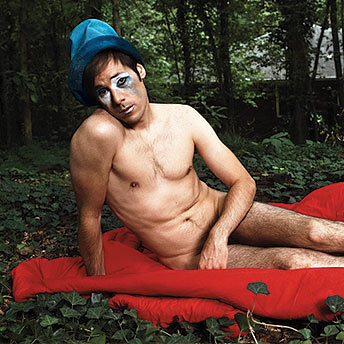
Of Montreal's Kevin Barnes is obsessed with Prince, suicide, and borrowing his wife's tights. Meet rock's newest damaged genius.
There are many things that Kevin Barnes' wife might prefer he not talk about. For instance, when she became pregnant a few years ago, the idea of becoming a father so terrified Barnes that he considered committing suicide. Or that after his daughter was born, his misbehavior on the road nearly destroyed their marriage. Or that he suffers from chronic depression, which he treats with the powerful antidepressant Cymbalta in a haphazard regimen. "I take it every three days or so," says the 34-year-old leader of the cult-fave psychedelic pop group Of Montreal. "I should probably take it more, but I kind of like that it messes up my mind. Every day is like a roller coaster — sometimes I feel really good, and sometimes I feel all tingly." Today is a Cymbalta day, which makes Barnes feel "introspective and weird." In the Athens, Georgia, band's industrial rehearsal space, downwind from a chicken-processing plant, Barnes stands quietly among his cheerful, PBR-drinking bandmates, with a purple Vitaminwater at his feet and a glossy Rickenbacker strapped to his slight frame. Dressed like Ziggy Stardust on a casual Friday — skintight red jeans, octagonal clear-frame sunglasses, a jaunty blue scarf adorned with tiny white stars — he absently noodles on "Day Tripper" before calling the song "Triphallus, to Punctuate!" from the band's new album, Skeletal Lamping (out October 21st). Three of his bandmates grab basses and pick out complex, strangely melodic lines as Barnes lets loose with an effects-heavy series of "ooh-ooh-oohs" that sound like Freddie Mercury on helium.
As with the last two Of Montreal records, Barnes recorded Skeletal Lamping (the title came to him after reading a Dylan Thomas poem) at home on his computer. An idea-packed pastiche inspired by Brian Wilson's SMiLE and Prince's Sign o' the Times, Lamping boosts the group's oddball pop with its polyperverse, sexed-up lyrics and kitchen-sink range — from hip-hop and disco to freaked-out soul and Stones-y blues. It arrives just a year after Barnes inadvertently introduced himself to the masses by allowing Outback Steakhouse to use his 2005 song "Wraith Pinned to the Mist and Other Games" in its ads. (The Australian-themed chain added didgeridoo and changed the lyric "Let's pretend we don't exist/Let's pretend we're in Antarctica" to "Let's go Outback tonight/Life will still be here tomorrow.") "They told me it was just going to be a radio jingle," he says. "And of course it wasn't — it became the anthem of Outback Steakhouse. The reality is it's definitely not good to sell a song to a commercial, as far as allowing people to have their own memories of a song." Barnes posted an anguished essay, "Selling Out Isn't Possible," online, writing, "The pseudo-Nihilistic punk rockers of the '70s created an impossible code that no one can actually live by."
But looking back, Barnes says the fear that he'd damaged his credibility fueled Lamping's adventurous spirit. "I was like, 'If you're going to call me a phony, I'm going to prove that there's nothing about me motivated by record sales,'" he says. Take Georgie Fruit, a character Barnes introduced on Of Montreal's 2007 album Hissing Fauna, Are You the Destroyer?, and in whose voice he sings much of the new record. "He's an African-American man who was in an R&B band called Arousal in the Seventies," Barnes says. "They didn't go very far, and he ended up in prison, where he had a lot of weird experiences and decided to be a woman. So he had a sex change. He's very free — I think of him as a genderless superhuman, untouched by taboos or the boring parts of our culture." (Barnes is considering an Arousal "reissue" as a side project: "It would be totally fun." He's also working on an album with MGMT's Andrew VanWyngarden under the name Blikk Fang.)
Of Montreal's live shows have evolved into over-the-top glam spectacles involving surreal props, whimsical sets and multiple costume changes — and, on one occasion, a fully nude Barnes performing against projected clips of Seventies gay porn. As the tours have grown increasingly baroque, Of Montreal have developed a reputation as kind of a Grateful Dead for arty, sexually ambiguous kids (plus David Byrne and Bono, who have both been spotted at gigs) who use the shows as an opportunity to dress up in hypercolorful garb, apply liberal amounts of makeup and glitter, and get supremely elevated on booze and drugs. In a few weeks, the band is heading off on its biggest tour yet, a theatrical production complete with elaborate costumes (drag, mythological creatures, giant kimonos), Madonna-size video screens and a cadre of "performance artists" who will act out choreographed scenes, including a brawl in a Deadwood-style saloon. "The inspiration is very Michel Gondry," Barnes says. "Or the kid in Rushmore that puts on those productions."
At rehearsal, Barnes' five bandmates appear to have been sent over from Indie-Rock Central Casting. Guitarist Bryan Poole has a Neil Young look involving bushy sideburns and an awesome tricked-out art project of a car (with a complicated back story about an artist friend's attempt to assemble a militia to capture a mysterious local known as the 8-Track Gorilla); bassist Davey Pierce lives in a garage next door among at least a dozen vintage mopeds in various states of operability; synth player Dottie Alexander sports a pink cheerleaderish skirt and polka-dot tights; and multi-instrumentalist Jamey Husband has an ascotlike scarf that recalls Fred's from Scooby-Doo. Rocking a cool straw hat and an unbuttoned cardigan without a shirt is drummer Ahmed Gallab, the latest addition. Gallab (who's been in town for less than a month and lives in the loft above the rehearsal space) emigrated from Sudan when he was a kid, and is eagerly waiting for rehearsal to stop so he can break his Ramadan fast. "There's two sides of Of Montreal," Barnes explains the next day. "There's the recorded music, which I've been predominantly doing myself. But the performing band is collaborative, and everyone is deeply invested emotionally and financially."
Barnes grew up in Grosse Pointe, Michigan, a well-off suburb of Detroit. "I listened to a lot of poodle rock," he says. "Mötley Crüe and Ratt were my favorite bands, and I covered my bedroom with pictures I cut out of Hit Parade and Circus." When he was 13, his parents — an accountant father (with dreams of becoming a stand-up comic) and teacher mother — bought him a black Pearl drum kit like Tommy Lee's. He formed his first band, Wit's End, singing and playing drums with a local kid named Mark Tremonti, who went on to become the guitarist in Creed. "Kevin was always a real talented guy," Tremonti recalls (the two haven't spoken since high school). "And he had a really cool voice and an artistic edge to him. Just to be able to write songs at that age was amazing. Our best song was 'Pull My Trigger.' It was pretty much a sex, drugs and rock & roll type of tune. You know, that Mötley Crüe thing. Dangerous lyrics. For a group of eighth-graders it was pretty edgy."
A year later, Barnes' father lost his job and moved to West Palm Beach, Florida, to look for work, leaving Barnes with a profound feeling of uncertainty. He fell into his first major depression. "Things were fucked up, and I was getting into trouble at school," he says. "Even though I wanted to be a rebel, there was a part of me that was sweet and wanted to be accepted." (Tremonti remembers, "He didn't really adhere to authority — he was a guy who probably got in trouble more than the average kid.")
Barnes began suffering increasingly debilitating anxiety attacks, culminating in what he refers to as "a weird drug experience." "It was my birthday and my friends bought me all this pot," he says. "Maybe because I was still developing, I had this bizarre reaction where I totally lost my mind. I really thought I was dying. After that I became conscious of how vulnerable we are psychologically. I still feel touched by that experience, which used to bother me. Like, what the fuck is wrong with me — I still feel as crazy as I did when I was a teenager. But now I feel like it's good, like it fuels my creativity."
In Florida, Barnes made a crucial discovery — British Invasion rock, particularly the Beatles, the Kinks and the Rolling Stones. "I was delivering pizzas, and I got The Kink Kronikles on vinyl," he says. "I put it on a cassette and listened until I wore it out." Playing along to an early Stones comp on guitar, Barnes taught himself chords, and by the time he finished school, he had released a collection of tunes on the influential indie label Bar/None. In search of a band, he headed to Athens after seeing the classic documentary Athens, GA. Inside/Out. "I was just dying to find like-minded people to play with," he says. "But I never thought in a million years that I would ever have a career in music — I was just a kid with a four-track recorder with no friends and no prospects."
Athens has two abiding passions: University of Georgia football and off-kilter art rock. Best known as the birthplace of R.E.M., Athens also nurtured freaked-out proto-alt bands such as the B-52s and Pylon, who exploded from acid-fueled UGA parties in the early Eighties. A decade later, when Barnes arrived fresh out of high school, a new scene was starting to take off — centered around a tight group of Beatles-and-analog-recording-obsessed indie bands that referred to themselves as the Elephant Six Collective. "It was just a great explosion of talent," Barnes says of his early years there. "Very bohemian, everyone living together, three or four people sleeping on the floor, everyone playing on each other's records. And there was the excitement of seeing Michael Stipe at a house party, wearing a straw hat, looking really cool. I'd be like, 'Oh, my God.'"
Until 2004's awesomely titled Satanic Panic in the Attic, the first Of Montreal record Barnes made by himself, the band was mainly inspired by the Elephant Six groups (Neutral Milk Hotel, Olivia Tremor Control, the Apples in Stereo among them), whom Barnes befriended shortly after moving to town. "They were kind of like big brothers to me," he says. "I sort of worshipped them — like, God, they're making records and going on tour, they have a publicist, a booking agent, all these things." Living together in a series of communal houses, including a $400-a-month brick bungalow he shared with Neutral Milk leader Jeff Mangum ("It was a total party house — we had a skateboard quarter pipe in the living room and no heat"), Of Montreal cut several low-fi albums between day jobs. "We all wanted to sound like the Beatles," Barnes says. "And everyone was turning each other on to lost psychedelic classics — like someone would go on tour and discover, like, Os Mutantes or the Pretty Things' S.F. Sorrow and bring it back to the circle. Everyone would be really influenced by them."
Of Montreal's breakthrough, 2007's Hissing Fauna, veers from synthy electro pop to sun-splashed R&B inspired by psychedelic-soul great Shuggie Otis (name-checked on the standout "Faberge Falls for Shuggie"). On about half the songs, Barnes' vocals shift into a life-affirming falsetto — but the lyrics are more harrowing than groovy. Hissing Fauna's emotional center, "Heimdalsgate Like a Promethean Curse," finds Barnes singing, "I'm in a crisis/I need help/C'mon mood, shift back to good again . . . chemicals don't make me sick again."
Barnes met Nina Twin — a talented visual artist and musician — at a gig in Oslo in 2001. After a long-distance courtship, she moved to Athens and joined the band on bass. When she became pregnant in 2004, the couple moved to Nina's native Norway to take advantage of the Scandinavian nation's free health care. "The government actually pays you when you have a child," Barnes says. "So we said, 'Fuck it, let's put everything in storage, go to Norway and see what happens from there.'"
Barnes suffered the deepest depression of his adult life, becoming mired in anxiety, paranoia and persistent thoughts of suicide. (Heimdalsgate is the name of the street where they settled in Oslo.) "I was totally isolated, totally broke, we were couch surfing, and I had never imagined myself a father. I found the concept of having a child terrifying, and it is terrifying. There was so much terror in my mind. It was so much easier to live in a dream state where all I had to worry about was myself." And as scary as the pressures of fatherhood were, the fear that he'd have to give up music was worse. "We had been a band for seven years, but never had any commercial success," Barnes says. "But the thing that motivated me wasn't praise or acclaim — it was the process of creation. So there was no reason for me to stop making music, until there was the idea that, fuck, if I have a kid . . . I'll have to stop fuckin' around and take care of my kid."
Encouraged by their booking agent, the couple returned to the U.S. to launch a tour behind the surprisingly popular Satanic Panic. After an attempt to bring their daughter, Alabee, on the road failed, the tour continued without Nina — who became increasingly resentful of being left behind. "Understandably so," Barnes says. "Taking care of a baby is nowhere near as much fun as going on tour."
With Nina at home, and fueled by champagne and antidepressants, Barnes began bringing his glam superqueen live-show persona to the afterparties. "I think the medication allowed him to function, but it also caused his psyche to become more disassociated from feelings like empathy — especially when alcohol is involved," says guitarist Poole, who records his own psychedelic side project as the Late BP Helium. "He'd do stuff like come up to you and stick his hand down your pants and start jerking off your dick. Or, like, try to make out with you, or take all his clothes off and just start walking around at parties."
Nina and Alabee moved back to Norway, and for half a year Barnes went on without them. But then something clicked inside. "I was looking for another Nina, in a way," he says. "But I realized what I had with her was so special. And I was missing Alabee a lot. My whole life I've been sort of detached emotionally, but with Alabee I understand true love. When I'd go visit them in Norway, Alabee would stand at the windowsill and cry because she wanted to see me. That's when you realize you need to be there for your child, because she needs you, she loves you. And you can't take that lightly."
For now, Barnes and Nina seem happy. They just bought a chic, modern, three-bedroom house in the leafy Athens neighborhood of Five Points, separated from the neighbors by tall, shady trees and a long driveway. The sun-soaked rooms feel homey and somehow Scandinavian, accessorized with high-end kitchen gear, an upright piano, framed expanses of cheery Marimekko fabric, Nina's artwork and shelves full of tasteful books (spotted: Portnoy's Complaint, Gravity's Rainbow, Bob Dylan's Chronicles, Dave Eggers' What Is the What).
Barnes' mom lives in a house next door and helps out with Alabee. When he's not making music, Barnes spends a lot of time in front of his new flatscreen TV, watching NFL games. "When I was a kid, like in high school and stuff, I felt very feminine," he says. "But I'm also very athletic, very into sports. I read ESPN magazine. I watch SportsCenter all the time. I'm a big Cleveland Browns and Indians fan."
Sitting on his big new patio as the sun sets, with Nina puttering around in an embroidered housedress, Barnes seems relaxed. His sunglasses are off, revealing sleepy, vulnerable eyes. But the couple's hard-won contentment could be shaken in a couple of weeks, when Of Montreal hit the road again for a yearlong tour. "I'm not always a very attentive husband," Barnes admits. "And there's no way I could be with Alabee all the time and never do anything in the adult world. Nina's a lot like me — it's hard for her to have a three-year-old as her only companion. But she's going to be performing the first four or five shows, and I'm excited. Hope springs eternal."
Saturday, June 27, 2009
2008-11-13 - Paste (part 7)
Of Montreal's Kevin Barnes: The complete Paste interview

Paste: Tell me how you got your first record deal.
Barnes: I had this friend, we were like best friends in Florida, and he was way more in touch—he had an older brother who turned him on to some things, and he knew about the indie scene, about indie labels, which I had no clue about. I guess there was some list that had all the indie labels, and there was this book about how to put out a record on an indie label, or how to start a label or something like that. We wrote songs together, and I wrote my own songs on the side. He got a list of all these labels, so we made a demo. Nobody seemed at all interested except Bar/None who wrote back and said they liked what they heard and wanted to hear more, so we sent them more and they were like, “eh, that’s pretty cool,” but they weren’t that into it. So, in secret, I sent my own tape with my own songs and they were like, “hey this is cool, we like this a lot,” but this put me in a weird position with my friend because they rejected the songs we wrote together and they liked the songs I wrote myself. For a while, I tried to sneak him into the contract, where we’d write the songs together and I’d sing them, but I’d try to sing them in his style, but [the label] wasn’t really that into that, and eventually it was obvious they didn’t want that stuff, they wanted my stuff. After a couple years of trying to work it out, we started to split apart, and I realized I’d be better off working by myself, so I just signed the contract with Bar/None and put my own songs out.
Paste: Are you from Athens originally?
Barnes: No, originally I’m from Cleveland, Ohio.
Paste: After Florida, you ended up in Cleveland and Minneapolis for a bit. Tell me what was going on in your life then, and about what made you come to Athens.
Barnes: The funny thing is, the guy I was telling you about, my friend from Florida, he was a huge R.E.M.
Julian Koster [of the Music Tapes] lived in Athens at the time and was also signed to Bar/None with his band, Chocolate USA. I was talking to Bar/None, saying I was trying to get a band together, “Where do you think I should go?” And they were like, “we have this other artist who’s kind of in the same position you guys are, he lives in Athens and he seems pretty happy, you should go meet him.” So I called him and talked for two hours, and it was like, “this guy’s awesome, he’s totally on the same page.” My friend and I moved to Athens together, but for whatever reason, he decided he didn’t want to live there anymore and moved away, but I stayed. I ended up living in the same house with Jeff Mangum [of Neutral Milk Hotel] and Will Hart and Bill Doss [both of Olivia Tremor Control]. It was amazing. All of a sudden I realized, “I’m not a freak! There are people who are into the same kind of music, and four-track recording and the DIY ’60s-psych-pop thing.” I think that was super-important for my development, to give me the support to keep going. I’d felt like I was the only one doing this thing, so it was so exciting to meet a group of like-minded people—it’s like, “holy shit, you’re doing the same thing and you’re 10 times better than me, this is so exciting!” But after a while, sometimes when you’re a kid—I was 18 at the time, and I had saved up money to move to Athens, but of course I spent all my money in a couple of months. I couldn’t really manage to support myself so I had to move back to my parents’ house in Florida. I should have just moved back to Athens when I had the money again, but I decided to try a couple of different places. I tried Cleveland because my sister lived there, and tried Minneapolis, but that didn’t work out. Eventually, I came back to Athens and have been here ever since.
Paste: Since it took so long for Of Montreal to have any kind of commercial success, did you ever doubt yourself and doubt the music you were making?
Barnes: I never really doubted myself. It’s kind of like that thing—when you believe in it, even though it’s not selling, you can always say, “well, people just don’t get it.” It definitely was frustrating as hell. I wasn’t very happy during the early years. I hated working at these non-committal jobs and having to spend so much time doing that.
Paste: What kind of day jobs did you have?
Barnes: I worked at a video store forever, and I did some telemarketing—all sorts of jobs you can’t really get any fulfillment out of. It seemed really impossible to earn a living playing music. It was like this code I just couldn’t figure out how to crack. How are these other people doing it? Are they more talented than I am? Are they smarter than I am? Why can’t I do it? But I never gave up because there was no reason to give up. Making music was the only thing that fulfilled me. I wasn’t going to give up just because people weren’t buying my records because that would’ve deprived me of something super-important in my life, of my whole focus of existing. It was definitely frustrating and depressing, and I almost feel like I paid too many dues. I’ve been kind of scarred by the amount of dues I paid. I was so emotionally invested in every show, and you go on tour for years and play to 50 people, and you’re like, “What the fuck, this is our third record, our fourth record, our fifth record and we’re still playing to 50 people. What the hell’s going on? Why isn’t it clicking with people?” You just can’t figure it out. And then, like magic, all of a sudden people start caring and you’re like, “What happened? Why is it different now?” But I’m happy. I’m psyched people care now because I know all too well what’s it like to play when people don’t care.
Paste: I interviewed you before a show at the 40 Watt in Athens right before Sunlandic Twins came out, and you seemed like you were in a pretty good place at the time. You told me, “I got married and I felt really emotionally strong. I was stable and happy and using that energy to make music.” But between then and Hissing Fauna you went through a difficult period—some depression and you and Nina split up for a while.
Barnes: Yeah, we split up for 3 months.
Paste: What was this time in your life like, and what do you think brought on this depression? How was your mindset when making Hissing Fauna?
Barnes: When I look back on it now, I think that it all centered around having [my daughter] Alabee. Being married is one thing, that sort of connects you to the world on one level, but there are so many anxieties that come with being a father that I wasn’t prepared for. I was living in this fantasy world inside my head, in this sort of bubble, and having a child roots you to the earth on such a huge level. It really slaps you in the face, like, “I am mortal, I am not going to last forever, I am responsible for this little thing, I have to take care of her.” It puts you in this strange, fractured state of mind, especially when you’re so used to being self-centered and egotistical all the time. That was really difficult for me. Also, the scenario around her birth—we were in Norway and we didn’t have a place to live, didn’t have a house of our own. We were couch-surfing, which is so insane when I think about it now. Nina’s eight months pregnant and we’re couch-surfing in a foreign country. Even though Satanic Panic had done well, we didn’t really have any money to speak of. There was no way we could’ve had Alabee in the United States because it would’ve ruined us, we would’ve been so far in debt. But in Norway, they take care of their citizens—they actually give you money [when you’re having a child]. You don’t have to pay for anything; they give you money to help out. So we decided to do it over there. We took everything out of our house and put it in storage, and went to Norway—without a home, without a country, just floating around, waiting for this child to be born and freaking out. Sunlandic Twins was done but hadn’t come out yet, and I knew I was going to have to go on tour once the record was done. It was a really weird transitional period, and that transition was really difficult for me. It took me a long time to find my footing again after that. I think that was the cause of my depression, but also, a big part of it was being on tour and Nina has this two-month-old baby back in Athens, living in this little apartment. I’m on tour, which is like a party. I’m having fun and she’s got all the responsibility. I wanted to be there with her to help her, but this is my dream, this is what I’ve wanted to do forever and things are really evolving in a positive way: We’re playing bigger shows, selling more records. But, at the same time, Nina is at home and suffering, and there’s nothing I could really do about it. So I was torn. I couldn’t satisfy everyone and I couldn’t satisfy myself. Eventually, it came to a head, and that’s why we split up. It was like, “Well fuck this, I can’t do this anymore, it’s driving me insane. I’m not going to quit music, [and I’m] not going to stay home. I can’t do both, so you have to go away.” It was really fucking hard for her. It’s so like a man to be, “OK, you take the kid and go.” And [she] takes all the pain and responsibility, and it’s so like a woman to be able to handle it. I would’ve totally lost my mind, but she’s so strong. She’s a fantastic person. And for her not to hate me after that, I think proves how strong our bond is. I couldn’t think of being with another person, and I don’t think she can either, so she just forgave me and we got back together. All that happened while I was touring for Sunlandic Twins and writing and recording Hissing Fauna. “The Past is a Grotesque Animal” is about our breakup. And that was difficult once we got back together—here’s this record documenting our hard times but it’s only from my perspective. The world only knows my side of the story; they don’t know her side. I think for a while that was kind of hard for her too, me airing out our dirty laundry for the whole world to see. But then, she’s like me, she’s an artist as well, so it’s like, “I understand, that’s what it’s about, you’re an artist.” There are tons of examples of people going through these breakups or tough times and writing about it, and the other side has to deal with it being out there.
Paste: How was your mindset while working on Skeletal Lamping as opposed to the more turbulent times that led to Hissing Fauna?
Barnes: I’m slightly more stable now because I’ve been on anti-depressants for a couple years, and things are a little bit less insane—still insane, but less insane. I think I was in a happier state of mind because I don’t have to worry about money as much, and don’t have to worry about doing my part with Alabee because things have worked out, she’s in school and my mom’s there to help. I just focus on making music. In a way, it’s sort of established now too—it’s a silly thing, until you start making money with music, some people are always going to be like, “Don’t quit your day job.” When [playing music] becomes your primary source of income, people give you more respect and give you more space to do what you need to do. So I take advantage of that and spend as much time as possible working on music.
Paste: The word ‘whimsical’ has been used to describe Of Montreal. It’s even in one of the band’s album titles, and I’ve heard you use that word to describe the music before. What does that word mean to you, and do you think it’s still the best word to describe Of Montreal’s sound and approach?
Barnes: It’s definitely still a pretty good description of the band. When I think back on the earlier records, people would always say we were twee. At the time, I was super annoyed: “How can they say that, it’s not twee; it’s really emotionally heavy and blah blah blah.” But now when I look back, I’m like “Yeah, it is twee, it was twee, that shit was extremely twee.” At the time it really offended me, I didn’t really understand it, which is insane because it just shows how delusional a person can be. Obviously, now, things are a bit heavier emotionally but it’s funny how people have this perception of emotions like, things are light if they’re happy and dark if they’re sad. It’s not necessarily that cut-and-dry. It’s not like something has less value because it’s happy. But for a while I got into that state of mind: I don’t want to make super-happy music because it might seem like it has less legitimacy. [2002's] Aldhils Arboretum was actually the one record I was more influenced by the outside world. While I was writing that, I was trying to make something that seemed slightly more mature than the past records had been. I abandoned that with Satanic Panic and just did what I felt like doing. And now I’m still in that state of mind. [Aldhils] was just a brief departure into that world. It was also at a time when we had been a touring band for a long time, and we were trying to crack the code in a way: How can we do something that we still find creatively interesting, but that doesn’t make people disregard it as twee or preschool music, music for babies.
Paste: You’ve been making music under the name Of Montreal for almost a decade now. When you look back at all these different records and this body of work, how do you feel about it?
Barnes: I never listen to the old records, but I’m happy with them. I’m proud of them. I’m proud of the packaging and the personality of each one. I’m also really happy that each record has its own individuality, but it all works together. I kind of toyed around with the idea of changing the band name for Satanic Panic and closing that chapter and moving on. But I decided it’s cooler to have it all under the same heading. It’s interesting that it’s pretty diverse. When we first started getting [a lot more] people into the band around Satanic Panic and Sunlandic Twins, I knew they weren’t going to like Gay Parade or Coquelicot. It’s very unlikely they would listen to that and be like, “This is awesome.” I think in 20 years time, hopefully, I’ll still be putting out different kinds of records, and still developing as an artist and trying different things. Hopefully, Sunlandic Twins, Hissing Fauna and Skeletal Lamping will be just as foreign to what I’m doing 10 years from now as The Gay Parade is to what I’m doing right now.
Paste: When I was listening to the new record, I was thinking, “you could play a lot of this in a club.” But I bet [Coquelicot’s] “Good Morning Mr. Edmonton” would really clear a place out.
Barnes: Yeah, definitely.
Paste: The name Of Montreal came from a relationship you had with a girl from Montreal.
Barnes: Yeah.
Paste: How much do you still relate to that name? Or is it just something you picked and stuck with?
Barnes: At the time, it made sense, but it was very shortsighted of me to pick a name that was always going to be connected to this relationship I had. At the time, it was the most important thing in my life, but I should’ve known 10 years from that point it wouldn’t really have the same value. [But] I think just the fact that the impetus for calling the band Of Montreal was centered around a life experience—I think that’s still true. Everything I do is centered around my personal experiences. Each record is a time capsule for what I was going through at the time—what I was listening to, what kind of films I was watching, books I was reading, people who were in my life. So I think the name is still appropriate in a way, if you think of it in a broader sense than just a failed relationship.
Paste: Have you ever considering producing records?
Barnes: I’m actually doing my first production job in a couple weeks, with this French band. I’ve never really produced anybody before. I’m kind of excited, but also a bit nervous. I feel kind of like a charlatan even though I’ve self-produced and engineered all [the Of Montreal] records. I feel like I’m not really proficient enough to call myself a producer/engineer. At the same time, I guess I am, I am producing and I am engineering, and if people think it’s OK and they like it, then there’s no reason not to try it. I would really like to do it as long as I’m on the same wavelength with the person. I would want to collaborate with people and be creative in it, and not just sit there and say, “Oh, you want to record guitar now?” and then get up and move the microphone to the guitar. I definitely would want a more hands-on relationship with the band. But I think it would be a lot of fun.
Paste: I heard you were going to be in a new Joe Swanberg film. I guess it starts shooting in September?
Barnes: That has actually been postponed for a while. Originally, I was supposed to do this film with him and then he called me—“Hey, I want to do this other thing.” He’s been working with Noah Baumbach a lot, and he’s like, “We want to do this project that’ll be a bit different.” And then this production job came up with this French band, and I’d rather do that. But I’d definitely like to get into acting at some point, if it was a good role. I’d really like to do something where I could be really freaky, like a Crispin Glover thing.
2008-11-13 - Paste (part 5)
Of Montreal's Kevin Barnes: The complete Paste interview
Paste: There was over 30 minutes of material you said you cut from the album. Are you going to put that out as an EP?
Barnes: I’m not really sure what I want to do with it. On some levels I feel like, “Well, these are the songs that weren’t good enough to get on the record, so why would I want to put out a reject EP?” But I feel like it would be OK if it was like a fan-only sort of thing. I feel like there should be some level of quality control—you don’t just put out everything. In the past I have put out everything; [at that point] I didn’t feel like it was important to worry that much about it. Now, I don’t feel like it’s necessary to release everything for everyone. It might be cool to just put out an EP and people could just download it for free if you want people to listen to it. Or we could just use the tracks for B-sides. There’s a couple songs that I like that, for whatever reason, just didn’t work. I didn’t want to make a 74-minute CD. I wanted to keep it somewhat digestible, so you could listen in one sitting, so you could listen to the whole thing without being like, “Goddammit, is this thing still going?” I wanted to make something where people would want to listen to it again rather than get to the end and be like, “OK, I don’t need to hear this again for another month.” There’s a lot of songs that I actually like that my brother [and collaborator, David Barnes] and I went back and forth on, like, “Should we keep that on there? Should we take it off?” And I actually wanted to edit it down even more, but he was like, “No, don’t do that. You gotta keep it there.”
Paste: Are you going to play some of those songs live? Some of the ones that didn’t make it on the record?
Barnes: Maybe. We have so much work ahead of us [with the touring band], just learning the songs ’cause we have a new drummer now.
Paste: Who’s the new drummer?
Barnes: His name’s Ahmed [Gallab], and he plays in this band Sinkane. It’s funny because we’ve done a lot of press photos with him, but we haven’t done a single practice with him, so hopefully it works out. I’m sure it will. He’s an awesome drummer and an awesome guy. So what we’re trying to do now—in the past we’ve had two different kinds of performance, like we would have an aspect of the show that would have backing beats on a CD player and no live drumming, and then the other side would be all live drumming and no backing tracks. And so this time we’re trying to get rid of the CD player altogether and just have drums on everything, but still have the same sounds from the record, so we had to get this MPC player to sample so we can have the actual sounds from the record, but instead of having a little disc playing, we’d actually have a human being playing it, and that way we’ll be able to really expand upon certain ideas and it won’t be as consistent from night to night—there’s going to be room for spontaneity and experimentation, so we’re all really looking forward to that.
Paste: There’s all this really cool packaging for the new record—so many different options. What was the idea behind this? What are these different options giving people?
Barnes: It just occurred to us: “Why does it have to be,” especially with digital downloads, or just packaging ion general, “why does it have to follow the same path that is always has?” Someone established, OK, we’ll have packaging that’s basically the size of a CD, and that’s just the way it’s gonna be.” We realized it doesn’t have to be that way. If you want to do something different, you can. And the only real restrictions are for the big corporations like Borders or Target or Best Buy. For stocking, they want it to fit on the shelves, so you don’t want to have something that’s going to be a specialty item that’s going to have to be stocked inside a glass case, like when you go into an indie store and they have their window or whatever. So there are different challenges we had to work out, but we really wanted to make something very unconventional, to create an object that could stand on its own. Something that wasn’t just a CD protector, or just something you’d have to categorize and put it on your shelf. Like everything that was involved with the release of the record, we wanted to make an object that would be interesting and thought-provoking, and that would blend into your design scheme in a way. You think of lifestyle, of interior-design objects, like the lamp and the wall decals and posters—these are things everyone needs, everyone uses. We go to IKEA because we don’t want to go to Rooms To Go or whatever, we want there to be a design element in our own house. Ecko and different companies are producing interesting objects that are thought-provoking and inspiring. We felt there was a lack of these things—it’s difficult to find interesting objects for your house, so we thought it’d be cool to produce our own. And luckily, [our label] Polyvinyl has been amazing about figuring out how to make that happen. A lot of labels would be like, “Uh, that sounds expensive.”
Paste: Yeah, because you have to come up with whole new ways to manufacture this stuff, right?
Barnes: Yeah. But also, I think that the spirit of the times, like with what Radiohead did [releasing an independent album as a name-your-own-price download, and then also offering a gorgeous, high-priced special edition]—it sent ripples through the industry. All of a sudden you realize there’s a lot of potential, you can do a lot of different things. You don’t have to just follow the boring path. Everyone involved in of Montreal is very creative and we all want to do interesting, important things, so it’s cool to give people an opportunity, like [my wife] Nina and David, to design these objects, and to also give people the option, so when they download the record, they don’t have to just get this tiny little thumbnail image of the album cover. They get a T-shirt or a tote bag or a lantern or a wall decal—it’s that much more exciting to get that in the mail.
Paste: [Your publicist], Frank, told me about a book and a play and an art show related to the release of Skeletal Lamping. Is that stuff still in the works?
Barnes: Well, we’re trying. David’s working on a book of his illustrations and what we’d like to do is come out with another Skeletal Lamping collection of all new objects, probably in early spring. I love the idea of creating a whole collection of art objects that are somehow affiliated with the release of a record. It makes it so much more interesting than just a record. It becomes a lot bigger, and I love that idea of like—in fashion you get it all the time, the spring collection, like the Marc Jacobs spring collection. It’s always something that’s—it’s not just one pair of pants, it’s a lot of different items. And I really hope that, in the future, it’d be really cool if it caught on and every band did that—released four or five objects with their record. It’s always good to have options, you know? And it’s also really exciting to try to create different things. What we really wanted to do was put on an art show in every major city and coordinate that with the release of the record. I think we’re trying to do one at the MoMAs in every city, and we’re gonna try to work on that in the spring. It would be awesome to do something like that, where you get a group of really creative people in every city and give them a rough idea of what you want to do, and people could put on this performance-art piece at the same time all over the world, and it’s in some way connected to the release of the record. Art is fun in that way, when you try to think of different ways to inspire people, and different reasons to make art, and different reasons to produce things. A lot of our production comes down to inspiration. And a lot of times, you’re just sitting there, you don’t really know what to do and then something will just click. And then, you’re off. You spend the next month working on this thing. So I love that about art—that it’s sort of laying there dormant until you find the switch to turn it on and it just explodes.
Paste: What about that play? Is there something going on with that? Is it something you’re writing?
Barnes: I guess there’s other performance-art troops doing things like this already—the idea was to have a happening in every city on the day we play. So it’s sort of like the circus coming to town, it’s not just the rock show that lasts for three or four hours—the whole day is an event. It’s probably not gonna happen on this tour, but we’re going to try to do that in the future, maybe the next tour, where we get to the city a little early and set up an art installation and a performance-art piece in an art gallery. And we had this idea for this machine that would like record people’s voices, and then you use the voices from that day’s event in the performance at night so everything ties together. I think that would be really exciting for people to feel more connected, to feel a part of it. I think art should always be communal. I always want the live performance to be more of a communal experience so it’s not just us entertaining people. I want people to feel like this is a chance for them to dress up and step out of their normal reality. And this is outside of time, outside of whoever they’re expected to be in their day job. It’s an exceptional moment in time that matters, that has value, and it’s exciting, and it has potential and anything can happen.
Paste: Of Montreal’s live performances have really evolved over the years. I saw you guys at a bar in a strip mall in Mt. Pleasant, S.C., in early 2003, and [drummer] Jamie [Huggins] was in the parking lot sewing costumes before the show. How has the show changed and how has the experience of performing evolved, now that you have some money to help live out your fantasies?
Barnes: It’s really cool now because we have this group of people like Dan Korn, our sound guy, and Nick Gould, our video tech. The two of them and Davey [Pierce], our bass player, are very crafty. They understand woodworking and electronics. So we don’t have to farm out our ideas. We can do everything in house. Everything we do now, because we have a stage concept, we can still realize on a pretty small budget. Any idea we have, we figure out a way to realize it, unless it’s totally cost prohibitive, but then we just tone it down a little and find another way to realize the same vision, just maybe not as extreme as we might’ve wanted. Like Liberace, there are a lot of people who have done some really awesome things because they didn’t have a budget to worry about. Eventually we’d love to get to that point, even if we had a government grant. What I like is to focus on one show at a time—for example, when we did Pitchfork [Festival] a couple years ago, we said, “OK, let’s put everything into this one show and make it really exceptional and different from any show we’ve ever done.” It’s fun to work like that, one show at a time. We’re doing that same kind of thing with the Roseland show in New York in October and then we’re going to keep some of the ideas and use them for other shows. You can feel OK about spending a shitload of money if its only gonna be for one show. The cool thing is, the reason we have a budget is because everyone in the band wants to do this. We’re spending band money to make this happen, so it’s great that I have this group of people who care just as much about putting on a performance as I do. If they thought, “Whoa, I’d have so much more money if I was just in a straightforward rock band…” But at the same time, it wouldn’t be as much fun, it wouldn’t be as fulfilling for anyone. I think we all get off on that. The production planning is just as exciting as the production itself.
Paste: Last year a big deal was made about you taking all your clothes off at a show. What is it like to be naked on stage in front of so many people and how did you feel?
Barnes: I feel really relaxed with my body. I could easily be naked right now and not feel insecure. It wasn’t a big stretch for me. I wasn’t putting myself in this really awkward, vulnerable place because I was totally fine with it. It’s amazing, though: You do something and it’s stamped in time forever. Twenty years from now, it’ll be one of those stories—the way I heard about Iggy Pop rolling around in broken glass. If you wanted to, you could very easily make yourself this huge, iconic figure just by doing wild things and sacrificing your body. A lot of people don’t realize the potential there. But at the same time, you’re walking a line where it’s like, “Is it for shock value?” It might take away from the music if everyone thinks the singer is just trying to get attention because he’s really insecure.
Paste: How important do you think it is for an artist to let go?
Barnes: I think it’s very important that you allow yourself to be vulnerable in your art. It’s important that you don’t put up a wall between you and the rest of the world. I did that for a while. Early on, I had gotten some really negative reviews and they had really hurt me and made me hesitant to share my personal feelings with the rest of the world.
Paste: After Cherry Peel [Of Montreal's 1997 debut album]?
Barnes: Yes. And then, eventually, I realized that there’s always going to be bad reviews no matter what you do. And it’s more important, from a production standpoint to present things that are full of genuine emotion and represent where you’re at personally, and I don’t think I’ll ever feel embarrassed of those things. I think the only time I might feel embarrassed is if I’m doing something I’m not touched by. I’d never do that, but if I did… I think it’s important that people wear their heart on their sleeve as artists. I think that’s something that really resonates with the audience; its something people can identify with, and also it’s very brave. People like bravery.
Paste: So after Cherry Peel you got away from writing personal stuff, and more into characters. At what point did you come back to writing personal stuff?
Barnes: I guess around Satanic Panic in the Attic. I got married to Nina and moved out of the house with the band, and me and Nina and my brother got a place together. It was a supportive environment being with the band, but it was also more challenging as far as accommodating everyone, being in a communal household, being reliant on each other for so many things, and then you’re in a band together, and you spend so much time together. Every artist I know is totally crazy and neurotic, so it’s kind of a dangerous situation to be in. It was really liberating for me to get out of that and move in with Nina and David. They didn’t really have any demands, it was just do what you want, just create something we find interesting and fun. Their life wasn’t really—I mean, it was connected to mine on an emotional level, but not a financial level. And they had their own creative outputs, so it wasn’t the same situation. Like when [the band and I] were living out in the country, if I wanted to do something like on Satanic Panic or Sunlandic Twins—where I recorded every part—then feelings would be hurt. [Former bassist] Derek [Almstead] would be like, “Why are you writing the bass lines? I want to write the bass lines,” which is totally understandable. I was depriving them of their creative outlet that was fulfilling and exciting. So that was a difficult transition for the band, when I took it over again and started doing everything by myself. [Barnes had briefly taken that approach on the band’s sophomore album, 1998’s The Bedside Drama: A Petite Tragedy.]
Paste: Do you feel like your friendships with all these former bandmates have endured that transition, or has it been difficult?
Barnes: It’s definitely been difficult with some people more than others, but I can totally understand any sort of problem that arose from that. And I love everyone that plays with me, and I really support them and everyone is so talented, and they all have their own projects and I totally want to encourage them—like, Jamie is an amazing songwriter and an amazing singer and performer. And Bryan [Poole], and Davey, and Dottie [Alexander] are all fantastic composers as well as performers, and it’s pretty amazing that they’ve been with me all this time and have gone through all these different phases with me, musically, and every time have been able to adapt and get excited about it, and encourage me and basically stay connected through all of it. It’s been pretty amazing. We’re like a family, and you can’t divorce your family. I think we’re like that—we’re like brothers and sisters.
Paste: I read an interview where you talked about the trappings of the Elephant 6 Collective and some of its unwritten rules. Tell me what those rules were, and about breaking free from them.
Barnes: All of it was just my perception of what the rules were; there was no manifesto we all had to sign or anything like that, but there was a spirit of that time, and I started to go this other direction. I had these weird hang-ups that maybe I created myself—this idea that nothing had any value unless it was recorded on an analog tape machine. I couldn’t stand any contemporary bands—I never listened to any of them, really, except for the Elephant 6 bands. I was living in a self-imposed fascist state. I had all these rules about what was good and what was bad, and I was really critical of other bands, and just really stupid. And I know it sounds clichéd, but I can’t help but think that [getting away from that mindset] was influenced by 9/11. After 9/11, it was a universal thing in the United States where everyone felt like they need to connect with other people more. It really influenced me in that way. [Suddenly], I wanted to listen to and support contemporary bands. I wanted to feel a part of my time, my generation, and not be so obsessed with ’60s music, and music made by dead people. I’d always loved dance music, but it was kind of taboo to use a drum machine in the Elephant 6 world. Obviously studio trickery was encouraged, but you probably shouldn’t do anything you couldn’t pull off live. Somehow it felt like disco or electro-pop or attitude music wasn’t that cool. [There were] just all these really weird rules I thought existed and that probably don’t exist at all. I started getting into electronic pop music and really wanted to make this weird disco hybrid—you know, pulling from all these different influences. I started getting turned on to ’70s Afrobeat and soul and dub and Jamaican music, and I got all these Soul Jazz and Trojan reissues, and rediscovered my love for Prince and Stevie Wonder, Sly & the Family Stone and Curtis Mayfield, and that’s what brought me to where I am now. I don’tlisten to The Kinks anymore—I still like that stuff, but I’d never really think to put on a Kinks record.
Subscribe to:
Posts (Atom)