Friday, June 26, 2009

2008-11-04 - The Line Of Best Fit

TLOBF Interview :: Of Montreal

Posted on 04 November 2008 by John Brainlove

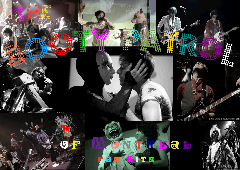
(L-R:  Dottie Alexander, Bryan Poole, Jamey Huggins, Davey Pierce, Kevin Barnes)

(L-R: Dottie Alexander, Bryan Poole, Jamey Huggins, Davey Pierce, Kevin Barnes)


John Brainlove met Kevin Barnes after a packed out Of Montreal Rough Trade instore to talk about life on the road, inspiration, the differences between dreams and reality, and the fantastical world Of Montreal…

John Brainlove: So, I was googling Airwaves and I got really excited to see you were playing, but it turned out to be a lineup from last year… how was that?
Kevin Barnes: It was great. It’s always a bit scary when you’re playing a festival, and there’s like so many bands and you never get time to set up your stuff, and you get thrown out onstage and it’s chaos, and inevitably something sets on fire or breaks… in this instance my amp was making a horrible sound, so I kinda freaked out for the first four or five songs, then I kinda got into it and it was fun, and then the next thing I know I’m being pulled offstage…

JB: Have you been to Iceland before?

KB: No, that was a first…

JB: Do you find when touring that you get a chance to see places? Or is it just like, hotel, bus, plane, show…

KB: Every once in a while you do, yeah, if you get in early enough and the promoters are enthusiastic, a lot of times we’ll be playing smaller stages in like Italy or Spain and the promoters feel like they have to fill this role of a cultural liaison and show you a good time, and that’s always great. But if you get into a place sometimes, you’re just left on your own and wander around a little bit and find stuff out…

JB: Which I guess is never that nice, just a few alleyways and cafés around a venue…

KB: Yeah totally. To be honest, this is my first really really good experience of London. I’ve never had a bad experience, but I’ve never had a trip where I went to a whole bunch of different parts of the city and really got a good sense. It’s always been in more run down parts of London, whereas this area is like super-hip and young, and where we’re staying is kinda ritzy. I really like that the city has so much diversity, and I hadn’t seen the good side of London before. And I was like “shit man, London’s awesome”.

JB: Yeah, in some parts it’s like a different world, you go around in the day and all you see are decorators and nannies…

KB: … and no artists live there, sure. What’s this area like?

JB: Well I guess we’re right in Shoreditch and Old Street, the first time I came here it was mostly just factories and closed up shops, but it’s really buzzing now, the artists landed here like regeneration locusts and then got priced out…

KB: Yeah, it’s like that in New York, and I guess everywhere. We were in Barcelona and we were like, we wanna move here, and they were like “no, don’t do it! You’ll raise the rent” and all the reporters will come…

JB: So tonight you’re playing in Rough Trade in happening Brick Lane… I think the last time I saw you was ATP playing the Hissing Fauna show. That’s obviously a very personal album. You’ve said that this one is a step away from the autobiographical approach, more fictionalized or written around characters…

KB: No, I didn’t mean to say it like that. I don’t want to propagate the idea that was writing from the point of view of a persona… I hope I didn’t…

JB: (laughs) Maybe I missed some sarcasm or something…

KB: I better go back and read it! There was this character I created called Georgie Fruit, and now I wish I never did, because people are like, “is that a Kevin Barnes song, or a Georgie Fruit song?”… and really there’s no difference. They’re all Kevin Barnes songs, and I don’t like that idea of people seeing a division. I think people would see that as less genuine, but it seems like it’s not based in reality, like you’re writing from the point of view of a fictional character. That’s too much like a defense mechanism. I want all my songs to be like, really coming from the heart and maybe if they’re not about something that’s physically happened, like a physical experience that I’ve had, I don’t really make a division between the physical and the dream state or the emotional state. I don’t really make the division. If you fantasize about something that’s just as real as if you really did it.

JB: I was interested in your ideas about identity, the idea of identity as a malleable construction, does that relate back to that fluid idea of characters and points of view… about your own self being a construction that you consciously work on changing or building. And in that sense having a character is presenting a front…

KB: I don’t really think of it as a front… I don’t think you can ever contradict yourself, even if you contradict what you said yesterday… it’s just as real as it was yesterday. I don’t think you have a really fixed identity. When people say “you’re being phony” I don’t agree with that because you can only be yourself. It’s impossible to be phony. Whoever you feel you are at that moment… it’s real. And whoever you want to be… I don’t believe there’s one true identity that’s the fixed you. It’s obviously fluid, and it’s effected by your mood, your experiences, your dreams, what you ate… it’s constantly changing. Nobody should believe that they only have one fixed persona or character or identity or whatever that’s the real them.

JB: Do you think that’s a scary thought, to have no sense of permanence? Everything as transitory..?

KB: I find it very liberating. You don’t have to worry about being consistent. You just feel what you feel and act how you want to act, without having to worry “is this appropriate for who I am? Is this outfit appropriate for who I am?” … it’s more fun to have that malleable aspect to your character and be free to do whatever. And it’s all real.

JB: Did you make a conscious decision about the change of musical direction? Skeletal Lamping seems like quite a deliberate swerve…

KB: I think I really wanted to make something that was constantly shifting, constantly changing, with no rules and no limitations, no structure really… it still has structure. Some songs have do have repeating parts, but repetition seems to me like laziness. A lot of people always repeat things…

JB: Do you think that’s in contrast to Hissing Fauna, which had quite tight cycles repeating for a long time?

KB: Well, this time I was in the mindset that it’s laziness to write a part, then do it again. It’s a very common thing in pop music to verse / chorus / repeat. It’s more creative that way.

JB: Yeah it’s at the very heart of pop music… if you hear a song again and again and it has repeating parts, you just end up liking on some level through exposure…

KB: Yeah, that’s something that’s very powerful about pop music, and I think in a way I’m depriving them of that relationship with the songs. On this record it’s hard to tell where one song ends and another begins, I wanted to make it flow, and it’s kind of random where I placed the track markers. Tonight when we played, the stop and start parts are random without the context of the album…

JB: After Hissing Fauna, which was so intensely and nakedly personal, Skeletal Lamping does seem more stylized or cryptic, even though it’s just as lyrically dense…

KB: I think it’s just as autobiographical. I mean, Hissing Fauna was like pain. And pain is the great equalizer. Everyone can appreciate pain, confusion, anxiety… these things are universal and easily relatable. But when you talk about more abstract things… Skeletal Lamping is definitely more abstract. I don’t think it’s less emotional or less autobiographical. Maybe it’s a bit less accessible, but it’s all about sexuality, gender roles, the politics of sexuality… the complexity of society and finding your way through it… navigating through it… getting through your childhood, your teenage years, your twenties, and then finding yourself in this place where you’re like… “what the fuck happened? what’s going on?”. But I do think it’s still a very introspective record, and where something is introspective it has to be autobiographical. It’s deeply rooted in my experience, my fantasy world, my dream world… it’s everything.

2009-04-15 - New Haven Advocate

Pop, Sometimes Naked

The predictably unpredictable of Montreal at Toad's


Wednesday, April 15, 2009


Promotional Photo
Of Montreal: Weird and accessible, all in one crazy package!

Of Montreal

With Janelle Monae. 8 p.m. April 17. Toad's Place, 300 York St., New Haven. $20. 203-624-TOAD, toadsplace.com.

A decade ago, it would have been nearly impossible to predict of Montreal would turn into anything lasting. The band emerged from Athens, Ga., as part of Elephant 6, the indie-famous musical coterie of psychedelic pop aficionados. Starting with Cherry Peel in 1997, of Montreal released a stream of albums full of sunny, quirky guitar-pop.

"We wanted to be the ultimate '60s psychedelic rock band," says guitarist Bryan Poole in a recent phone interview. The lyrics were smart, the music riotously catchy, but of Montreal was seen as something of a kid-sibling band next to earlier Elephant 6 powerhouses such as Neutral Milk Hotel and Olivia Tremor Control.

The E6 affiliation granted of Montreal stature most young bands don't have. The band flowered and its audience grew when it moved beyond the E6 sound, starting with the electro-glam-rockisms of 2004's Satanic Panic in the Attic.

It came at a crucial time, lifestyle-wise, for the musicians. "At some point, for most people, the harsh reality of not being able to do it anymore becomes apparent," says Poole. "You get to near 30, and you think, 'How long can I keep living in a house with a bunch of dudes, delivering pizzas?' I mean, I still live in a house with a bunch of dudes, but I don't have to deliver pizzas." Poole is aware that a flourishing second act never happened for, as he says, "a lot of bands I've adored."

He figures the band's growing popularity is the result of songwriter Kevin Barnes' pushing the limits of pop. For example, Hissing Fauna, Are You the Destroyer?, Barnes' mesmerizing, ear-candy-rich but harrowing chronicle of a heavy depression appeared immediately to be a career-defining moment on its release in 2007.

Poole welcomed Barnes' gradual turn toward naked emotionality. "The early, early material struck me," he says. Barnes "told me about events in his life and how they'd resonated.

"When he started writing songs that were personal again, it was something people could relate to."

Last year's Skeletal Lamping delves into weirder, more challenging territory — though sung largely from the point of view of Georgie Fruit, a fictional middle-aged transgendered African-American funk musician with a criminal past, the album touches on a hypersexual part of the human psyche that few indie rock bands address. That gets left to artists like Prince.

As Poole says, "Georgie Fruit kind of invaded [Barnes'] body for a year and a half or two years and wrote all these songs, funky Prince stuff with Bowie backing vocals."

The tour for Skeletal Lamping was an extravaganza, with "extra performers and dancing Buddhas and hanging gallows," says Poole. "I definitely felt like a part of Emerson, Lake and Palmer. Luckily we didn't lose money."

Live, the band dresses as if they raided a weird vintage shop. Barnes, who often goes through a handful of costume changes during a show, has pulled stunts such as riding onto the stage on a white horse. Once in Las Vegas, he got naked. The showmanship would appear empty if the songs were weak, but they're a barrage of ebullient and wide-ranging pop from a long string of albums.

The current tour will be scaled down to suit smaller venues, says Poole, and be "hopefully crazy and wild, but not as stupendous." There may also be songs Barnes has written since the Skeletal Lamping's release.

"He's like a welder or a plumber — he's honed his craft," Poole says. "He's pushed himself to go places a lot of people don't." Good news: The pushing is, for many of us, why we keep listening.

2008-09-01 - Under The Radar


Of Montreal

Dirty Minds and Super Freaks

Sep 01, 2008 Photography by Patrick Heagney

"Everybody involved is so emotionally invested in Of Montreal that it’s become like a cult,” says Kevin Barnes, Of Montreal’s master of ceremonies. He’s assessing not only the status of his band in the public eye—due to mount with the release of the band’s exceptional new album, Skeletal Lamping, to be promoted on tour with a “show to end all shows”—but the drive among its members and in the extended family that makes all their DIY dreams come true.

A dozen years and nine albums in, this Athens, Georgia band is at the height of its power, and the peak may still lie ahead. More than merely an ambitious pop act cranking out a superior composite of psychedelic flutter, post-punk deconstructionism, throbbing glam rock, and smutty funk, the band truly does have the trappings of a cult. The awe inspired by their live spectacle, soaring pop music, and complex lyrical intimations attracts followers as well as fans. Some display their devotion by mirroring the band members’ wild costumes—on stage, they’ve been known to sport angel wings, Native American feathers, lobster arms, lingerie, 10-foot dresses, Darth Vader masks, assless chaps, and nothing at all.

Barnes is the band’s main exhibitionist, a flamboyant frontman for whom the role of cult leader wouldn’t be much of a stretch. He’s got the requisite charisma, narcissism, and libido (judging by his lyrics and sometimes lewd stage antics), not to mention a leadership quality perhaps fueled by control issues—his artistic, auteurist M.O. is such that the rest of the band is excluded from the creative process. Barnes is not only the band’s sole songwriter, he also records virtually every scrap of music himself.

“Kevin is the maestro,” confirms guitarist Bryan Poole (aka The Late B.P. Helium, one of his side projects). “It’s his thing. It’s been great because Kevin has been writing great music, though it is definitely an ego challenge, which is why I find it very important to play with other people. Kevin’s my friend, I like helping him get across his vision, and I’m a tool if he needs me to play some guitar on recordings. But generally, that doesn’t happen.”

Poole has been at Barnes’ side since 1996, the nascent days of Of Montreal, which was named in bitter tribute to a Canadian girl who broke Barnes’ heart. Poole quit the band briefly at the top of the decade, a period during which Of Montreal went through a democratic phase (at Poole’s urging), but Barnes had regained complete control by the time Poole rejoined, just prior to the release of 2004’s Satanic Panic in the Attic. But despite a few shifts in personnel, the band has stayed together, and it’s primarily Barnes’ talent and ambition that have propelled them to where they are, so his M.O. must be working. Poole is reluctant to complain about his “bread and butter,” though he admits that his friend is prone to prima donna behavior. But even that has its silver lining, Poole says, quoting a snatch of wisdom handed down to him recently by an Irish cab driver/down-on-his-luck former musician:

“‘Yeah, so, your lead singer, he writes all the songs?’ and I’m like, ‘Yeah, yeah.’ ‘He’s probably an asshole, isn’t he? He must have his head up his ass.’ And I was just like, ‘Well, I wouldn’t say that,’ and he’s like, ‘Yeah, but, you know, anybody who has to really put on a good show and really go for it has to have this pretentiousness about them, and this thing where they’re into themselves and there’s just no way around it. The people that aren’t into themselves make bland art.’ That was his assessment. And yeah, Kevin can sometimes be that way, so maybe that’s true.”

With their busy Technicolor imagery and delirious pop noise, blandness has never been part of the band’s palette. Even in the beginning, Of Montreal attracted lovers and haters almost exclusively with their penchant for what Poole calls “twee psychedelia,” as well as styles of music stretching back past more recent allusions—from The Beach Boys, Brian Eno, and Abba to the pop music and jazz of the Roaring Twenties and the Great Depression.

“In the early days,” says Barnes, “I was really into Cole Porter and the Gershwin brothers, and the curly moustache and the pinstripes and the vaudeville scene and the music hall and the theatricality and the lifestyle of these people, who weren’t making a really good living and were probably not treated so well, but they were doing what they wanted to do: They were performing. I was just fascinated by that world. It really influenced my songwriting as well as my guitar playing and everything.”

Touring in support of the album The Gay Parade, Barnes wore white face paint and a pencil moustache in a guise he called “Claude Robert.” Looking back now, Barnes realizes that role-playing was a defensive maneuver, a reaction to the harsh negative reviews he’d received for Of Montreal’s 1997 debut, Cherry Peel.

“I didn’t feel comfortable exposing my personal life anymore, so I created these songwriting characters so I could write through them. I had that shield, where I could say it wasn’t me that was saying that, it was Claude Robert or whatever.”

“I became more confident after I got married,” he adds—his wife Nina Barnes, with whom he has a four-year-old daughter, Alabee, contributes to the band’s artwork, particularly the various art objects that make up “the Skeletal Lamping collection,” which includes Of Montreal tote bags, Chinese lanterns, and sculptures. “Having that person on your side really, really meant a lot. I didn’t need to worry so much about what other people were saying about me because I knew that I was still loved by my wife and loved by my brother and by my friends. Maybe I just became a little bit more mature. When I was younger, if I got a bad review, it was as if the world was giving me a bad review.”

In recent years, Barnes has employed what he calls the Dylan Thomas technique, a “super geeky exercise” in which he attempts to channel the great Welsh poet as his muse while writing lyrics, but he’s also become a believer in writing what you know. “People can connect more with personal songs and with vulnerability than they do with writers who are writing from the outside. It doesn’t really seem like it’s coming from the heart if you’re writing from some character’s perspective.”

Barnes was particularly revealing on Of Montreal’s last album, 2007’s Hissing Fauna, Are You the Destroyer?, based on the despair he experienced during a bipolar breakdown.“When I was writing Hissing Fauna, I was in a really, really, really bad state of mind. I wouldn’t be here right now if I still thought that way—that was something that you can only really tolerate for a period of time and then it’s just unbearable and you just have to kill yourself. Luckily, I was able to turn it around and I feel a lot better now. That’s why the new record is a lot sassier and sexier and more playful.”

The contrast between Hissing Fauna’s giddier pop songs and their lyrics about depression, salvation, and psychiatric therapy created a classic contrast reminiscent of bands such as The Smiths. But elsewhere on that record lay the seeds of Skeletal Lamping—the driving post-punk drone of “The Past Is a Grotesque Animal” is perhaps a precursor to the new album’s wealth of “noisy tension music.”

“I hadn’t really done very much with dissonance or friction before,” says Barnes. “With this record, I was experimenting with creating something that still had an infectious quality to it and an immediacy to it but was at times a bit awkward intentionally so that it would catch the listener off guard. I wanted to make a record where you never really knew what was gonna happen, you never knew what was gonna hit you next.”

Moreover, the suggestive throb of Hissing Fauna’s “Faberge Falls for Shuggie” is the domain of yet another of Barnes’ personas: Georgie Fruit, a black shemale funk fiend. Although she makes a cameo appearance on Skeletal Lamping, and the accompanying dirty falsetto and slinky beats are in high supply, Barnes says he wants to kill off the character, who’s less a mask than a part of his true personality.

“Kevin’s found himself sexually, it seems, in the last couple of years,” offers a chuckling Poole. “As a result, we’ve moved from wanting to be a ’60s psychedelic band to being a more glam/sexual kind of band. On the last couple of records, there were bigger, heavy dollops of Prince and Bowie. Those are huge icons, but it’s hard to deny some of those influences showing up in the music and in what we want to do for our stage presentation. We have grand visions.”

Skeletal Lamping was originally conceived as one 50-minute composition with no track markers, but the record has been broken up into songs for easier consumption, and because, according to Barnes, “naming songs is too much fun,” (“Beware Our Nubile Miscreants” is one example). Among its eclectic contents are harmonic pop confections, slithering funk rhythms, and bursts of cacophonous clatter and hallucinatory overlapping vocals, perhaps voicing the myriad eccentric characters currently holed up in Barnes’ noggin.

“I always try and make a good mixtape with a record,” he explains. “I want there to be a lot of dynamic and a lot of variety. I try to defy whatever natural tendencies I have so that I can attempt to be a different artist from song to song. There’s still going to be a natural continuity ’cause you can’t really completely break free of your artistic instincts, but something I aspire to is making something that could feel like a bunch of artists collaborating, not just the product of one mind.”

Aside from Poole and fellow bandmates Dottie Alexander, Jamey Huggins, Davey Pierce and new drummer Ahmed Gallab, Barnes’ brother David is essential to the Of Montreal cult. He’s largely responsible for the band’s visual aesthetic, from the cover art (he’s created roughly 98 percent of their covers to date, according to Kevin) to the costume ideas and conceptual shenanigans that have become part of the live show—having Kevin emerge from a coffin full of shaving cream is one of the Barnes brothers’ recent stunts. This brand of collaboration has its roots in arts experiments and practical jokes that they used to indulge in as kids. Kevin says some of their stunts were too annoying and “avant-garde” for their mother to appreciate at the time, but she’s come around now that they’ve taken it to a professional level. Well, semi-professional.

“It’s all part of the DIY, indie spirit,” says Kevin. “That definitely appealed to me, involving David and creating something together. It’s a really cool bonding experience, even though the process can go through a bunch of different phases and you can be frustrated with each other. But in the end, you feel really good about it, it’s something that you’ll always have to look back on, something I’m very proud of and happy with.”

For the Skeletal Lamping tour, Kevin, David, and the gang have cooked up their most spectacular show to date, featuring (among many other things) a spinning room onstage that will contain a series of “atmospheres” and a gaggle of performance artists. Poole says it threatens to reach Vegas proportions, thanks to some lucrative festival dates the band has played, and a lot of cult muscle. Whenever and wherever they build it, the followers will come.

“My whole goal with putting on these productions,” says Barnes, “is that people who come to the shows will see it as an opportunity to put on a performance of their own, to dress up and put on some really outrageous outfit and realize this fantasy that they might have. No one is going to be critical of you and no one is gonna call you an idiot. It’s a very positive thing, something any great movement has, like the glam rock movement or the hippie movement. Even if people have to be conservative because of their job or whatever, they can just be a freak for the night. I think it’s good for the spirit.”


Photobucket

Photobucket

Photobucket

2008-10-21 - Ragged Words


ARTIST:
Of Montreal

It’s slightly hard to comprehend that the Kevin Barnes being smothered in red paint on Camden’s Koko stage on a Thursday night is the same mild, almost gregarious Kevin Barnes who attentively answered our questions on a park bench four days earlier. The Of Montreal supreme leader is as interesting, as fascinating and as thoughtful as you would imagine, and perhaps normal is an unfair word to choose, but for someone who creates music so extraordinary and live spectacle so wildly eccentric it makes Ziggy Stardust look like an aging, parochial drag queen, he appears remarkably grounded.

Skeletal Lamping, Of Montreal’s ninth album in just 12 years and the follow up to last year’s soul-bearing, glammed up breakthrough Hissing Fauna, Are You The Destroyer?, is a bold, startling, uncompromising and frankly remarkable record. Initially conceived as one long composition broken into different movements, the eventual 15-track funky as fuck beast goes form making sense one minute to baffling the next, an awkwardness intentionally conceived to challenge the perception of how an album is both constructed and consumed.

"That was kind of the point for it not to make sense,“ Barnes says. “I wanted to make something that was really unpredictable and had a lot of surprises because I think that so much pop music is predictable and doesn't have a lot of value for that reason. So I wanted to make something that was, for better or worse, an exceptional record that was different and kind of went places that I'd never gone before and a lot of indie music hadn't either.

"I like the idea of awkwardness because it stands out when it's awkward. If everything is linear and it makes sense, it doesn't prick up your ears so much, you think 'oh that's natural, everything kind of resolves, it's pleasing' but that's boring."

Skeletal Lamping is by no means an uncomplicated barrel of laughs but is a marked change from its predecessor which was informed by alienation, depression and subsequent temporary marriage break up. Barnes recently described himself as being at piece with the chaos in his life, adding today simply that this time around he “allowed anything to happen that wanted to happen and didn't really censor or edit myself that much, to allow the freaky voice come out and have its way."

That freaky voice would belong to the alter-ego of Georgie Fruit, introduced briefly last time out, who, being a black shemale funk singer of a 70’s heyday, tends to dominate proceedings on Skeletal Lamping . Having first retreated behind the persona of Claude Robert in 1999’s The Gay Parade after being affected by criticism of the band’s debut Cherry Peel, Barnes insists that, despite Georgie’s presence, he has long since stopped hiding behind shields. The characters and their creators are one in the same. Is he more comfortable then, 12 albums on, with the criticism that comes with being a musician?

"Yeah, definitely. I still don't like negative criticism, no one does but it doesn't hurt me as much. It used to put me in a bad mood for a really long time but now I'm just disappointed that a person would think that way.

“Everyone's entitled to their opinion but for some reason a lot of people who spend their time blogging - half are super positive and just want to turn people onto things they love and the other half are really bitter and want to put people down. So it's just weird when someone marginalizes something you’ve put so much time and heart into.

"It's a little bit easier but not really - I don't even touch the computer in that way.”

Barnes felt the wrath of the blogging community when he allowed Outback Steakhouse to use his 2005 song ‘Wraith Pinned to the Mist and Other Games’ in its an ad which changed lyrics from "Let's pretend we don't exist/Let's pretend we're in Antarctica" to "Let's go Outback tonight/Life will still be here tomorrow." Having believed it was going to be used as a radio jingle, he has already defended himself in an essay entitled Selling Out Isn’t Easy", but the fiasco nevertheless acted as inspiration for the new record.

"For whatever reason I was in that particular state of mind and followed that spirit into that place that helped me create the record but a lot of it was having to prove myself or wanting to prove myself. It gave me that motivation to create something that was really far out and interesting and to show the world that I wasn't a sell out."

Skeletal Lamping is so far out that you wonder if Barnes shows any sign of slowing down. Of Montreal’s prolific catalogue is littered with highlights (The Gay Parade, Satanic Panic In The Attic as well as these last two) but it’s inconceivable to consider the band’s peaked. Having stated his aim of wanting to get as much art out into the world before he no longer can, does he ever worry about the well drying up?

"I really have it in the back of my mind and it's something I worry about - becoming older and becoming more boring and safe. There's so many artists, as they get older, especially in music, they just put out worse and worse records. They start when they're young and hungry and everything's exciting and then they get comfortable and that's super depressing. I don't like to see that. So in my head, I'm always like, man, it sounds cliched, but you have to stay excited and freaked out by the world. I don't really feel any different than I did when i was 24. The same confusion, paranoia, anxiety and confusion drives me."

We say we hope it's the same in ten years time when he’s 44 to which he agrees "I hope so too." What then of the premise of this record’s title - lamping being the brutal hunting technique involving the flooding of an area and shooting or capture of animals in powerful light - something Barnes proposed he was attempting to do to his proverbial skeletons but hadn’t yet decided whether to "shoot or just capture them." Shoot or capture then?

"I definitely would let it go, I wouldn't kill it."

2008-10-01 - Spin

PhotobucketPhotobucket

Photobucket

Photobucket

Photobucket


With unlimited imagination and the resources to realize his weirdest whim, Of Montreal's gender- (and genre-) bending, secretly sane visionary is learning to have his cake and eat it, too.
By Andy Battaglia 09.22.08 1:55 PM
Photographed for SPIN by Michael Schmelling

For an impish sprite with a wardrobe full of starry aqua ankle boots and fishnet tights, Kevin Barnes is surprisingly intense when it comes to volleyball. It's a numbing summer night in Athens, Georgia, and we're engaged in some serious business in Normaltown, the larky boho haven that Barnes calls home. His backyard is strewn with tangles of Christmas lights, and his friends -- the tight coterie of musicians, painters, and various weirdo visionaries who help make Of Montreal more than just a band -- have split into gamely warring factions. "I've seen him rip off his shirt in anger for losing," says Of Montreal drummer and multi-instrumentalist Jamey Huggins. Keyboardist Dottie Alexander describes playing against Barnes as "a real catharsis."

The attic in the house up front is where Barnes has worked on a series of increasingly ambitious art-rock masterpieces, including Of Montreal's ninth album, Skeletal Lamping. But it's out here, in the yard past the trampoline and a kiddie pool, where Barnes, 34, and his band function like a true unit. The group just treated itself to a new piece of equipment: a shiny pink volleyball to replace a leaky old one wrapped with what bassist Davey Pierce describes as "20 pounds of duct tape." (They tried.) The grass around the net is littered with melted Cherry Garcia cones and empty beer cans. By any sporting measure, the level of play is unmistakably low. But the spirit! Bodies lurch and dive feverishly. Absurdist trash-talk zings over the net like so many feeble slams: "We need to get you finger extensions!" "What would Jackie Joyner-Kersee do?"

On the Set with Of Montreal (video hosted on Spin's website)

Barnes himself is commanding but relatively quiet. Between points, he riffs on the allure of Aerosmith and tells of a dream in which a bandmate appeared before him with a disarmingly small penis and six swinging testicles. (That would be Ahmed Gallab, a newly enlisted supplemental drummer, not yet in town to be freaked out.) But the Kevin Barnes diving after wobbly shots with an incongruously focused look is a long way from the upstart star who preens onstage amid a mess of cuddly winged monsters.

Of Montreal's practice space is in a complex of repurposed warehouses between a chicken-processing plant and a cement factory, under a rusty water tower on which hobo is graffitied in a shaky hand. A trapeze studio and a bike shop do business among art spaces and rooms made noisy by dozens of bands. They rent two large rooms: one for music and another to build props and sets for their famously elaborate stage shows. The music room boasts a guitar amp draped in pink fur and a chandelier attached to a pulley, built on a whim to raise and lower for the lighting of wax candles.

The prop room nearby houses the fixtures that make Of Montreal come alive onstage. A wooden box swathed in brightly colored paint serves as a makeshift coffin from which Barnes can spring forth as a ghostly white blob, covered with the contents of 30 cans of shaving cream.


"Over here we're building leaf-blower guns," says Nick Gould, who started designing sets and props for Of Montreal as a recovering film-school student and dates keyboardist Alexander. Components of a dazzling stage set stack up high against a wall, with luminescent risers and a catwalk suspended in between. In concert they flash in stroboscopic patterns like something from Ziggy Stardust's yard sale. In storage they're just a bunch of plywood contraptions cobbled together and crammed with standard-issue 60-watt bulbs. "Your output is going to be exponentially more creative when you make it up as you go," says Gould.

Of Montreal's growing stature -- 2006's Hissing Fauna, Are You the Destroyer? sold an indie-respectable 108,000 copies worldwide -- owes a lot to the ad hoc spectacles they stage, with little budget but lots of ingenuity. When they performed "Heimdalsgate Like a Promethean Curse" on Late Night With Conan O'Brien last year, Of Montreal had so many people doing so many different things on set -- sword fighting, stumbling around in a ten-foot space-god suit -- that union rules required them to be billed as a "performance group" rather than just a band.

Live Video: Of Montreal, "Mingusings"

Such shoestring theatricality has made them heroes to a new breed of like-minded bands. "Kevin is constantly pushing the boundaries of pop, which is inspirational to slackers like us," says Andrew VanWyngarden of MGMT. "He's making the Black Albums and Station to Stations of today."

This outsize ambition has been funded in part by a handful of commercial deals, including a jingle for a certain Australian-themed steak-house franchise that has been the source of much debate in indie circles. "It's all slightly embarrassing, a skeleton in the closet," Barnes says. "But we put a lot of money into the shows that we might not see again. If you want to make a living making music these days, you have to have other sources of income."

"We're always up for an incredulous moment," says guitarist Bryan Poole, who joined up with Barnes more than a decade ago. Back then, Barnes was a shy, awkward twentysomething from Florida with an ear for forgotten '60s pop and a belief that indie rock could be more than glum guys in plaid shirts. Poole remembers him confessing to not having any friends until he was ten or 11, so "he had to create his own world and all these things to entertain himself."

Barnes wasn't alone in Athens, though. When he first moved there, he shared a house with Jeff Mangum of Neutral Milk Hotel and Will Hart and Bill Doss from Olivia Tremor Control -- each a prime mover in the experimental psychedelic confab known as the Elephant 6 Recording Company. "That was just about making music for yourself and your friends," Barnes remembers. "The scene didn't exist that we wanted, so we just had to make it."

2008-12-01 - PiX


The world that is Of Montreal is a strange and beautiful one. The brainchild of the fabulously extravagant Kevin Barnes, Of Montreal is the sort of band you have a relationship with- that forces you to think and has the power to make you both happy and sad. Over the years Barnes’ theatrical and dream-like performances have made him an icon of underground pop. He’s performed from atop a white horse at New York’s Roseland Ballroom- he’s formed a band (Blikk Fang) with MGMT’s Andrew Van Wyngarden- he’s even played entire shows as his alter ego- a middle-aged, sharp-tongued, transgender black man. The beauty of it is, you never know what’s next.

Released in October of this year, Of Montreal’s most recent album, Skeletal Lamping, is his ninth record to date. Full of odd transitions, complex structures, and unpredictable twists and turns, Skeletal Lamping is a record that explores and liberates the idea of ‘pop.’ The P.i.X. caught up with Kevin while he was on tour of the states to ask him some questions about himself and about his most personal record to date.

The P.i.X: Having performed with a band for so many years now, why do you continue to write music solely on your own?

Of Montreal: I prefer it. I enjoy the challenge of creating songs one instrument at a time. It's very fulfilling. I don't like the amount of compromising that goes into collaborations. I prefer to be the only cook in the kitchen.

The P.i.X: You play a lot of covers live. What do you like about it?

It's interesting to dissect someone else's song. It's also just fun to perform covers live because it's usually a surprise for the audience. It's exciting to get to pretend to be a different vocalist sometimes.

The P.i.X: Where do you feel most at home- writing, recording, or playing live?

Definitely writing and recording. I am able to disappear into my own dimension and escape from the outside world. It gives me a sense of balance and validity.

The P.i.X: How does Skeletal Lamping differ from your other albums? What were you thinking about when you made it?

Skeletal Lamping is probably the most confessional and personal record that I've ever made. It's just more abstract. I go through different phases. Sometimes I want to write the perfect pop song- I want to make something that's really catchy and immediate. But as of late, I've been thinking more about creating these fragmented little compositions and then piecing them together in a way that's unpredictable and exciting.

The P.i.X: Is your approach and view of writing music the same as it was ten years ago? Do you think of writing music as a day job?

Luckily, I get the same fulfillment out of recording and writing now that I did when I first discovered music. I love the process of composing music. It is definitely the thing I enjoy the most in life.

The P.i.X: How would you like to be remembered?

As a centaur.

2009-06-01 - Nylon

Nylon May 2009

2009-04-21 - Muso's Guide

Of Montreal: on-stage battles and solo projects

By Rebecca Schiller • May 21st, 2009 •

Of Montreal

Of Montreal


We had the chance to chat and dine with a red skinny-jean-clad Jamey Huggins from Of Montreal before the band played the first of two sold-out shows at Boston’s Paradise Rock Club. Read on to find out about on-stage battles, the bustle of being on tour, and Jamey’s new solo side project as James Husband.

Muso’s Guide: So the tour’s been going well so far?

Jamey Huggins: Um, yea, all the shows have been sold out; audiences have been enthusiastic, if not maybe a bit misbehaved. We’ve had a few ejections.

MG: What happened?

JH: You know just, them jumping on stage and getting drunk and stage diving. A couple of our people got hurt [laughs] because of our own antics on stage, fighting. Not really fighting, but choreographed fights, a couple of bumps on the head, you know. I’ve got some wretched calluses.

MG: How did that happen?

JH: Drums.

MG: So how is it being back in Boston? I saw of Montreal perform at the Orpheum earlier this year.

JH: Yea, I really liked that place.

MG: Will the show be a lot different being at a smaller venue tonight?

JH: Well that’s just it—it’s a lot smaller.

MG: So will you be able to have all your crazy scenes on stage? Is it harder to pull off?

JH: Yeah, sometimes it works better because it’s so compact. Um, it might look a little bit more effective because it’s such a smaller stage, and it’s easier to transform a smaller stage so that it looks like a different room. But yea, everything’s up there, whether or not it’s gonna function [laughs]. But a lot of stuff broke in New York and we haven’t had a chance to replace them; technical things, all kinds of things. Instruments, amps, videos, boxes, light bulbs. We haven’t had a chance because we’re playing every day and traveling every night. We’re crossing our fingers that we don’t have a technical issue tonight.

MG: Do you think you’ll get to do any sightseeing while you’re here?

JH: I mean, it’s already after six, the doors are in less than an hour, we’ll be on stage in two and a half to three hours, and during that time I just want to get this delicious Thai food down and maybe have a little time to prepare, clean up a little bit. That’s the thing— you almost never get to sightsee. We were in New York for three days I didn’t do anything that wasn’t related to the band.

MG: So I hear you’re working on a solo album now?

JH: Well I’m done with it. It’s set for end of the summer, late August.

MG: Do you know what it’s called yet?

JH: No, I’m still working on the title. I have to come up with all the artwork and stuff in the next maybe two weeks.

MG: And you’re going by James Husband for that?

JH: Yeah.

MG: How did you come up with that name?

JH: Uh, it’s not really that creative, because it’s just a really slight a variation of my real name—a syllable. I think there was this guy who was a manager for a ‘60s group, um, they were called The Pretty Things. And I was reading in their liner notes about these things involving their manager and his name was something like David Husband, and I had never heard of that as a last name but I guess it really is like a common British last name. Um, but I just liked the sound of it [laughs]. I don’t know. Something to give it a little bit of, uh, a shift of focus from reality.

MG: How is the sound of the solo stuff different from Of Montreal?

JH: I’m not trying to go somewhere different with it, because a lot of the stuff was recorded and written before Satanic even came out, and a lot of the stuff is six years old or more. Uh, and it’s definitely not danceable. I mean, I guess you could dance to it, some of it. But there’s no real electronic element to it. It’s much more rooted in like ‘60s/’70s kind of production and instrumentation. If anything, it’s a little bit more like, uh, R&B influenced, but less Motown. More like Memphis-style. And then some of it’s almost country-ish, but I can’t help that ‘cause I’m from Georgia. But I don’t know. There’s a lot of different styles in there. It’s definitely more of a headphone record, not like a Saturday night kind of record. It’s more for the car than dance floor.

MG: So did anyone else from the band work on the album with you?

JH: Dottie plays the saxophone and sings a little bit. Bryan played some ripping electric guitar solos, I guess on only really one song. But that’s the thing about doing what I do, is I can play everything, so I do. I mean, to me, that’s part of the fun—playing all of it, so I do that until I run into something I can’t handle, like a cello or a horn or something. I do play trumpet, but not nearly as good as the guy that I got on the record. And I have this cellist who did some really great stuff. So yeah, other than that it’s a one-man band. But I intend to change that because we’re gonna make it a live touring thing. Most of Of Montreal will be involved with that. I mean I’ve done shows with all these guys. In fact I’ve even done like whole opening tours with of Montreal. But, you know I’ve never fully realized it. It’s kind of like a project that the rest of the band was enthusiastic about. And finally, I guess, Kevin was the real driving force, and kind of convinced me to go and work with Polyvinyl, on the initial release. So I guess I have him to credit for kind of lighting a fire under my ass. When it does come out, we’re gonna try and do a whole tour, treat it like the real thing.

--

A continued conversation (first part here) with Jamey Huggins of the glamtastic American band, Of Montreal: this week read about the band’s almost overnight success in Europe, opening for Franz Ferdinand, and life on the Of Montreal tour bus.

MG: of Montreal just played over in Europe—how was the response different over there?

JH: Uh, well, it’s a weird thing, you know? Like, in England it’s such a hard thing to get an audience. And then suddenly, the last time we were there, or the time before this last time, we were really struggling for some press. And we played a show for like 200 people> or something, did a couple of interviews, and then the last time we were there, we sold out this like 1,500 theatre and had to turn away like 300 people who were trying to get in. It was like overnight we were suddenly like legitimate in London after we’d been playing there for years at these really small clubs. And then like, the Franz Ferdinand concert, we opened for them and did that.

MG: How did that show go?

JH: It was kind of a nightmare, actually. Nothing to do with them, you know, they’re absolutely great. They were really kind and everything, the band, but we had to go on in this really small space. And for of Montreal to do an opening set for anyone, it’s kind of tricky. So we played like six or seven songs, and we had a major technical meltdown where our in-ear monitoring died, so no one could hear what they were singing, we couldn’t hear each other. We fixed it after a couple of songs. But still, it was great. And then we went to France and had a fantastic show in Paris. For some reason Paris loves the new of Montreal stuff. We sold more copies of Hissing Fauna and Skeletal Lamping in France than all of the rest of Europe combined.

MG: Why do you think that is?

JH: Well, I don’t know, the French like electro. And those records are very much, like, beat-driven. Um, but also I think we have a really great press team there. We just happened to get lucky with some really great, super enthusiastic, super influential people. And I guess, they told us this one story about this really popular TV host who has, like, several million viewers, and does this show, and apparently she made some little statement where she held up Hissing Fauna on her show and said “This is the best record of the year, and if everyone watching the show doesn’t go out and buy this tomorrow I’m gonna stab my hand with this…” She had like a knife, and was holding up the record with this knife, and was stressing how emphatic she was that France needed to listen to this strange American band.

MG: I guess it worked, then.

JH: Well, I’m sure that’s part of it. But it’s weird, cause in France, they play us on like regular radio, you know? More of like the Clear Channel rock station or something. So it’s like weirdly somehow more legitimate or something. They don’t have the sense that we’re like an indie band.

MG: So will there be more crazy costumes tonight? Any family members making cameos again?

JH: Yeah, you know, it’s always a revolving cast, depending on who can do it. I mean, if we had our way, we’d have them all every night. People have been kind of trading off, taking legs of the tour. So like we had Nina [Barnes, Kevin’s wife] in New York, and we even had Alabee [Kevin’s daughter] on stage.

MG: What did Alabee do?

JH: She danced, and sort of rode on her mother like a horse. Um, but we have David Barnes and his little troupe of, uh, performers. So I think there’s about five of them tonight. It’s kind of been shifting from night to night. He’s gotten really good at writing sort of little scenes. They’re kind of like one-act plays and provide something like a music video. I see it as they’re like mini videos for each song. Some of it’s like pre-planned, some of it’s live stuff. But in addition to that, uh, he’s taken to writing out like actual characters that reoccur and stuff. So, the last tour, it was a lot more, kind of like, theatrics, dancing around, and choreographed fights, stuff like that. But this time around he has like names for the characters and actual like acting teams and stuff. He’s been writing them on the bus and trying them on stage. Last night, they tried something I’d never seen before, where they had like a Christmas morning. So they had all these performers dressed up like little kids in pajamas and such, and they were all opening presents, but then inside one of the presents they rigged up a smoke machine. So like, three out of the four kids open their presents and there are gas masks, and they’re all excited about their gas masks, and they put them on, and the last kid opens his present and it just shoots out gas. Strange things like that. And tonight they won’t let us use it. Apparently this stupid Great White thing [a deadly nightclub fire caused by pyrotechnics at a concert in 2003], all smoke machines are illegal in every venue in this state. Which is ridiculous, because there’s no fire involved. So there will be no smoke tonight.

MG: Think there will be an extra crazy crowd tonight, being 4/20?

JH: I don’t even know what that is. I mean I know that people smoke pot at 4:20 in the afternoon or something. I don’t know, I hadn’t given it any thought.

MG: So what’s it like on the tour bus?

JH: It’s just like any other environment. Just certain times of the day it might be really wild, and everybody is hanging out. Just sort of doing what you do. And other times it’s like a tomb and all you can hear is some snoring.

MG: What are your thoughts on Kevin stripping at shows?

JH: Well that’s only happened once, and it was like three years ago. I think he’s outgrown his exhibitionist phase a little bit. And he’s actually been dressing a lot more masculinely. But he’s still wearing like a pink woman’s Indian kind of garb. But I think he’s grown into another phase.

MG: Who does your makeup before the show?

JH: Everybody does their own. I’ve gone away from it a little bit, from the sort of glammier stuff. Now it’s more like stage makeup.

--

And now for the final piece in our interview with Jamey Huggins of American band, of Montreal: we discuss the new of Montreal album, Kevin’s gin-induced inner comedian, and the misconceptions that the band’s creativity stems from drugs.

MG: So is there a new of Montreal album in the works yet?

JH:There’s definitely a new one. It’s probably about six or seven songs right now.

MG: Any idea what it’s called yet?

JH: Well Kevin gave all the albums their titles since Hissing Fauna. This one’s called Controller Sphere. All the album titles are in that one song ['Faberge Falls For Shuggie']. Uh, Skeletal Lamping, Controller Sphere, a couple more, I forget. We’re playing two of them, two brand new ones that are going to be on that record: tonight, one of them, and the other tomorrow night.

MG: What are they called?

JH: Well Kevin’s still working on the title, but it’s temporarily called “Cokehead Cokehead.” But, it’s not at all inspired by the drug. The original lyrics are kind of based around the word coquette, and then, we were joking around at this radio performance, and I think I misheard it and said, “It sounds like you’re saying cokehead.” And he thought that was hilarious so now he’s been calling it like ‘Cokehead’.

MG: What’s your favorite song off of Skeletal Lamping?

JH: Um, I think it’s probably ‘Nubile Miscreants’. I really, really love playing it live. It’s definitely my favorite song to perform. And also I think the lyrics are really good. At first I was kind of upset by it. I couldn’t understand who [Kevin] was singing about. But then I finally realized that if anyone should know better, I should know that when he sings about ketamine-addicted teenagers and, you know, college dorms, that he just makes that shit up. There’s nobody. All those lyrics about Rachel, crystal meth, and uh, I think it’s a stroke of genius cause like a lot of our fans think it’s reality. For me, it’s just really clever story-telling. And the rhymes are really good. It’s just not his typical song. A little bit more literal, not just fancy word play. There’s an actual little story there. And that’s kind of what he used to do, in the pre-electro days. A lot of character-based stories with like names and little sub plots and stuff. Plus, it’s got a nice groove to it. A lot of the songs are so, uh, what’s a complimentary way to say this? Uh, I don’t know, it’s kind of like awkwardly arranged. The whole point of it is it’s supposed to be jarring and unexpected. But that one to me is a little breath of like, a couple of minutes of the record that it’s really like groovy. And it doesn’t have a whole lot of like erratic kinda things happening in it. I don’t know, for some reason I just really like it.

MG: Are there any of Montreal pre-show rituals?

JH:Yea, but nothing like really surprising. I mean, Kevin and I like to bathe. Not, not each other [laughs]. But a ritual of getting as clean as possible before we get really dirty. You know, we all sit around and put a little makeup on and stuff and everyone has their, like, beverage ritual: certain things they will or won’t drink before the show.

MG: What are they?

JH:Well I’ll start with the dont’s [laughs]. Dottie and I are not allowed to drink whiskey or red wine before the show but Kevin and Bryan are heavily encouraged to do so.

MG: Why is that?

JH:Well, everyone’s had their own ups and downs with alcohol, and, uh, for some reason if Dottie and I drink anything brown, like whiskey or red wine, we tend to get really aggressive with each other and fight. And so we have banned it from ourselves. It wasn’t like a band decision. We just said that we weren’t allowed to do that any more cause we were fighting with each other right before we’d go on stage. But Kevin, if he drinks whiskey, becomes like a standup comedian, and if you’re lucky enough to catch him on a rare night, or if for some reason, every one in a while he’ll do a shot of gin, which is a terrible thing to shoot, but sometimes there’s nothing to mix it with. But if Kevin drinks maybe two shots of gin, or like a really strong gin and tonic, then he’ll talk to the audience more and put on these little characters. He can be really fun if you just get the right amount, the right concoction [laughs].

It’s the same way with Bryan, you know. He’s hilarious. But he’s become kind of more distant with the crowd. It used to be that he’d talk just as much as we played, you know. Five or six years ago, there would be enough banter in a single show to release a half-hour of spoken word. And a lot of times he’ll just go into poetry or something. Uh, but, you know, there’s also something to be said about being professional. And maybe we shouldn’t be drunk, and maybe we should actually play stuff, play the songs [laughs]. But you know, every once in a while it comes out that way. But maybe for 4/20, who knows? Maybe Kevin Barnes will be stoned off his ass [laughs].

Uh, that’s a frustrating thing we were talking about last night, this sort of presumption that we all use drugs. But besides beer, a little bit of gin, and some kombucha? And some, you know, Ibuprofen, it couldn’t be farther from the truth. People have a really hard time accepting that creativity can come from imagination. And it’s really amazing how widespread that attitude is among people who are fans of music and art, but they, themselves, can only imagine that it’s created by having some kind of mind-altering chemical in your brain or whatever. But I guess if you’ve never written a song or made a painting, then it must seem to you or that type of person, maybe it does seem like they could only imagine coming up with an idea only if they were in a totally different mindset. But if you’re a songwriter, you can be more sober and normal to come up with something really entertaining. And that’s the whole thing. A lot of the songs that we do are so unconventional and so weirdly lyrical and strange arrangements and stuff, but that’s because we want to make something different. It’s like a conscious choice to make something that hasn’t been done before, to make it really interesting and colorful and unexpected as possible. And that can be done, you know, on coffee and um a good night’s sleep, you know? Or at 4 in the morning, whatever. But there’s definitely no speed involved, or like ecstasy or anything, or for God’s sake acid. Which is what we always get accused of; described as like “such and such…on acid.” I don’t know, that’s a frustrating thing, because Kevin, especially, has never done anything like that. But, um, I understand a lot of our fans do. And there’s a lot of college students who come to of Montreal shows as if it were a rave or something and all take X and coke and come in off their tiny faces, high as a kite. And then I wonder if they can even remember the show.

MG: That’s all for now—I’ll let you get back to eating your dinner. Thanks, Jamey!


2009-04-22 - City Beat

Collective Consciousness

Of Montreal finds itself a decade-long overnight sensation

By Ryan Mclendon

Many bands exist for years before anyone deigns to care. It took Aimee Mann the better part of two decades she went from fronting ‘Til Tuesday in the ‘80s, known only for the sugar-sweet hit, “Voices Carry,” to getting nominated for an Oscar at the turn of the 20th century for her contributions to the Magnolia soundtrack.

Quintessential singer/songwriter Daniel Johnston was basically a sociopath in his parent’s basement until Kurt Cobain became his unwitting billboard by wearing one of his T-shirts in a photo, long, long before every nauseating Indie twink claimed him as an influence for his Sadcore song stylings.

Of Montreal, the non-Canadian, pro-vaudevillian, Ziggy Stardust-esque troupe from Athens, Ga., have a similar chronology. They seemed to have come out of nowhere, even though they released their first album, Cherry Peel, in 1997.

But it wasn’t until 2005, when the album Sunlandic Twins was released, that Of Montreal began to cause a stir. Previously, their vibrant, synth-driven, flamboyant energy was seemingly fed the glittery residue that was left in the industry by bands long since deemed irrelevant to average music consumers: Queen, David Bowie and Prince. Needless to say, they weren’t commercially viable before that time.

If you remember, 2005 wasn’t exactly a renaissance of sonic Monets from superb musicians — awful music was the zeitgeist. Either record producers were signing record contracts to mediocre artists that made brains bleed across the nation (read: Fall Out Boy, Ryan Cabrera) or well-established, formerly brilliant artists were releasing tripe (Tori Amos’ The Beekeeper and Garbage’s Bleed Like Me). Good bands went marginally unnoticed in a sea of (non-Shirley Manson oriented) garbage.

But then Of Montreal became viable … in a commercial.

Their song “Wraith Pinned to the Mist and Other Games” from Sunlandic Twins was dismantled and re-dubbed — even using another singer that sounded similar to frontman Kevin Barnes — by Outback Steakhouse. Exchanging the lyrics “Let’s pretend we don’t exist/ Let’s pretend we’re in Antarctica,” to the widely hummed-around-the-office favorite, “Let’s go Outback tonight,” Of Montreal got the flame-grill-kissed taste of fame.

“That’s something (we) signed not knowing what was in the contract,” says guitarist Bryan Poole. “We didn’t know that they could do anything they wanted to with the song and butcher it to hell.”

Poole has been the constant guitarist in Of Montreal since their inception. Their last two albums, Hissing Fauna, You Are the Destroyer and Skeletal Lamping have been fan favorites. Their sound — gleeful, spastic and psychologically stunning — is as complex as anything Henrik Ibsen ever wrote, fraught with tension and relief, color and charm.

Their albums are the equivalent of watching the best Rock Opera ever and then dying immediately afterward.

However, even Poole’s role with the now-successful band isn’t enough to satiate his sonic palate. He also performs in the bands Dark Meat, Tiny Sticks and his solo work as The Late B.P. Helium.

“It’s really important to keep playing with different projects because it expands your vocabulary,” Poole says.

But being a member of various groups doesn’t strike Poole as odd or even difficult to manage. “They’re all projects,” he says. “They’re entities unto themselves. They’re just friends.”

Poole’s not overly choosy about who he collaborates with. His criteria of workability is quite straightforward. “I don’t be in a group with assholes or jerks who play over everything,” he says.

But when he chooses to work with a band, he wants to be able to a) have a good time and b) make some terrific music. When it comes to Of Montreal, the proof is in the pudding.

“Basically these are friends of mine, so I’m making music with my friends who also happen to be great musicians,” Poole says.

Another way Poole keeps it simple is playing with musicians who are within the same artistic collective. Of Montreal and one of Poole’s earlier start-ups, Elf Power, were both members of the notorious Elephant 6 collaborative, along with other notable bands like Neutral Milk Hotel and The Apples in Stereo.

Elephant 6 is unique because it’s a collective of musicians that continually produces well-known Indie bands that occasionally swap musicians. Kevin Barnes even briefly played in Elf Power before Of Montreal. For Poole, this is perfection.

“(Elephant 6) is like a group of friends,” Poole says.

Despite Of Montreal’s success, Poole is set on maintaining his multiple-band status and hopes it doesn’t affect any of his other projects. However, Of Montreal does seem to take precedence with him because of the sheer amount of time he commits to the band.

“There’s only so many days in the year,” Poole says. “If Of Montreal is touring for half of the year, than you can say it’s my main project. But it’s really not my main project.”

Nonetheless, Poole also makes sure that while he’s touring with Of Montreal that his other projects still get attention. “You try to space things out and coordinate things to get together with other people,” he says.

Poole’s concept of versatility keeping a musician from going stale may be one of the many forces that helps keep Of Montreal consistently interesting.

“When you get together with different people, you get different ideas,” he said. “I work well with people that will come up with an idea I don’t know about.”

2009-02-27 - The Age

Eclectic band to spread its wings

February 27, 2009

Kevin Barnes turns Of Montreal's shows into dance parties, writes Craig Mathieson.

BRYAN Poole is worried. "Have you got my wings?" the guitarist for Of Montreal calls out to a crew member loading up with gear for the eclectic American six-piece's New York City show. He gets an affirmative response and sighs with relief.

"I had a set of wings made for me by a very nice girl who is a fan, bless her heart," explains the genial Poole. "They're tremendous — they fold up and then you can open them up on stage. I had a Brian Eno-like cape thing happening on the Hissing Fauna tour in 2007, so this is definitely the next step."

Wings barely qualify as being outside the norm when it comes to Of Montreal. The band's frontman and songwriter, Kevin Barnes, is a cross-dressing sylph with a taste for extravagant eyeliner and fishnets. Setting the tone for his musicians, he has created a visual element for the band that has turned their live shows into excitable dance parties.

But the band's frenetic live indie-disco is just one part of their make-up. The group boasts a rich back catalogue of nine studio albums, which with 2007's Hissing Fauna, Are You The Destroyer? and now Skeletal Lamping have grown increasingly diverse, flitting between styles within songs to reveal a songwriter equally fascinated by experimental literature, electro beats and gender politics.

"We're fortunate that Kevin has never had writer's block. He's always on and he's a workaholic," Poole says.

"The day we get home from tour he's into his attic recording. Making music is part of his DNA and it shows — he gets better and better at it. There's always another record in his head."

Poole compares Barnes' current predilection for jumping between styles within a single track to a film editor using jump cuts — Skeletal Lamping's Four our Elegant Caste, for example, skips between Motown bounce, new wave pop and Freddy Mercury's falsetto.

"There have been a million records that tell you a straight story and, really, is anybody going to do it better than Ray Davies?" he says.

Much of the impetus for the band's output comes from Georgie Fruit, a black, 40-something man who has undergone multiple sex reassignments. Near the end of writing Hissing Fauna, a particularly dark and personal record for Barnes, the composer claimed that Georgie Fruit has possessed him, writing the record's upbeat final compositions.

"Georgie kept on writing songs," confirms Poole. "Georgie doesn't filter his thoughts or emotions — everything comes to the fore.

"There are a lot of dark thoughts in your psyche that you don't want to come out except in the odd strange dream that you wouldn't even tell anyone about, but Georgie Fruit just lets it all hang out. His stuff is a bit more buoyant, if weirdly and perversely sexual."

Barnes, a 34-year-old married father of one, has since moved on from Georgie Fruit. "He's left the building," Poole notes. "We hunt out quite a bit — I'm going to miss Georgie."

Of Montreal play the Hi-Fi Bar on March 5 and Golden Plains festival on Saturday, March 7.

2009-02-18 - Honolulu Weekly

Pooled over

of Montreal brings sparkle and glitter back to Honolulu
of Montreal


of Montreal / In the Clubs

The band of Montreal born out of the artistic hub of Athens, Ga., home to the Elephant 6 music collective, seems to virtually re-incarnate itself musically every couple of years, picking up different kinds of fans with every release. Most easily described as indie pop, of Montreal’s sound has gone from mellower, more acoustic to pleasantly danceable to crazy techno-pseudo gay-glam-pop (imagine the lyrics, “We can do it soft core if you want/but you should know I take it both ways” in a disco fabulous male falsetto), utilizing more electronic tricks and kicks as time goes on. Bryan Poole, founding member and sidekick (as well as bassist and vocalist) to front man Kevin Barnes’ brainchild, summarized the evolution of Montreal’s sound over a phone interview with the Weekly, saying, “[Barnes] had a dogma about only listening to stuff from like 1967 or 1966 and anything after that was crap. We were really into psychedelic bands of the ’60s ‘cause they were just weird, [but Barnes probably realized] those bands were embracing the technology of the day and creating new worlds of art. If those bands were around today, they would just embrace everything. And we’ve always had this love of Bowie and Sly and the Family Stone. [Barnes] started writing these more funky songs and this character possessed him for a while and wrote a bunch of songs and so it’s just kind of like, ‘Fuck it, it’s OK if it sounds a little bit like Prince.’ And that’s all right.”

Poole, a University of Georgia political science major originally from Nashville, Tenn., and of The Olivia Tremor Control, took a few years off from of Montreal to play with Elf Power and work on his solo project, the Late B.P. Helium. His newer side project, with Macha’s Josh McKay, Tiny Sticks, plays house parties with covers of and music inspired by the ’80s band ESG. Since of Montreal, as Poole described matter-of-factly, “is basically Kevin’s thing…I’m just a supporter when Kevin needs me,” hearing about of Montreal’s collaborative side project that organically formed last year, Instant Witch, peaks one’s curiosity as to how it might sound. “We kind of present ideas on the fly…I have a couple of ideas, and one of them’s turned into this Afro-beat song.”

No matter what song or album encapsulates your favorite version of of Montreal, one fact that remains is that a live show is sure to be a spectacle. As Poole described, the band’s goal is to create “One freaky dance party…A dance party [Salvador] Dali would want to go to for a good time.” Melting guitars? Maybe. But costumes play a big factor, too. Poole re-called that “the tour before [this one], I had this Brian Eno thing with these big wings that this girl had been making me. It kind of turned into this glam superstar that would take flight every night.” But not wanting to get boxed into being the wing man, so to speak, Poole shared that, “Lately I’ve had a style that was weirdly influenced by Avril Lavigne. I don’t know why. You know it’s wearing a loose tie and a vest that belonged to my grandfather and no shirt, and wearing some nice pants to actually look somewhat masculine…hopefully a rockin’ hot dude. Before I had the wings, it was an all pink thing, fishnet top and these awesome designer pink pants. God, I wish I could find some more…”

While the band loves playing in the Islands (really, who doesn’t?), of Montreal will only be here for two days and play one show. “Hopefully we can make a lot of friends and go back and chill out,” hinted Poole. So make it worth of Montreal’s time and make way for grandpa vests, shiny stuff and possibly lots of pink. Find some costumes—both for yourselves and maybe the band—and don’t be afraid to show that you enjoy having a good time. The band members “like people having fun and boogying.” And don’t forget to save a place for Dali. Poole promises that for the Honolulu show, “We’ll make it as freaky as we possibly can.” —

Loft